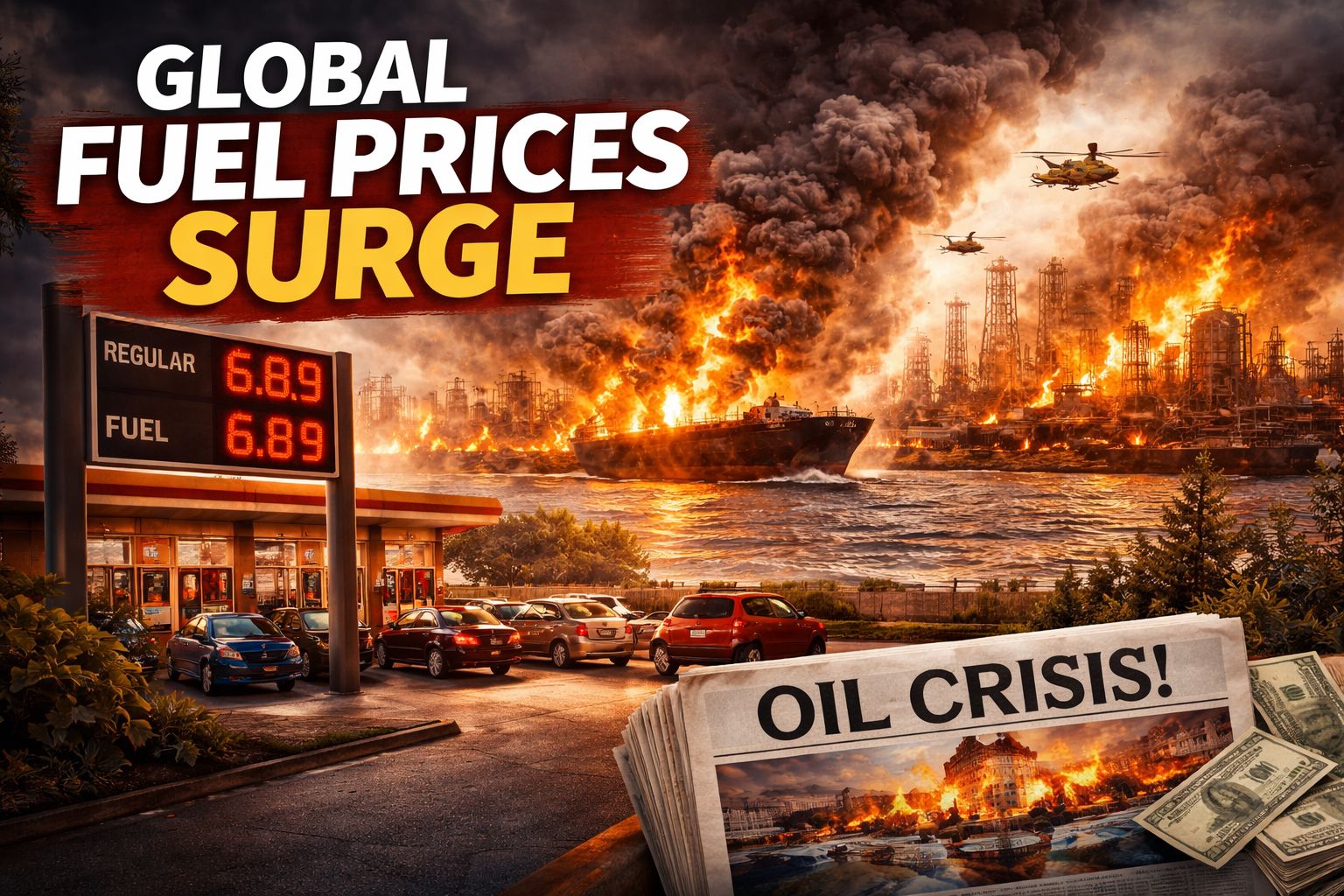
The world is watching in silence as the heartbeat of global trade begins to falter. What started as a distant conflict has now officially arrived at your local gas station. Fuel prices are no longer just "rising"—they are exploding. Across the globe, from the busy streets of New Delhi to the highways of the United States, consumers are facing a brutal new reality as the Middle East war enters a terrifying new phase.
The numbers are chilling. In the Philippines, fuel prices have seen a record 80% surge, forcing the government into a state of national emergency. In the U.S., families are feeling the sting of a $1 per gallon jump in just a single month. This isn’t just a market fluctuation; it’s a global supply shock that is draining wallets and slowing down economies. Americans alone have spent an extra $8 billion on gasoline since the conflict began—a number that grows by the second.
But the real suspense lies in what happens next.
The Strait of Hormuz, the world’s most vital energy artery, is under immense pressure. For countries like India, which depends on this narrow passage for 90% of its LPG and half of its oil, the situation is critical. Governments are scrambling, slashing taxes and banning exports just to keep the lights on, but the shadow of a $200 barrel of oil looms larger than ever.
As the war drags into its fifth week, the question isn't just about the price of fuel—it's about whether the supply will be there at all. We are witnessing a historic energy shift, and the cost is being paid by every consumer at the pump.
The world is at a breaking point. How much higher can these prices go before everything stops?
#AsiaStocksPlunge #OilRisesAbove$116 #TrumpSeeksQuickEndToIranWar #BTCETFFeeRace $POWR $RVN $pippin