
Honestly..... crypto just has not felt that exciting for a while.
Not in the dramatic, “I’m done with this forever” kind of way. More like a quiet fatigue. The kind that creeps in when you have seen the same pattern repeat so many times that even the “new” stuff starts to feel familiar before it has properly arrived.
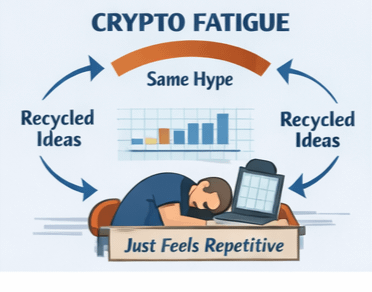
After a while, every cycle starts blending into the next.
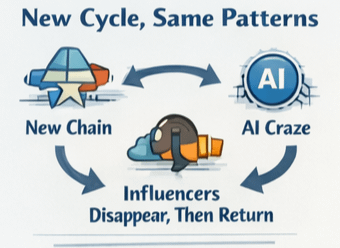
A new chain appears. A new narrative gets pushed. AI gets squeezed into the conversation whether it belongs there or not. The same people vanish when the market turns ugly, then come back a few months later talking about conviction like nothing happened. And the timeline fills up with threads that all feel like they came from the same template.
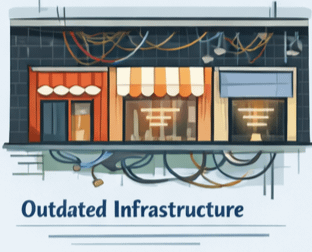
At some point, it stops feeling like innovation and starts feeling like walking through a mall where the shopfronts keep changing, but the wiring behind the walls is still old and unreliable.
And that wiring is where the real problem is.
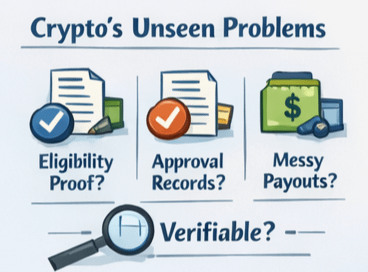
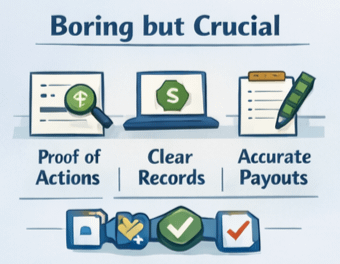
A lot of crypto still struggles with the plain, unglamorous stuff. How do you prove that someone is actually eligible for something? How do you keep a clear record of who approved what? How do you distribute money, access, or rights without the whole thing turning into screenshots, messy spreadsheets, and last-minute manual checking? And when something goes wrong, how do you trace it back and show what actually happened?

Those are not exciting problems. They do not make people emotional. Nobody builds a whole identity around them. But they matter more than most of the louder stuff, because they decide whether a system can actually hold up once it leaves the timeline and runs into real-world use.
That is why projects like Sign have started to feel more interesting to me than most of the noisier parts of crypto.
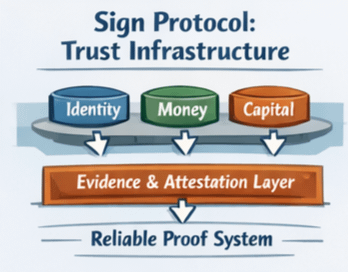
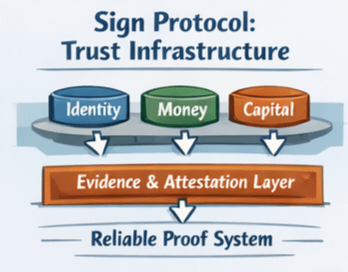
What Sign seems to be building is not another shiny destination for people to rally around. It feels more like infrastructure for proof. Not in the vague sense of “the blockchain makes it true,” but in a more useful sense: what happened, who approved it, and under what rules? In its current documentation, Sign Protocol is described as an evidence and attestation layer that sits underneath identity, money, and capital systems, while the broader S.I.G.N. framework is presented as a larger infrastructure model around those pieces.
That sounds dry at first.
But once you think about how much of crypto still runs on incomplete records and loose assumptions, it starts to sound a lot more important.
Take airdrops. People usually talk about them like they are culture, free money, or clever marketing. But underneath all that, they are really an operations problem. Who qualifies? Which wallet belongs to which person? What rules were used? What evidence is there if someone challenges the result afterward? The same basic issue shows up in grants, vesting, contract approvals, compliance checks, identity systems, and more recently in tokenized real-world asset flows too. Crypto spent years acting like blockchains solved truth on their own, when really they mostly solved timestamping. Truth still needs structure.
That is where the boring infrastructure starts to matter.
Sign’s recent trajectory makes that clear. In April 2025, it became much more visible with its token launch and Binance listing. Binance said SIGN would start spot trading on April 28, 2025, and tied the launch to its HODLer Airdrops program; the same announcement said the genesis supply was 10 billion SIGN, with 1.2 billion in initial circulation.
Usually, moments like that push a project into full performance mode. More branding. More noise. More exaggerated language.
But the more interesting part came afterward, in how the project kept defining itself.
Over the past several weeks, the docs have leaned more clearly into a bigger infrastructure picture: money rails, ID rails, capital rails, and an evidence layer connecting them. The material talks directly about privacy controls, auditability, role separation, revocation, interoperability, and evidence that can still be checked later. That is not the tone of a project trying to win a hype contest. It sounds more like a system being built with the expectation that one day it will have to answer for itself.
And to me, that matters.
Crypto has spent years obsessing over the front of the house the token, the app, the interface, the campaign, the story. But real adoption usually gets stuck in the back office. In the places where records need to line up, permissions need to be clear, and different parties need a way to verify the same event without relying on the same internal database. If this industry is growing up at all, it will probably be because more teams start fixing that layer instead of pretending it is someone else’s problem.
The wider market seems to be moving that way too, even if the online conversation still prefers spectacle. In 2025, reporting on tokenized real-world assets pointed to strong growth, with Cointelegraph citing a 260% rise in the RWA market during the first half of the year, driven in part by broader adoption and better regulatory clarity. Separate coverage of Binance Research’s market report described the same shift as part of a wider move toward more practical, yield-bearing, infrastructure-heavy use cases.
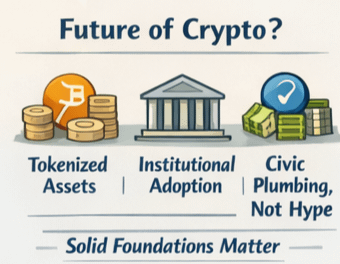
Seen from that angle, Sign is interesting not because it feels exciting in the usual crypto way, but because it is focused on a part of the system that still does not work well enough. Its protocol is built around schemas, attestations, querying, and auditability across chains and storage layers. That feels less like internet theater and more like civic plumbing. Maybe the best comparison is not some grand promise about the future. Maybe it is just a records office that finally got decent software. Nobody gets sentimental about a records office, but when ownership, approval, eligibility, or proof suddenly matters, that is exactly where everything ends up.

Maybe that is part of why crypto feels emotionally flat right now. People were trained to look for fireworks, while a lot of the useful progress is happening in places that do not look exciting from the outside verification systems, compliance layers, identity rails, and cleaner ways to make claims portable and provable. That kind of work is quieter. It is harder to package. It is harder to turn into a personality. But it may matter far more than another loud app or another recycled narrative.
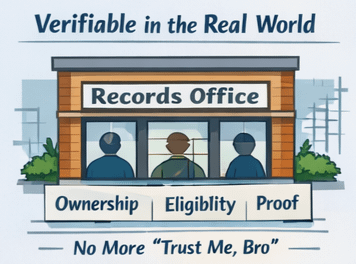
The part of crypto that lasts will be the part that can quietly prove what happened when nobody is willing to take anyone’s word for it.