
In today’s fast-moving digital world, trust has become one of the most valuable yet fragile assets. Every day, people share personal data, make online payments, and interact with strangers across platforms. Yet behind this convenience lies a growing concern: can we truly trust the digital systems we rely on?
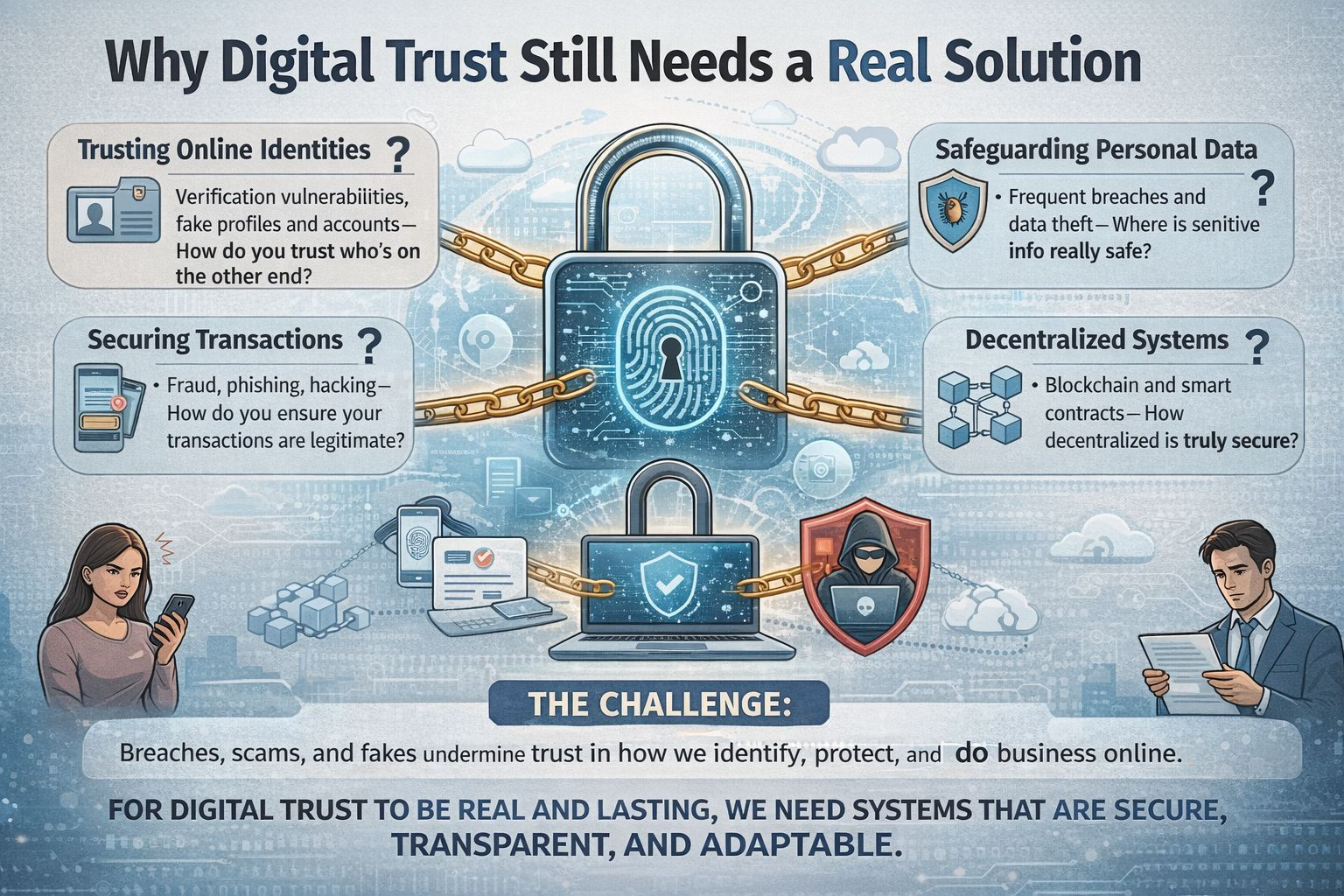
Despite advancements in technology, digital trust remains incomplete. The systems designed to protect users often struggle to keep up with evolving threats, leaving gaps that affect individuals, businesses, and entire economies.
One of the biggest challenges is identity verification. Online, anyone can create a profile, but proving that a person is genuinely who they claim to be is far more complex. Fake accounts, impersonation, and identity theft have become common issues. Whether it’s social media, freelance platforms, or financial services, users are often left wondering who is actually on the other side of the screen.
Another major concern is data security. Every interaction online generates data—personal details, financial information, and behavioral patterns. While companies promise protection, data breaches continue to occur at an alarming rate. Sensitive information is frequently exposed, sold, or misused. This raises a critical question: where is our data truly safe?
The issue extends further into transaction security. Digital payments have made life easier, but they have also opened doors for fraud, phishing attacks, and hacking. Many users have experienced or know someone who has lost money due to online scams. Even with security layers in place, the system often reacts after the damage is done rather than preventing it in the first place.
Then comes the rise of decentralized systems, often presented as a solution to trust issues. Blockchain technology, for example, offers transparency and immutability. However, decentralization alone does not guarantee safety. Smart contract vulnerabilities, lack of regulation, and user errors can still lead to significant losses. Trust cannot rely solely on technology—it must also include accountability and usability.
The core problem is that current systems are built in fragments. Identity, security, compliance, and user experience are handled separately rather than as part of a unified structure. This fragmentation creates loopholes where trust can break down.
A real solution to digital trust requires a balanced approach. Systems must be secure without being overly complex, transparent without exposing sensitive data, and regulated without limiting innovation. This means combining strong identity verification, advanced encryption, real-time monitoring, and adaptable compliance frameworks into one cohesive system.
Equally important is user control. People need to have a say in how their data is used and shared. Trust grows when users feel empowered, not monitored or restricted. Clear policies, simple interfaces, and reliable support systems can make a significant difference in building confidence.
Looking ahead, the future of digital trust will depend on how well technology aligns with human needs. It is not just about preventing fraud or securing data—it is about creating an environment where users feel safe, respected, and in control.
In the end, digital trust is not something that can be assumed; it must be continuously built and reinforced. Until systems evolve to address these challenges holistically, trust will remain uncertain.
And in a world increasingly dependent on digital interaction, finding a real solution is no longer optional—it is essential.
#Sign #signdDigitalSovereignInfra #AsiaStocksPlunge
