

On Bitfinex, the metric for accumulating BTCUSDLONGS longs has again transitioned into a stable uptrend on the daily timeframe. And this is a negative signal for the bulls.
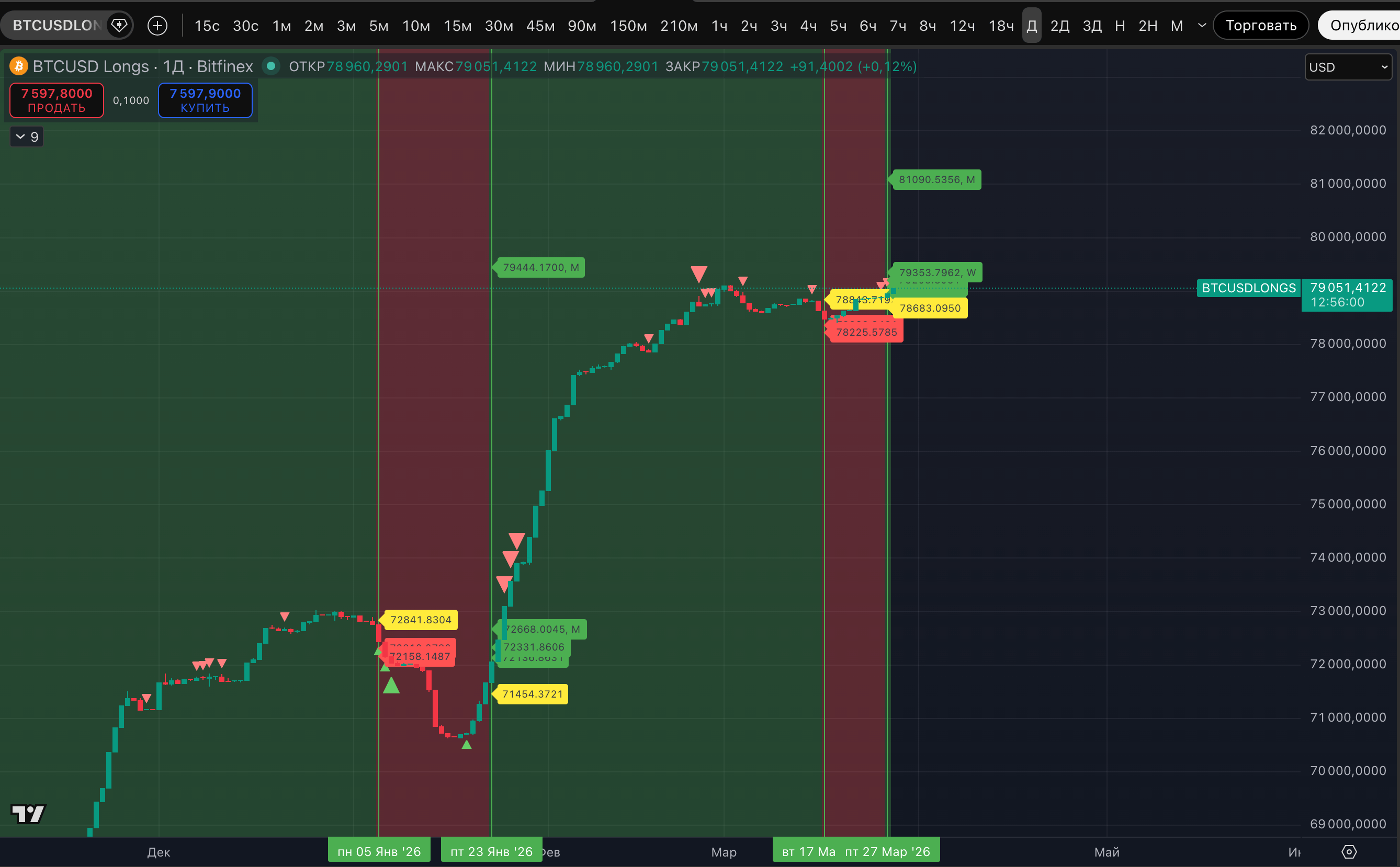
"Smart money" is accumulating longs. They are accumulating them on the market decline. The downtrend, unloading of longs, was noted on March 18, but as we can see - it was broken within just 10 days.
Let’s remind you that on the Trading View ticker BTCUSDLONGS, it is convenient to track how players on #Bitfinex accumulate and unload longs. They accumulate them as the asset falls and unload them as it rises. There is a pronounced inverse correlation with the price of #BTC, and this is typical behavior of "smart money." They unload longs to the crowd at the moment when the crowd is actively buying and pushing the price up. To realize their profits, they need sustained demand. They accumulate positions as the asset falls and "weak hands" hand it over to them.
Therefore, accumulating longs on Bitfinex is negative for the asset's growth prospects. And unloading longs is positive.
According to this metric + our indicator, the work on relationships is simple:
- when longs begin to unload and they enter a sustained downtrend - #BTC starts to rise.
- when longs begin to accumulate and they enter a sustained uptrend - #BTC starts to fall.
How well do the signals of the downtrend work for the price increase of BTC on the daily timeframe from BTCUSDLONGS? We look at examples from the end of 2024, when the most pronounced inverse correlation occurred. Stable downtrends on the daily chart of BTCUSDLONGS began:
- October 16, 2024,
- April 20, 2025,
- January 5, 2026.
As seen in the chart, in October 2024 and April 2025, such signals were followed by active market growth, confirming the inverse correlation between the price of BTC and BTCUSDLONGS.
BUT if from October 2024 to the beginning of 2026 the metric built a clear and predictable picture, almost a sinusoid, then starting from January 2026, "something went wrong."
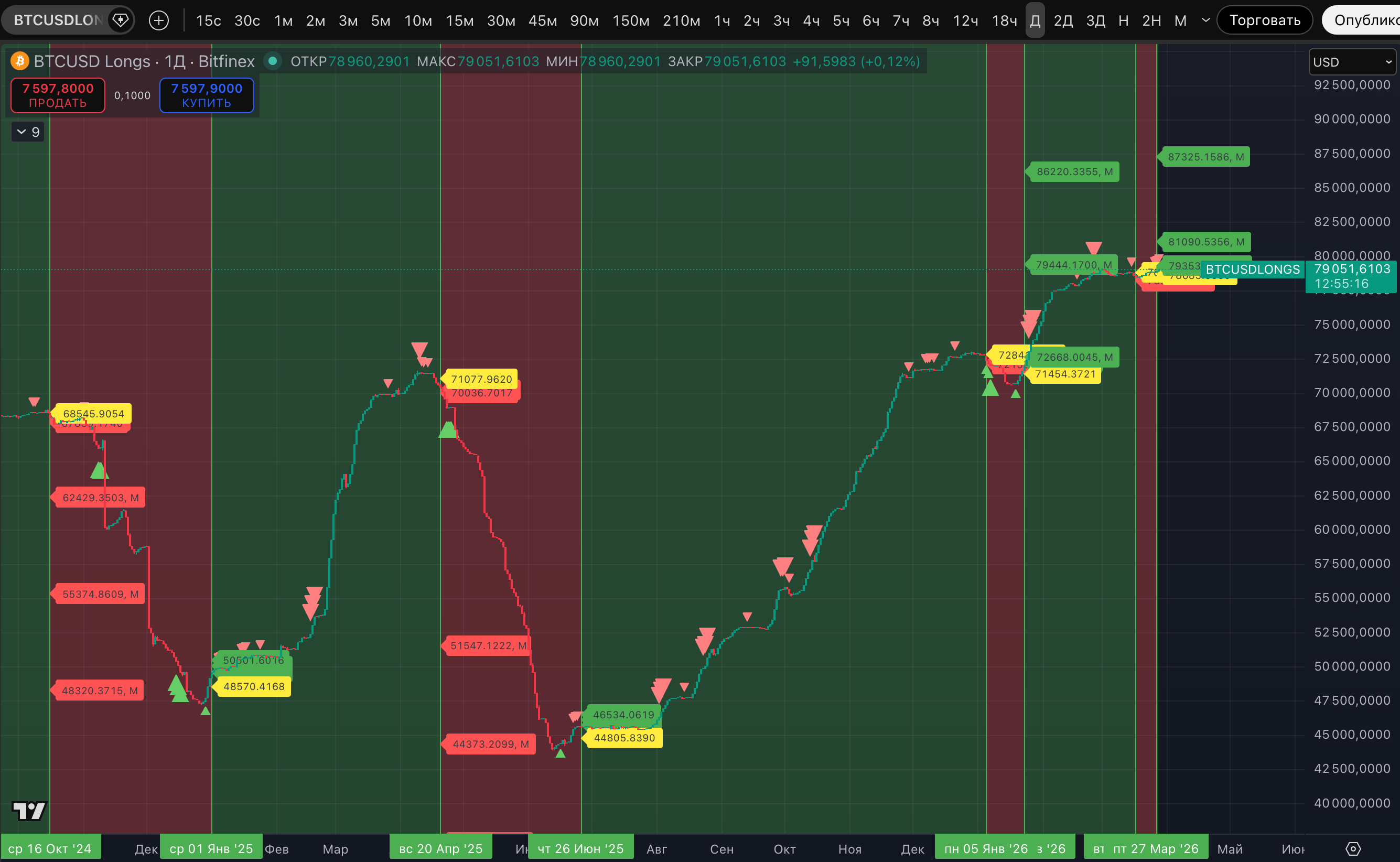
The number of longs continued to grow, breaking out of a wide range upwards. This can be explained by a likely bear market (or, still, a huge bear trap), on which "smart money" is actively accumulating longs.