


In recent days, the cryptocurrency market has been experiencing occasional collapses. When the situation in the Middle East tightens, oil prices surge back to around a hundred dollars. Bitcoin was first smashed below 70,000 dollars, then quickly pulled back up, and now it has been pushed down again to its original position. The whole market is starting to repeatedly price the same issue: as local geopolitical conflicts enter a deep-water phase, what truly holds value is no longer just the liquidity story, but the digital infrastructure that can withstand sanctions, internet shutdowns, capital flight, and failures in cross-border settlements. Meanwhile, the on-chain RWA scale has nearly quadrupled in almost a year, surpassing 25 billion dollars. The direction of capital is very clear: hot money is still chasing narratives, while smart money is already looking for protocols that can bridge to the real world.
If you look along this line, the value of SIGN @SignOfficial will suddenly become very clear. It is not about the next high TPS public chain, nor is it simply an airdrop tool, but rather about creating something harder: S.I.G.N, a sovereign-level digital infrastructure aimed at national-level Money, Identity, and Capital systems, with a verifiable evidence layer provided by Sign Protocol at its core. In simple terms, what it seeks to solve is not who is more lively on-chain, but who can move the most core modules of the national machinery—identity, payment, subsidies, clearing, and asset confirmation—onto the chain, while ensuring auditability, governance, and cross-border collaboration. This positioning naturally brings it closer to true power and budget compared to ordinary infrastructure projects.
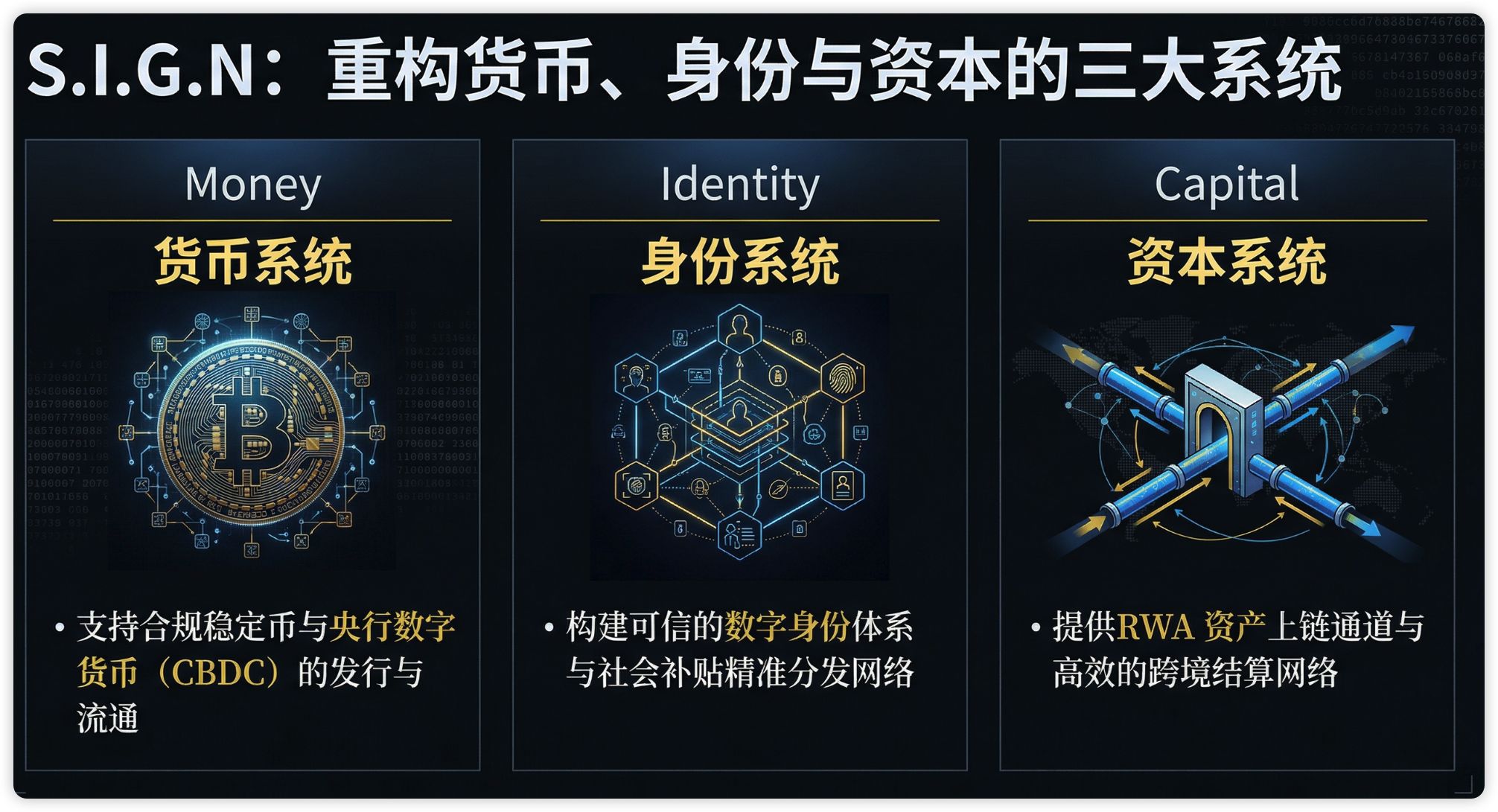
Why now, and why the Middle East? Because wars and sanctions expose a country's most vulnerable spots: fiat currencies will devalue, banks will block, cross-border payments will be interrupted, and identity systems and fiscal distributions may fail. At this time, what countries need is not another DeFi front end, but a sovereign toolbox that can issue compliant stablecoins and CBDCs, while also handling digital identity, subsidy distribution, RWA on-chain, and cross-border settlement. SIGN has already embedded itself into this scenario. According to official documents and the materials you provided, its narrative core is about national-level currency, identity, and capital systems, promoting sovereign blockchain infrastructure in Abu Dhabi, and landing digital identity and credential scenarios like SignPass in Sierra Leone. In peacetime, it is an efficiency tool; in turbulent times, it is a digital lifeboat.
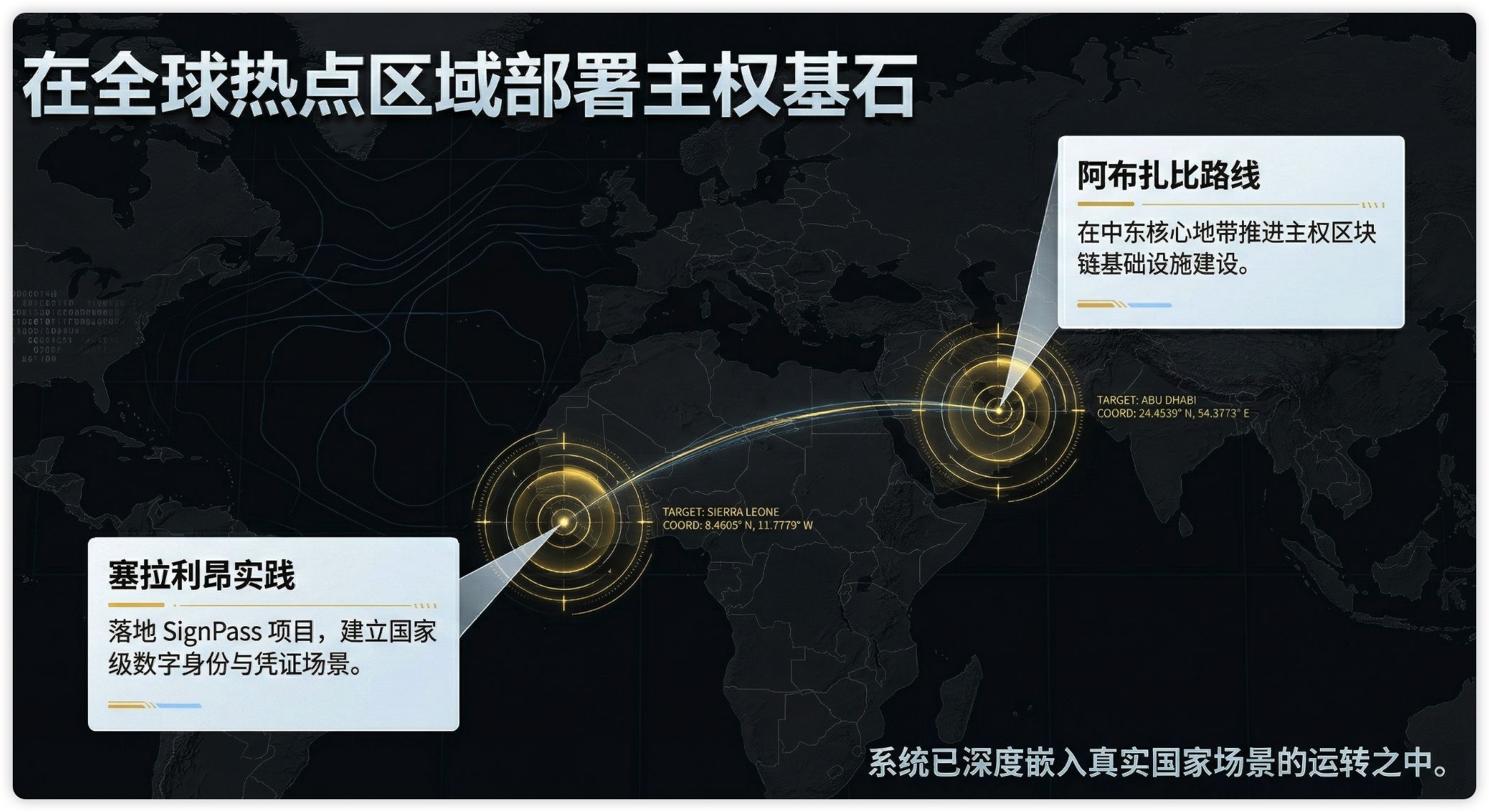
Thus, the most unique aspect of SIGN is not that it tells a brand new story, but that it has hit an increasingly large gap in reality: as the world shifts from globalization to division, and from risk-free arbitrage to a high-friction world, what is truly scarce is not the chain, but a trusted, transferable, and sovereignly controlled digital foundation. You can understand it as one of the few national-level middleware in the crypto space. In the next cycle, everyone will continue to chase trends, but what truly crosses cycles are often those systems that can take over identity in wartime, complete clearing in chaotic situations, and bear value when capital flees. The Strait of Hormuz blocks oil tankers, while SIGN aims to open up the future on-chain veins of the national machinery.