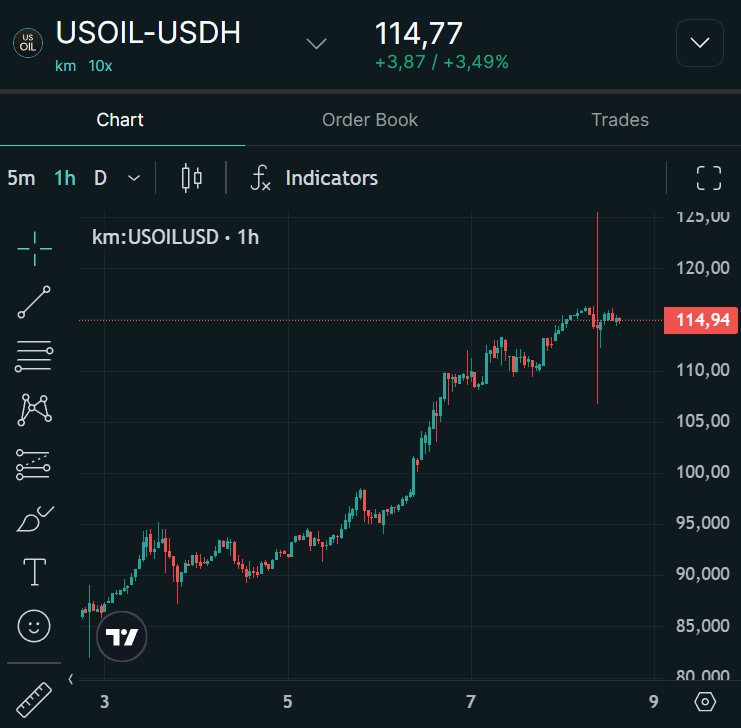
1/ WTI crude oil has surged directly above $100, hitting a new high since 2022. This increase is completely driven by geopolitical conflicts and concerns over energy supply, and subsequent inflationary pressures will only grow.
2/🗞️🇪🇺 The recently released report from the European Central Bank is quite insightful, predicting that by 2030, the market value of stablecoins could reach $4 trillion, with a high probability that dollar-pegged stablecoins will dominate. This is interesting because it means that U.S. monetary policy will indirectly affect the Eurozone, and the influence of on-chain finance has already permeated traditional monetary policy levels.
3/🚨 There are indeed many bearish voices; Polymarket traders are already pricing in the possibility of BTC dropping below 45,000 in 2026, and 75% believe it will definitely drop to 55,000. This year's volatility is expected to exceed many people's expectations.
4/🔥 Willy Woo's warning can be referred to; he said that the short-term rise of BTC may be a bull market trap, and the market is still in a major bear market cycle. In fact, this viewpoint is not new, but it does remind everyone not to be swept away by short-term rebounds.

5/ The new Supreme Leader of Iran has been set, it's Mojtaba Khamenei. The geopolitical landscape seems to have temporarily stabilized, but the contradictions between the US and Iran will not easily resolve, and we still need to pay attention to changes in the situation.
6/🚨 There is also a short-term prediction; Kalshi says BTC may drop to 61,000 in March, primarily because market volatility has not decreased, and the risk of a short-term pullback definitely exists.
7/🔥 $SOL is really fierce; in February, the trading volume of stablecoins directly surged to 650 billion USD, setting a historical high, more than doubling the previous peak. It can be seen that the demand for on-chain payments is exploding, and Solana's ecosystem is indeed ahead.
8/🔥 This is a solid good signal; US spot BTC ETFs have seen net inflows for two consecutive weeks, totaling about 568 million USD, finally ending five months of capital outflow. Institutional funds re-entering the market indicate that they still recognize the long-term value of BTC; they are just waiting for the right timing.
9/ Saylor is once again promoting $BTC and hinted that there is a book about BTC worth reading this week. Last week, Strategy just bought 200 million USD worth of BTC, and their holdings have now exceeded 720,000 coins. The pace at which institutions are increasing their positions at lower prices is quite obvious.
10/🇺🇸 The most noteworthy aspect is actually inflation. The current inflation situation in the US is almost identical to that of the 70s and 80s: rising oil prices, wars in the Middle East, soaring gold and silver prices, and economic stagflation. History is always remarkably similar, and the safe-haven asset trends of that time, applied to now, are likely to make crypto one of the core options.
I have always felt that getting entangled in short-term points is meaningless; it is easy to be swayed by market sentiment. The stagflation script of the 1970s is replaying, oil prices breaking a hundred, and geopolitical conflicts continuing. In this macro environment, funds will inevitably seek safe havens. Many people are scared by bearish comments, worried about dropping to 45,000 or 55,000. Whether it's a bull market trap or a short-term pullback, it's all normal fluctuations in the bottoming phase.
Real opportunities never appear when everyone is optimistic; instead, they are hidden among the bearish voices.