

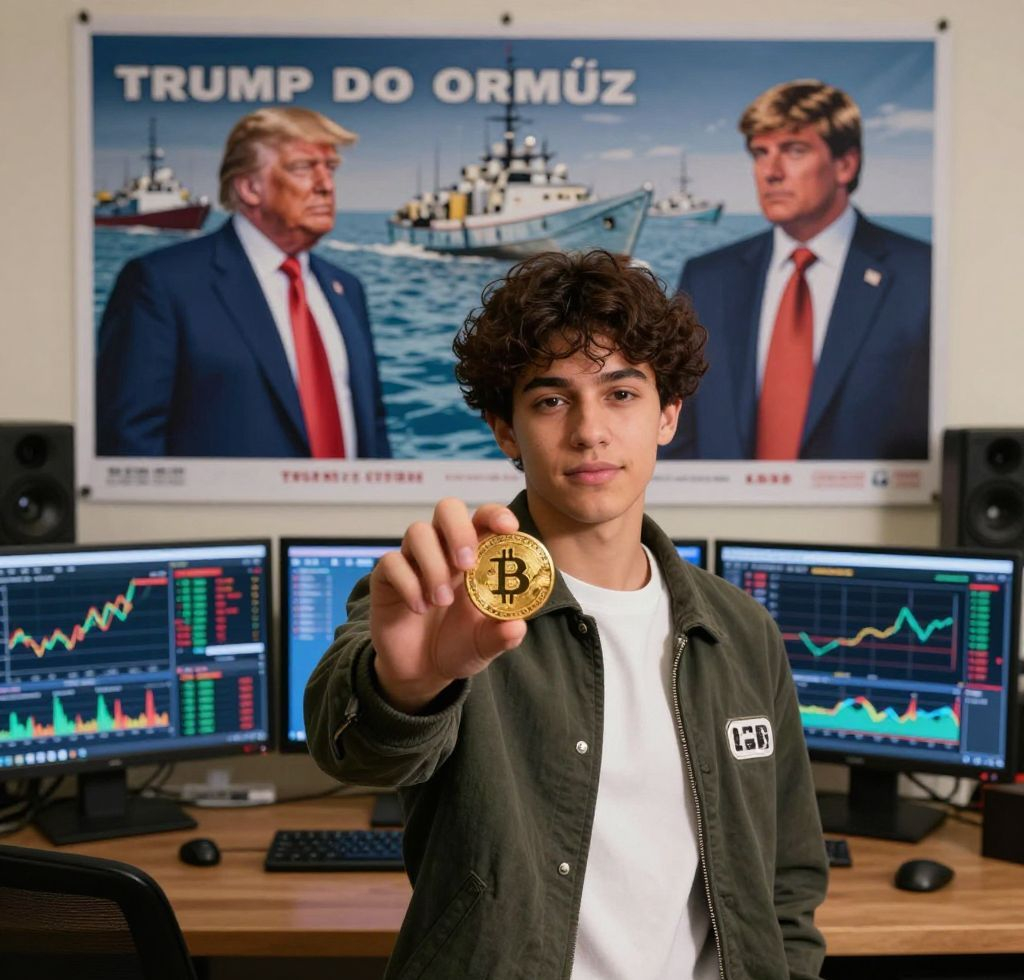
On October 1, 2025, Bitcoin did what few dared to dream a few years earlier: it marked a new all-time high of $126,884.
Euphoria in the markets, headlines in all the media, and a question hanging in the air: how long until 130,000? What no one had in the script was what came right after, a drop that started slowly, almost silently and without respite.
"A healthy correction," the optimists repeated. "We’re heading to 129K, to 130K, it’s just a breather." But the bounce never came. The red set in week after week, and with it came the prophets of doom: those who predicted a bottom at $48,000 and those who directly signed Bitcoin's death certificate.
Once again. On the other side of the debate, the most staunch long-term supporters — those who have seen this same script in 2018 and 2022 — have remained firm: technical correction. Painful, yes. Prolonged, also. But technical after all.
In November we published an analysis where we presented the thesis: that after a succession of all-time highs, a contraction of this magnitude was not only expected but necessary for the health of the cycle. HOWEVER, AS THE MARKET IS ALWAYS RIGHT, we did not dare to assert something outright but let the market do exactly what it has to do and we prepare to buy or to trade.
To all events, today the board looks different. Geopolitics has entered the scene with all its might — Trump’s decisions, global trade tensions, and a climate of uncertainty that traditional markets are already showing — and the question has ceased to be purely technical to become structural: are we on the brink of the next bullish impulse or has Bitcoin truly entered a bear market?
It’s time to retrace our steps and with updated on-chain metrics, fresh data, and the macro context on the table, we review whether our November thesis still stands — or if we need to rewrite the script for one more aligned with current market dynamics.
📊 THE NUMBERS THAT MATTER:
This application of mathematics to the Bitcoin world is a recent acquisition; I must say that mathematics has always been a mystery I understood from logic, not from long processes of verification. Currently, I must say that mathematics is the structure upon which the foundation of trading rests, among other sciences.
So bringing a bit of that world into the analysis we can see how from the last all-time high BTC fell approximately 46.2%, which according to comparisons with bear markets, in each cycle the drop exceeded 75% from its ATH, and although the declines in each cycle are less deep, the current percentage and days of correction do not justify a full-fledged Bear Market:
Current price: $68,270 (−46.2% from the ATH of $126,884)
Days in correction: 155
Fear & Greed Index: 40 → Fear, not panic
RSI 14d: 38 → Weak, but not extremely oversold
Below MA50 and MA200
30d Volatility: ~3.1% (low for a historical bear)
Therefore, the verdict remains the same, according to metrics, we are facing a technical Bear market ✅ not a historical Bear market (like 2018/2022) and facing a probability of deep correction within a bull market of 58–62%.
On the other hand, according to On-Chain metrics, there are also some data to consider.
🔗 ON-CHAIN: THE MARKET FROM WITHIN
Long-term holders (LTH): firm, not selling
Miners: no capitulation, stable hash rate
MVRV Z-Score: historical undervaluation zone
Short-term holders (STH): capitulating
Selling pressure: moderate, not massive
These data often indicate as a key signal that when LTH hold on and miners do not give up, cycle funds are usually close. This is a scenario I love because it’s predictable, easy to identify, simple to manage, and gives us a grand expectation: we have some control, having the data in hand, but what would happen if... and this is where Nassim Taleb comes in with his Black Swan.
The Black Swan
Nassim Taleb, in his work The Black Swan, teaches us that it only takes one unexpected event — a black swan — to radically change our perception of the world.
In financial markets, this means that while most days may pass in calm, a single unexpected event can trigger a chain reaction that transforms a moderate correction into a deep crisis.
Historically, many crises began as normal adjustments or corrections within bull markets, but the sum of geopolitical events — wars, revolutions, economic sanctions or political collapses — triggered panic among investors, unleashing stampedes and massive sell-offs. For example:
The Great Depression (1929) initially was a stock market crash, but the lack of adequate political response and the worsening of international tensions with the onset of World War II turned an economic crisis into a devastating global phenomenon.
The Oil Crisis of 1973 began with an oil embargo, a punctual disruption, but the geopolitical shock in the Middle East caused global inflation, recession, and a sharp decline in markets.
The Asian Crisis of 1997 started with problems in the Thai economy, but the rapid spread of panic to other emerging markets was accelerated by political uncertainty and lack of international coordination.
Could something similar happen today? Without a doubt. In such an interconnected global environment with latent geopolitical tensions — regional conflicts, rivalries between powers, economic sanctions — a market correction could become a turning point if some unexpected spark ignites the "perfect storm."
That’s why against any event we need to have a plan B: what if tomorrow there’s a perfect storm and you’re waiting for this deep correction to end? Are you prepared to protect your investment, your trade? Or if what’s happening now is just the tip of something much more complex and unpredictable, could you take advantage of the offers that may arise?
Because, as Taleb reminds us, uncertainty and randomness are always present, and often the most disruptive events arise from the unexpected combination of small pieces on a complex geopolitical board.
So currently we are facing the following events:
🌍 THE GEOPOLITICAL BOMB: STRAIT OF HORMUZ
The U.S. and Israel attacked Iran. Iran closed the Strait of Hormuz (20% of the world's oil).
Oil flows: from 16 to 4 million barrels/day.
Brent: +13% to $81.40; projections of $120–$150 if the closure continues.
Bitcoin: fell to ~$64K, then rebounded to $71K+ (short squeeze).
Historically, BTC falls in the initial panic (COVID: -40%; Ukraine: -9%), but recovers and sometimes outperforms other assets in the medium term.
🧭 WHAT TO EXPECT IN THE COMING DAYS: 3 SCENARIOS
1️⃣ Escalation — Prolonged closure of Ormuz
→ More volatility and possible additional drops.
→ If inflation settles in, BTC could gain the narrative of "hard asset" and attract safe-haven capital.
2️⃣ De-escalation — Reopening of the strait
→ Relief rally.
→ BTC could resume previous trend strongly.
3️⃣ Status quo — Tension without resolution
→ High volatility, sideways movements.
→ Ideal zone for silent accumulation if you have a long horizon. Extra tip: Set alerts at $64K (key support) and $75K (immediate resistance). Those levels will say a lot.
Conclusion: Predictably, these scenarios could occur, although there are many scenarios that could also occur individually, or collectively speaking, so a fourth scenario (to not overwork our minds) could be a much deeper correction that, without reaching 75%, gets close enough and creates panic sufficient to leave everyone out while it starts to rise before you were ready to buy.
If nothing happens and a normalized scenario of the first three occurs, Bitcoin will continue in a technical bear market, while we will keep a close watch on the market and write some ideas in the same place as always.
So even though fear dominates, love conquers, long-term holders and miners hold out like champions. Geopolitics continues its course adding volatility, robbing some of sleep over leverage and feeding a few, so these days will be decisive, days of waiting.
💡 FINAL REFLECTION
In 1929, Joseph Kennedy sold everything when a shoeshine boy gave him stock tips. Today, when bearish memes flood social media, the smart question isn’t how far will it drop? but am I thinking differently from the majority and do I have a plan? Mine is to keep trading whether the market falls or rises.
Remember that great fortunes are built in times of fear, not euphoria. (This is not investment advice).
It’s time for reading.
