
When I look at a project like SIGN, I do not really think the most important moment is when everything is working perfectly. Honestly, any system can look trustworthy when the app loads fast, the dashboard updates on time, and every record appears exactly where it should. For me, the more revealing moment is when something breaks. A service goes down. An interface stops responding. An update gets delayed. That is when I start asking whether the trust was actually in the system, or just in the smoothness of the experience.
That is why I think people sometimes describe SIGN too narrowly. I often see it framed as a credential verification project or a token distribution tool, and while that is not wrong, it feels incomplete to me. What makes it interesting, at least from my perspective, is that it is trying to deal with a more basic problem. How do you keep digital trust intact when part of the system becomes unreliable? That is the real question I keep coming back to. In my view, SIGN is less about making trust faster and more about making trust hold together when conditions are less than ideal.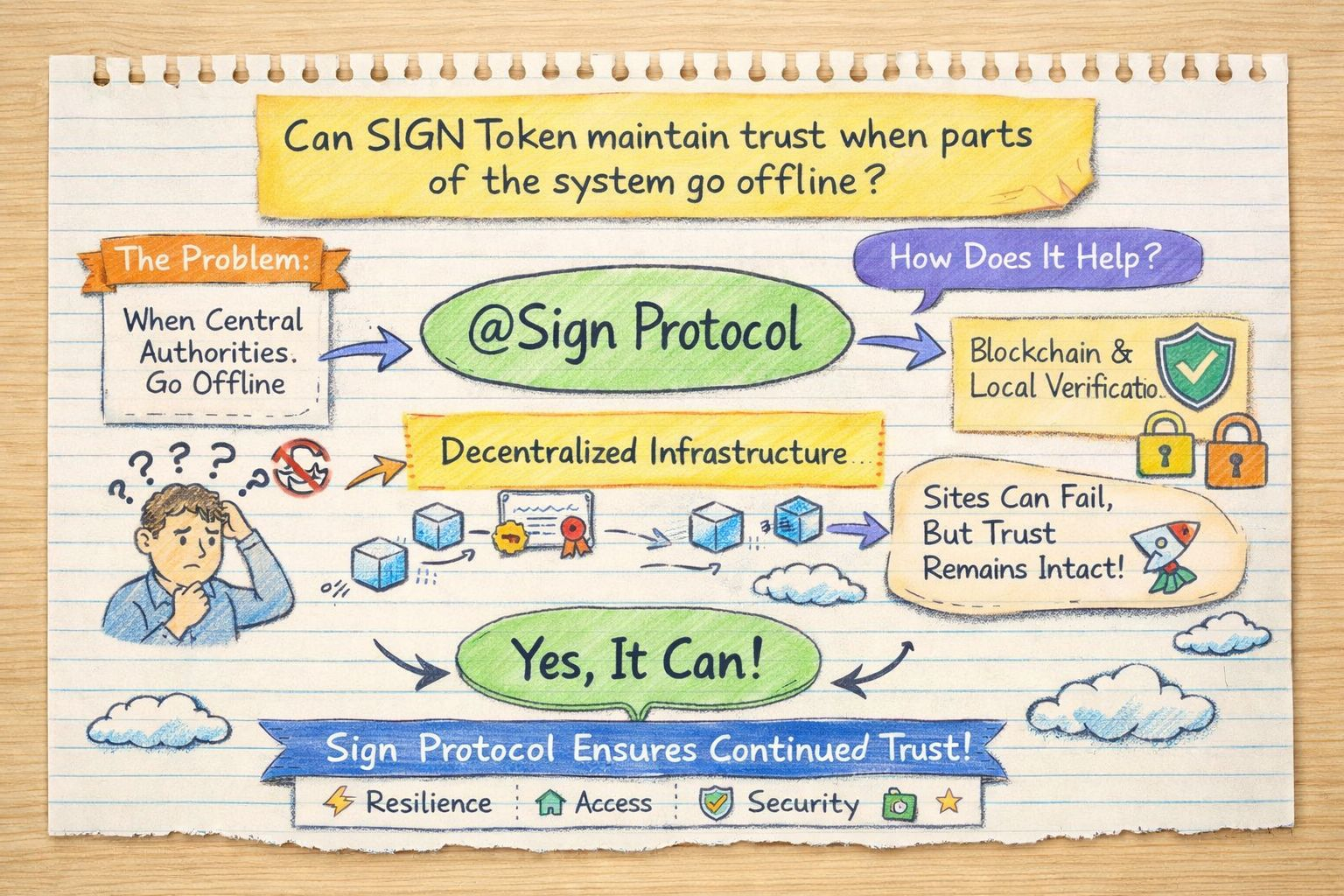 What I like about the project is that once you strip away the terminology, the core idea is not that hard to understand. A schema is basically a template for what a claim is supposed to mean. An attestation is the actual signed record created from that template. To me, that matters because it turns vague claims into something structured. Instead of re-explaining the same fact again and again, the system creates a format that others can read, verify, and reuse. On the surface, that looks like a cleaner verification process. But underneath, I think it is really about giving trust a more durable shape.
I also think SIGN becomes more interesting because it does not stop at proving something. It connects proof to action. That part matters a lot. Through TokenTable and the broader setup around the project, proof is not just stored somewhere for reference. It can affect who qualifies, who receives a token allocation, who can claim something, and under what rules value moves. In my opinion, that makes SIGN feel less like a simple product and more like coordination infrastructure. It is trying to sit in the middle of trust and decision-making, which is a much more serious role.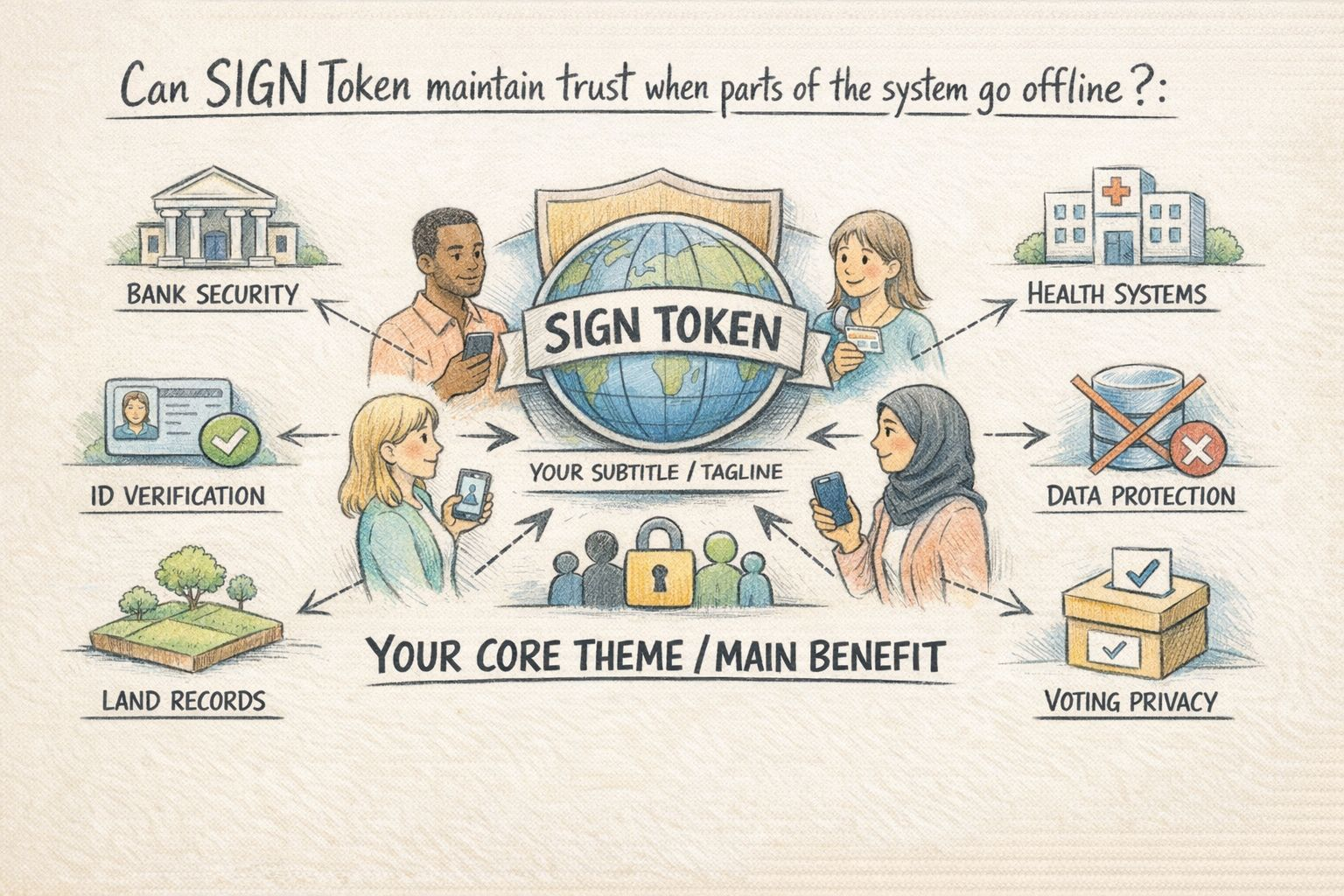
This is exactly why the offline question matters to me. If a front end, indexer, or some visible layer goes down, I do not think a real trust system should collapse into confusion. At worst, it should become less convenient. That is where I think SIGN has a meaningful strength. The project seems designed so that the evidence is not supposed to vanish just because the easiest interface is unavailable. And personally, I think that is one of the most important things a system like this can do. A lot of crypto projects feel decentralized until the main interface disappears, and then suddenly nobody knows how to verify anything without being guided through it.
At the same time, I would not overstate it. I do not think SIGN solves everything just because the underlying record can still exist. There is still a real difference between preserving evidence and preserving clarity in the moment. A claim may still be there, but if revocations, updates, or policy changes are delayed because part of the live system is offline, then people may still be left uncertain about the current status of that claim. That, to me, is the actual weakness. Old proof is useful, but sometimes the thing that matters most is whether the proof is still valid right now.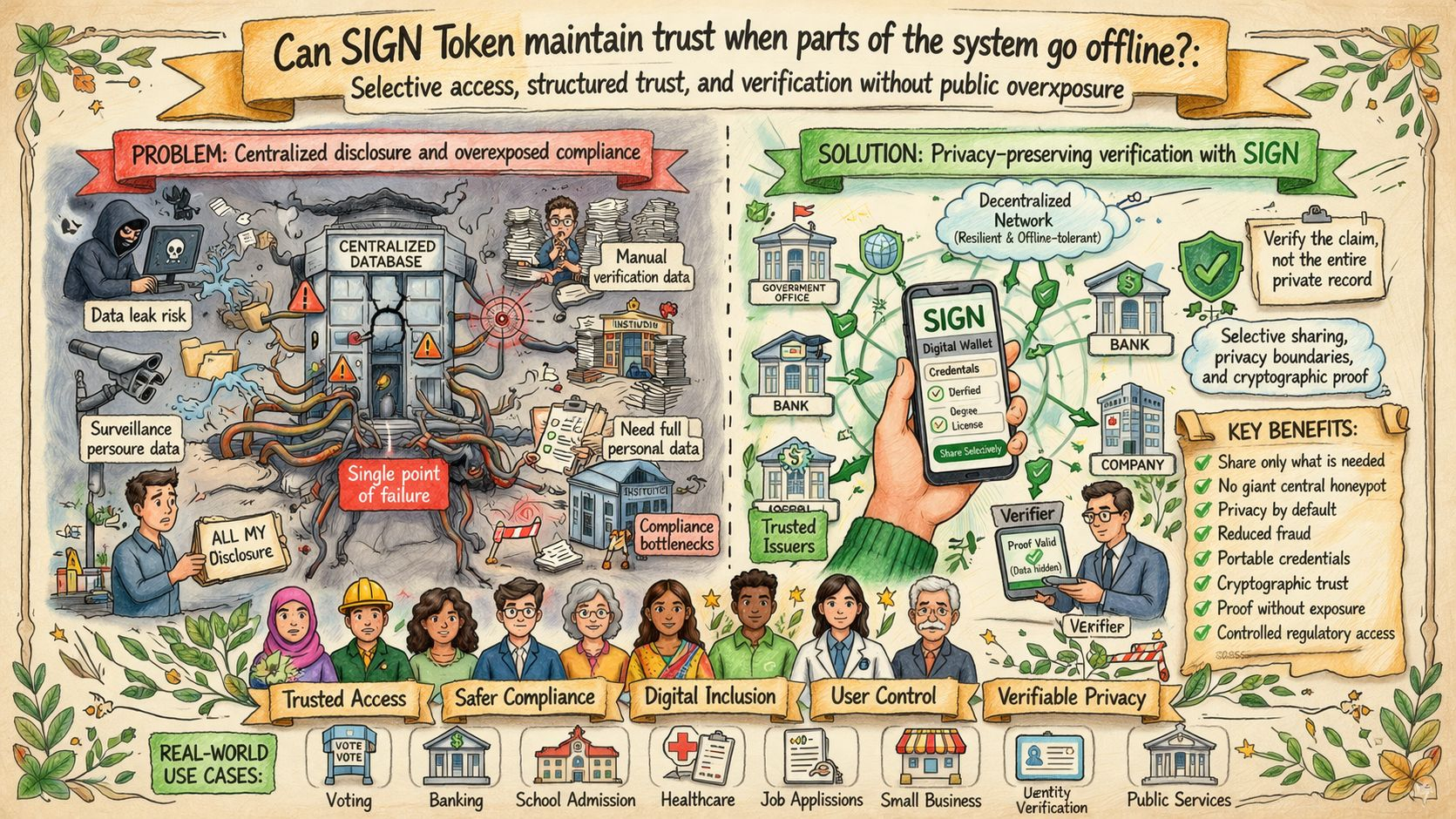
I also think this is where the token makes more sense than people give it credit for. Personally, I do not find token utility convincing when it feels bolted on after the fact. But in SIGN’s case, I can at least see the logic. If a project wants to become infrastructure for verification and distribution, then it needs coordination, maintenance, governance, and some long-term incentive structure. A token can help with that, even if it also introduces its own risks. So I do not see SIGN Token as the center of the story, but I do think it has a clearer place in the system than many tokens do.
Overall, my feeling is that SIGN is interesting because it is aiming at something harder than a normal crypto app. It is trying to become part of the background layer that other systems depend on. And in my opinion, that means it should be judged differently. Not by how polished it looks when everything is fine, but by whether trust can still be recovered when the convenient layer disappears.
So if I had to put it simply, I would say this: yes, I think SIGN can maintain trust when parts of the system go offline, but only in a limited and realistic sense. It can preserve the evidence better than systems that rely too heavily on presentation. What it cannot fully guarantee is perfect clarity when live coordination weakens. And honestly, that tension is probably what makes the project feel real to me. It is not promising a flawless world. It is trying to make trust survive messy conditions, and I think that is a much more meaningful ambition.