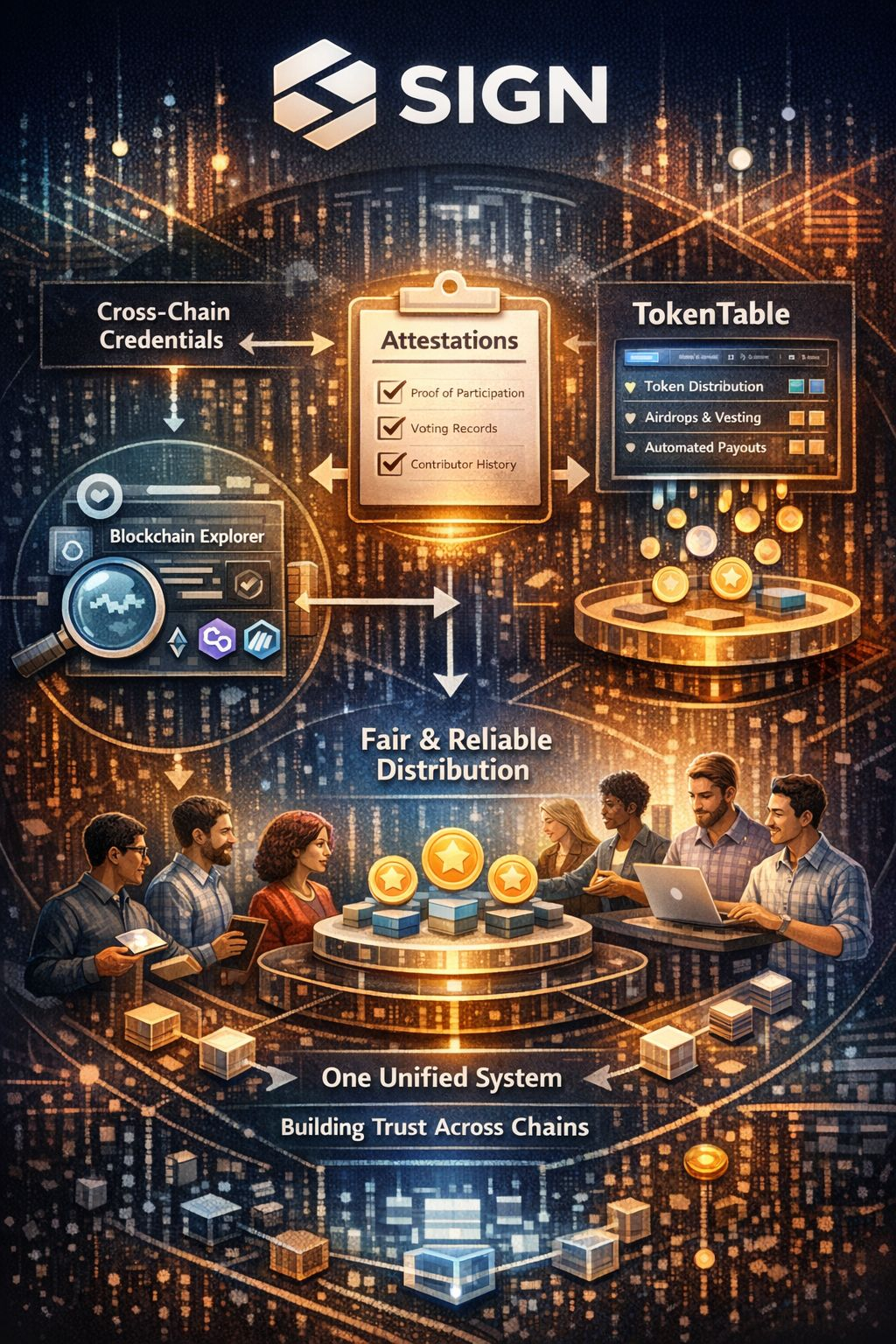
That night changed how I think about this space. Not in some dramatic overnight transformation but in a slow persistent way. Like a small crack in a windshield that keeps spreading until you cannot ignore it anymore. Over the following months I kept noticing the same crack everywhere I looked. A friend who helped launch a small project told me they spent three weeks manually verifying contributor wallets before a token distribution. Three weeks of spreadsheets and back-and-forth messages and second-guessing whether they had the right addresses. Another time I watched a well-intentioned airdrop get absolutely destroyed by sybil farmers because there was no reliable mechanism to separate real community members from someone running two hundred wallets through the same script. Each time the root problem was identical. There was no shared infrastructure for verifying who did what and no clean system for getting tokens to the right people based on that verification.

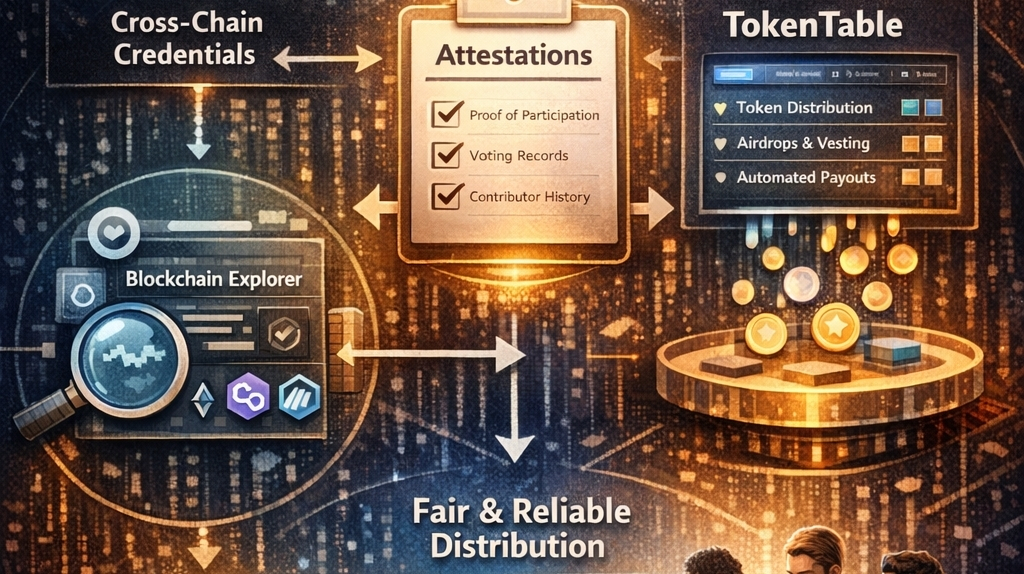
The other half of what they built is called TokenTable and it addresses the operational nightmare of actually distributing tokens. Vesting schedules and airdrops and lockups and all the mechanical work that every project dreads but cannot avoid. I have watched this process go wrong enough times to have a genuine respect for how hard it is to get right. Contracts deployed with errors that nobody catches for months. Distribution criteria that feel random because there was no infrastructure to make them precise. Teams burning out on logistics instead of building the thing they actually care about.
I will admit I carried some skepticism into this for a while. The identity and attestation corner of crypto has produced its share of projects that sounded profound in conference talks but never gained any real usage. I sat through presentations about decentralized identity that felt disconnected from anything a normal person would actually need on a regular Wednesday. What gradually shifted my perspective on SIGN was seeing it show up in practical contexts. Real teams using TokenTable for real vesting schedules. Attestations being used not as grand philosophical statements but as small functional building blocks. Proof of this here. Verification of that there. Each piece modest on its own but genuinely useful in the moment it was needed.
Connecting credential verification with token distribution seemed like a convenience at first. Two tools packaged together. But the longer I thought about it the more I understood they are fundamentally linked. You cannot distribute value accurately if you cannot verify claims accurately. A fair airdrop requires knowing who actually participated. A proper vesting schedule requires knowing who actually contributed. The verification layer and the distribution layer are not separate problems. They are two sides of the same problem and solving them in isolation is why everything keeps feeling duct-taped together.
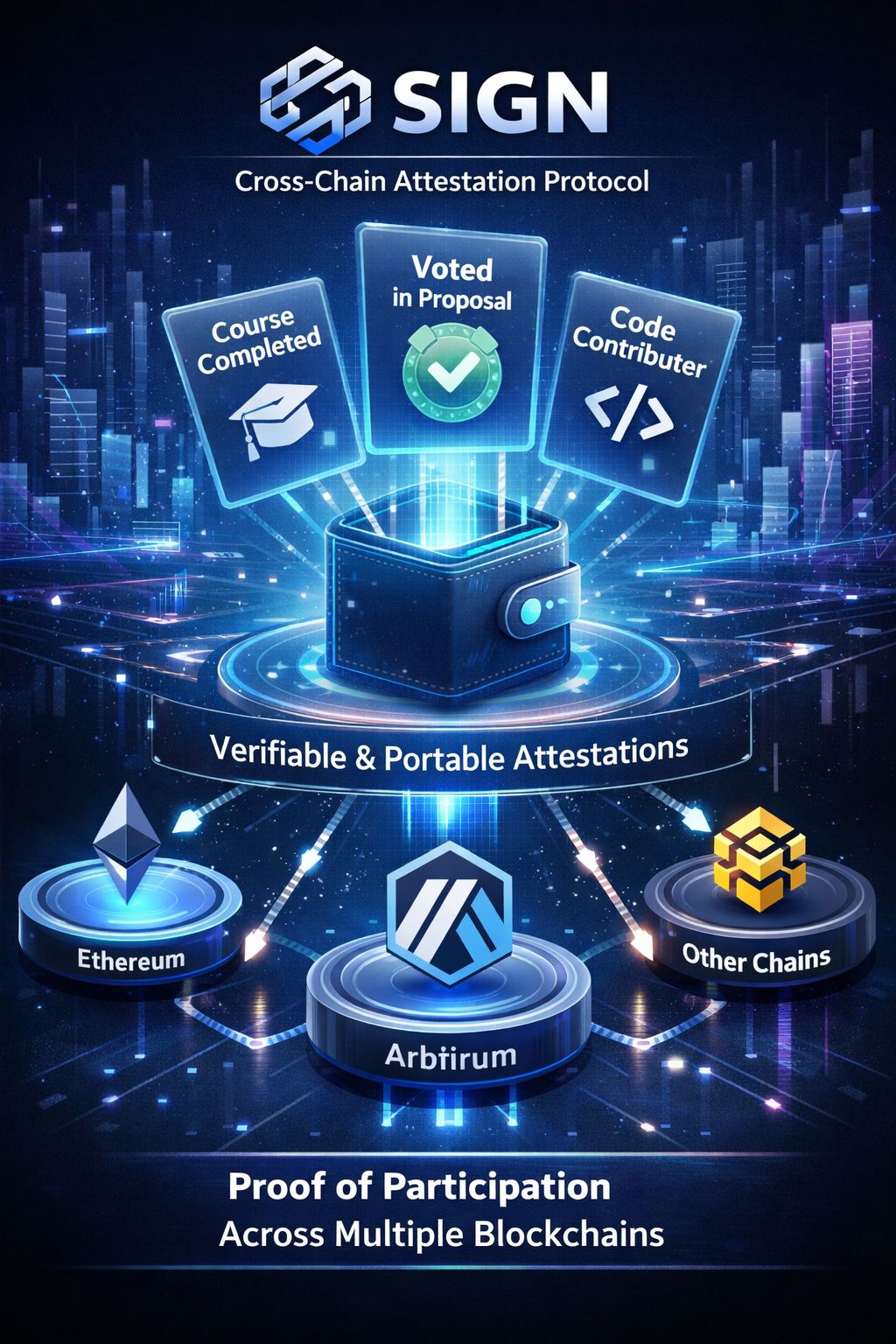
The cross-chain piece matters more than I initially gave it credit for. Credentials that only live on one chain are limited in a world where people and projects operate across many chains simultaneously. The value of proving something multiplies when that proof travels with you. When your history on one network is legible on another without manual translation. SIGN being chain-agnostic is not a technical detail buried in documentation. It is really the core of why the system works at scale.
For projects the practical benefit is straightforward. Instead of spending weeks on manual verification and risking errors in distribution you have shared infrastructure that handles both sides. For individuals it is more subtle but still meaningful. All the things you do on chain right now live as scattered transaction data that nobody can easily interpret. Attestations turn that scattered data into something coherent. Something you own. Something you can present when it is relevant without begging anyone to manually confirm your history.

I do not know exactly where SIGN ends up in five years. Infrastructure projects have unpredictable lives. They either become the invisible foundation everything runs on or they get absorbed into something larger. But the problem they are solving is one I have personally felt and watched others feel and I do not see it going away. Every cycle we relearn that fair distribution is hard and credential verification is messy and trust in decentralized systems still leans on surprisingly centralized shortcuts. I just hope that the next time someone is sitting at their desk at midnight trying to prove they were part of something that mattered the infrastructure exists to make that proof simple and undeniable. That is not a prediction. It is just a quiet hope from someone who has spent too many late nights fighting a problem that should have been solved a long time ago.
@SignOfficial $SIGN #SignDigitalSovereignInfra