

I want to do something a bit different today. I want to go through each component of what @SignOfficial is building and map it directly to a real specific problem I have observed or experienced in the Middle East context. Not in abstract terms. In concrete human terms.
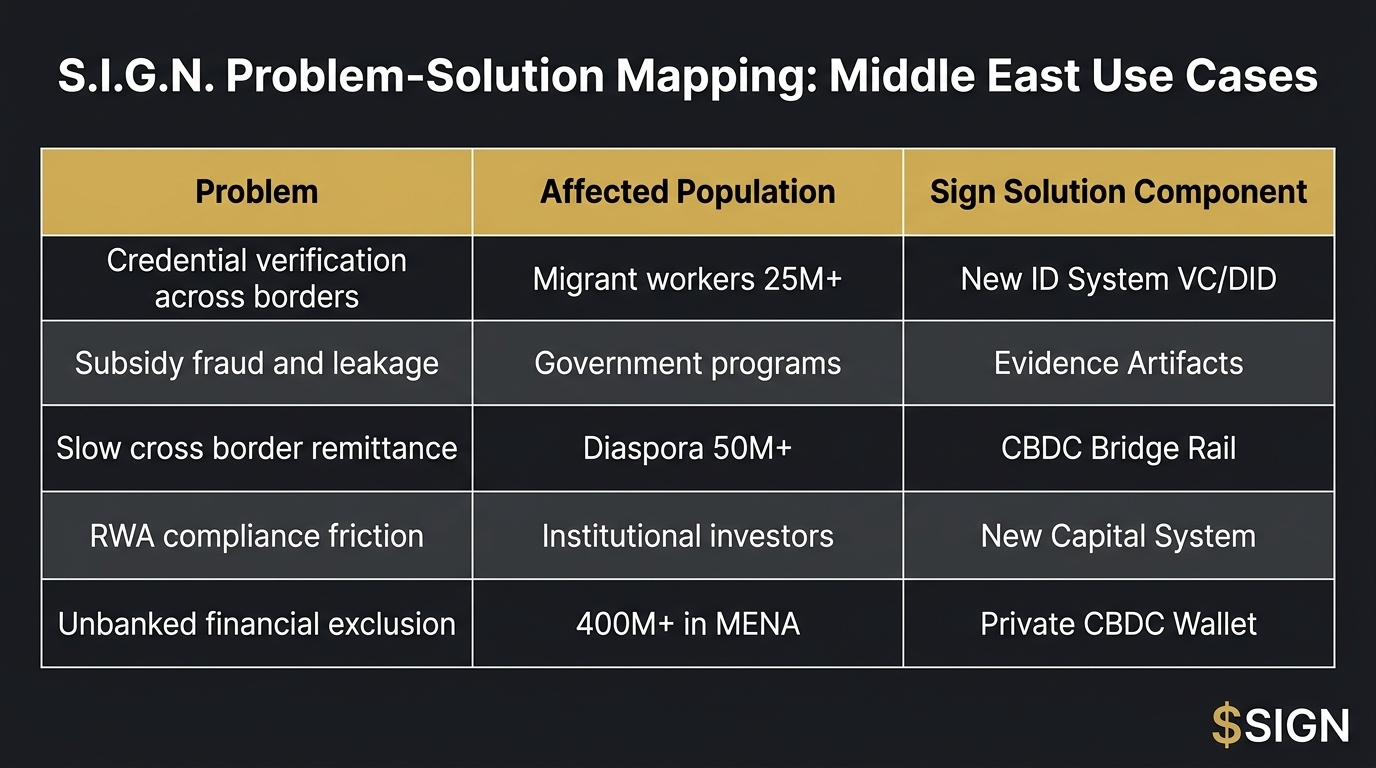
I am doing this because i think the gap between this is interesting infrastructure and i understand why this matters is often bridged by specific examples. So here we go.
Problem 1
A Syrian engineer with 15 years of professional experience arrives in Germany as a refugee. His credential documents are in Arabic partially damaged from his journey and from institutions that European systems cannot easily verify. He ends up doing unskilled work for 3years before his qualifications are finally recognized.
Sign solution:
The New ID System uses W3C Verifiable Credentials and DIDs. Once credentials
are issued digitally by an authorized institution they are globally verifiable without the original paper documents. An international professional credential could survive any physical journey as long as the cryptographic credential exists. The selective disclosure model means you share only what is needed. Your institution and qualification. Not your religion nationality or personal history.
Problem 2:
A government housing subsidy program in a MENA country has 40 percent leakage. Independent auditors estimate that a significant portion of subsidy payments go to ineligible recipients or are diverted through the distribution chain. The government wants to fix this but lacks the audit infrastructure to identify exactly where the leakage occurs.
Sign solution:
The evidence artifact system for G2P disbursement creates an immutable
cryptographic record of every eligibility check every approval and every payment. Ghost recipients cannot exist because each recipient requires a verifiable credential from an authorized issuer. Every step in the chain is logged with the signing authority, the ruleset version applied and the settlement reference. Forensic audit becomes much more tractable.
Problem 3:
A Gulf real estate developer wants to sell units to international buyers but the
compliance process for each nationality is different and manual. A large building with 500 units might involve buyers from 30 countries each requiring different documentation. The compliance team is overwhelmed and transaction timelines are measured in months.
Sign solution: The New Capital System combined with Sign Protocol attestations automates the compliance verification layer. Each buyer brings their verified credentials and AML attestation from their home institution. The transaction contract checks these attestations automatically. Compliance evidence is already structured and verifiable rather than manually assembled.
Problem 4:
An unbanked woman in rural Morocco receives irregular support payments from her son working in Europe. The fees eat 5 to 8 percent of every transfer. The transfers take 3 to 5 days. When amounts are large compliance holds freeze the transfer for additional verification sometimes for weeks.
Sign solution:
A CBDC rail with cross border bridge capability eliminates the correspondent
banking chain. Her son sends from a stablecoin on a public rail. The bridge converts with an AML check that runs in seconds using her verified credential. She receives CBDC in her sovereign wallet. Privacy preserved... Fees near zero... Time measured in minutes.
Problem 5: A large Islamic financial institution wants to demonstrate Sharia compliance for its investment products to international institutional investors. Currently this requires extensive documentation... third party certification reports and manual verification processes that are expensive and slow.
Sign solution:
Sharia compliance attestations issued by authorized Sharia board members
through Sign Protocol create a verifiable cryptographic record of compliance certification. Each product distribution logs a compliance evidence artifact. Investors can verify compliance cryptographically without needing to trust a third party report.
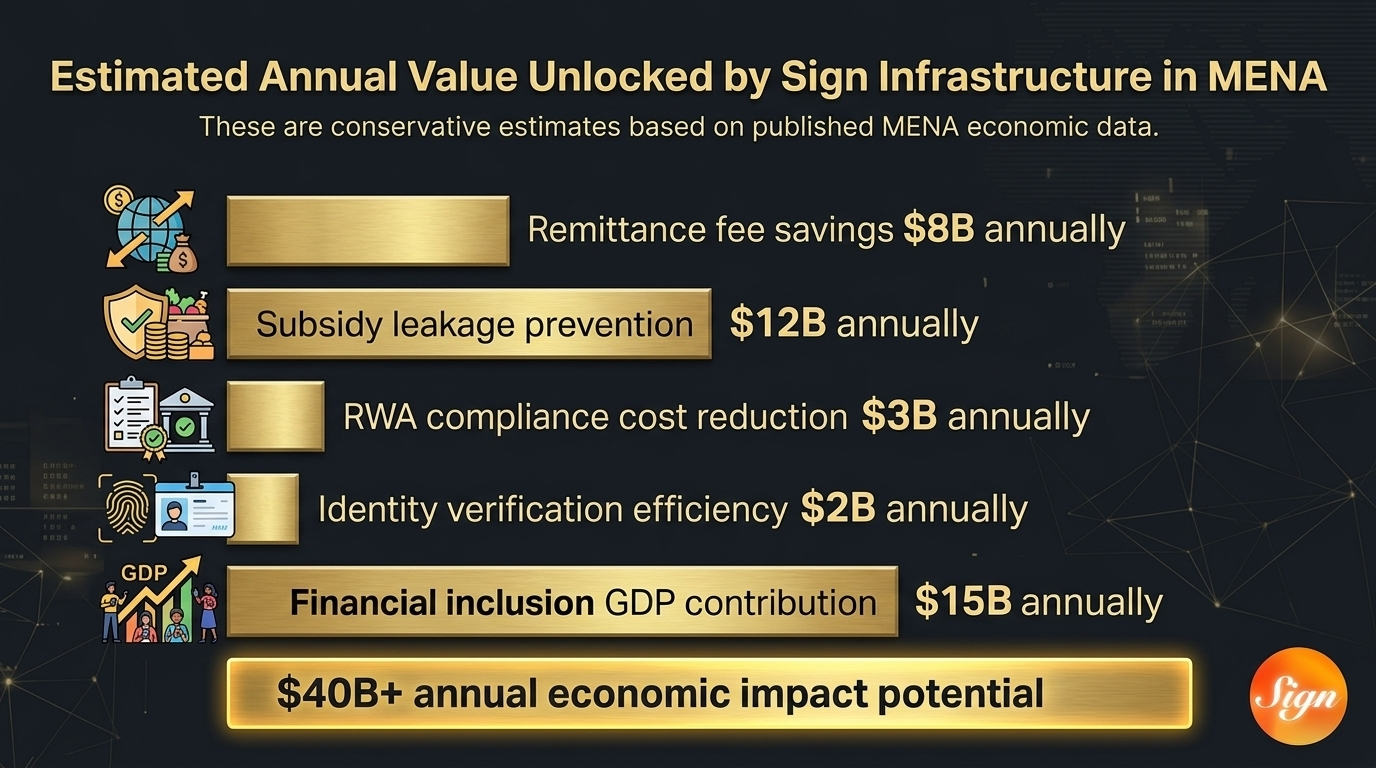
I could keep going. Every page i read in the S.I.G.N. documentation maps to a real problem i recognize from this region. That is genuinely unusual. Most infrastructure projects solve problems that are technically interesting but practically distant from the real friction points people experience.
$SIGN feels different to me because the problems it is solving are viscerally real and the technical approach is architecturally sound. That combination is rare. And I think it is why this project deserves serious attention from anyone who cares about the intersection of blockchain technology and human impact.
@SignOfficial $SIGN
