

I’ve been watching the dev side around Sign Protocol for a while now.
Hackathons, builders, people actually trying to ship something.
I like that.
Because most of this space talks more than it builds.
What caught my attention wasn’t the announcements.
It was the output.
Examples like Bhutan’s NDI hackathon pushing out real apps tied to national identity. Not just demos. Some targeting government flows, others leaning into private sector use.
That changes the tone.
Feels less like theory.
More like pressure.
But I don’t romanticize hackathons.
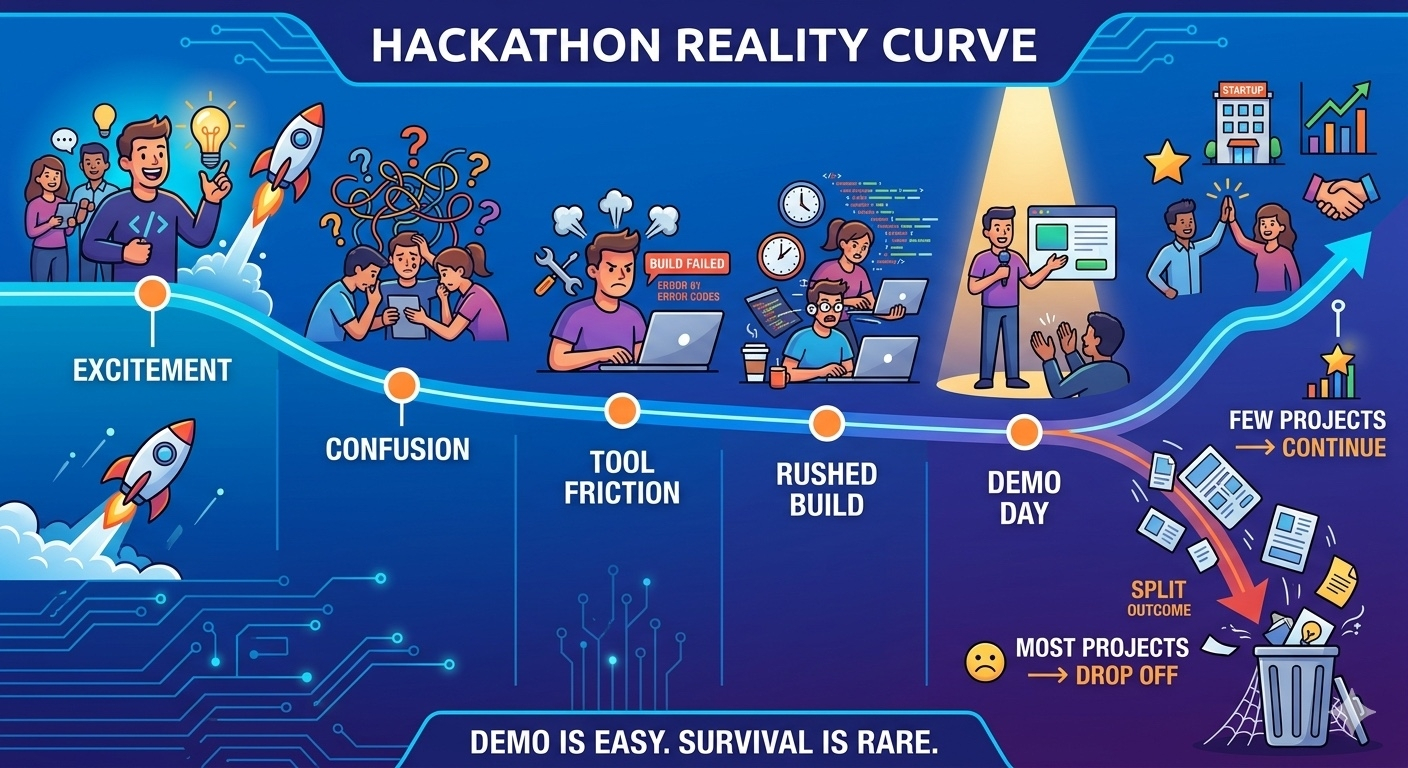
Most of them are messy.
You show up, get tools, docs, maybe a Discord… and then it’s chaos.
Things break.
APIs fail.
You spend hours just figuring out what connects to what.
Deadlines hit. Projects get rushed.
Most of it looks good for demo day… and disappears after.
What feels different here is structure.
There’s actual direction.
Docs that are usable.
Access that doesn’t block you every step.
Some mentorship that doesn’t vanish instantly.
That matters more than people admit.
Without it, hackathons become design theater.
With it, at least something has a chance to survive.
Still… most won’t.
And that’s fine.
Because the real value isn’t the final demo.
It’s what you learn under pressure.
You see what works.
What breaks immediately.
What looks good in theory but fails in practice.
That’s real signal.
What I’m watching is simple.
Who keeps building after.
Because that’s where everything changes.
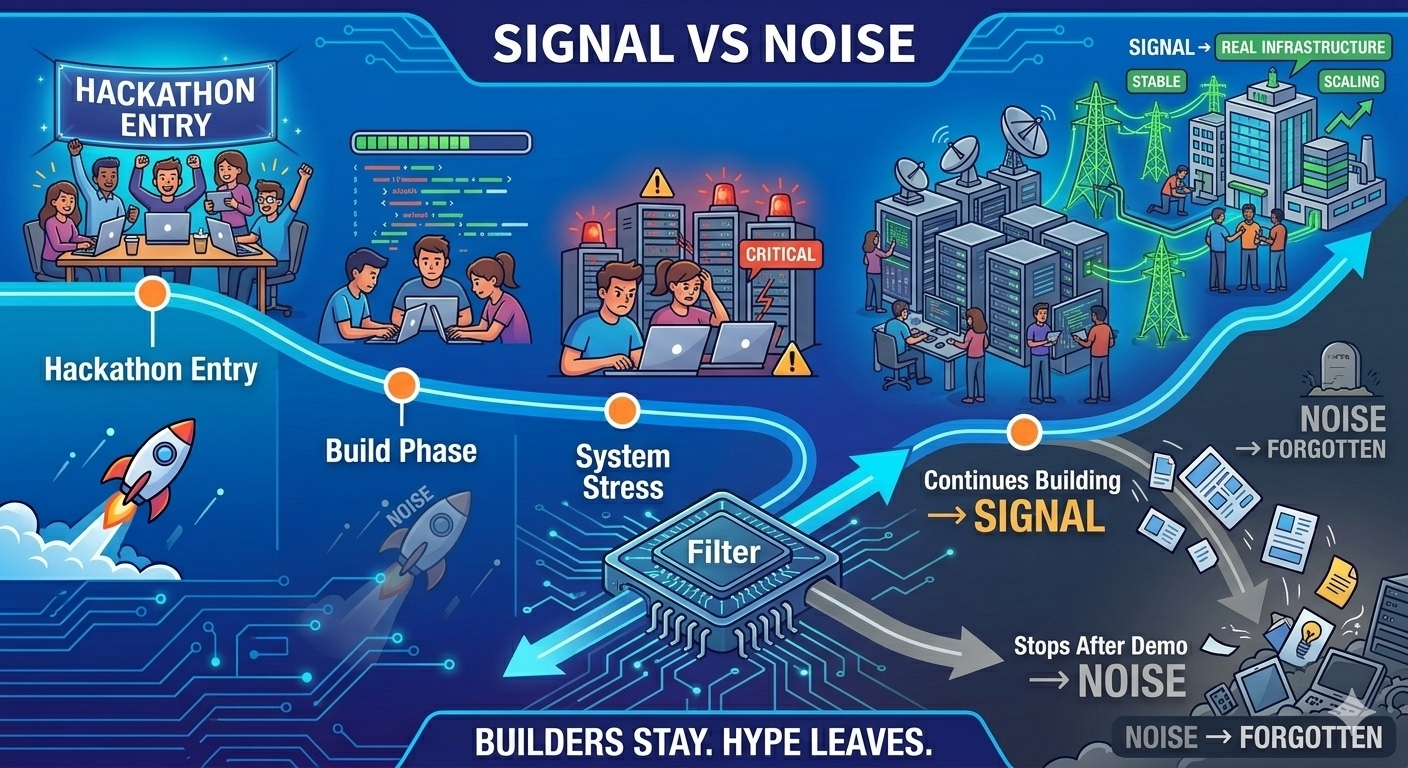
That’s the part most people ignore.
Not who wins.
Who continues.
Because shipping once is easy.
Continuing when nobody is watching… that’s different.
I’m not saying this is perfect.
There’s still chaos. Still unfinished work. Still teams that disappear.
But it feels functional.
And functional is rare.
So yeah, I’m watching.
Not for announcements.
For what survives after them.
That usually tells you everything.
$SIGN @SignOfficial #SignDigitalSovereignInfra