

I still remember the moment I started questioning something we rarely talk about—how can our most sensitive health data be both useful and truly private at the same time?🤗
It happened during a late-night conversation with a friend of mine who works at a small diagnostic lab. He wasn’t stressed about technology or lack of tools—he was frustrated with trust. “We have all the data we need to help patients better,” he told me, “but we can’t always use it freely, and sometimes we share more than we should just to make systems work.” That contradiction stayed with me. Because healthcare, more than any other field, sits at the intersection of urgency and confidentiality. Doctors need accurate, complete data instantly. But patients need assurance that their most personal information isn’t floating around systems they don’t understand.
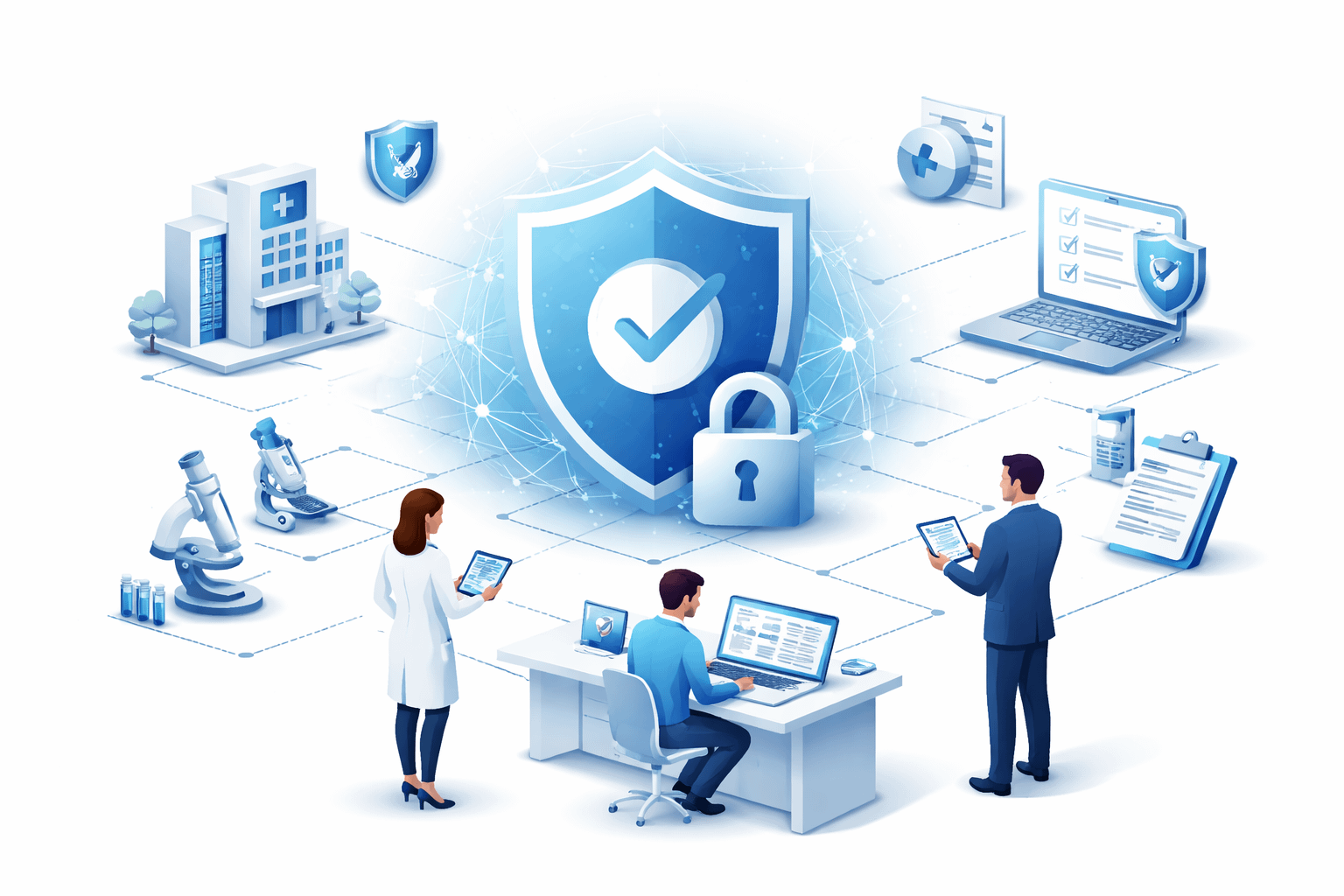
As I kept noticing patterns, I realized the problem wasn’t just about data—it was about control. Hospitals store records. Labs generate reports. Insurance companies verify claims. Each step requires sharing pieces of patient information across multiple systems, often duplicating it, exposing it, or relying on manual checks. I’ve seen situations where a simple verification—like confirming a test result or eligibility—turns into a chain of emails, PDFs, and human approvals. Not because people want it that way, but because there’s no infrastructure that allows data to be proven without being revealed. That’s where something like SIGN begins to feel less like a tool and more like a missing layer.
I imagine a different scenario now. Instead of sending full medical records, what if a system could simply confirm: “Yes, this patient meets the required condition,” or “This report is authentic and verified,” without exposing the actual details? With SIGN, that shift becomes possible. It introduces the idea that data doesn’t need to travel—only proof does. I find that powerful because it changes the nature of interaction. Doctors don’t need to question the authenticity of a report. Insurance providers don’t need to request excessive documentation. Even patients don’t need to repeatedly disclose sensitive information. The system itself carries verifiable truth, quietly working in the background.
$SIGN is currently trading around $0.045–$0.05, with a market cap of roughly $75M–$82M, ranking between #250–#320. It shows high trading activity with daily volume ranging from $30M to $200M, and has a circulating supply of about 1.64 billion tokens, indicating it’s still an emerging but actively traded mid-cap project.@SignOfficial #SignDigitalSovereignInfra $SIGN
What fascinates me even more is how this could reshape patient experience. I’ve personally seen people hesitate before sharing medical history, especially when it involves something deeply personal. There’s always that subtle fear—who else might see this? Where will this data end up? With SIGN-like infrastructure, that fear doesn’t need to exist in the same way. Imagine walking into a hospital where your eligibility, prescriptions, and prior diagnoses are already verified—not visible, just confirmed. You don’t explain everything again. You don’t hand over documents. You simply receive care. That kind of experience feels less like interacting with a system and more like being understood instantly.
From the enterprise side, the impact is just as profound. Healthcare institutions are constantly balancing compliance, efficiency, and risk. Too much transparency can violate privacy laws. Too little can slow down operations or create blind spots. I’ve noticed that most systems today try to solve this by adding layers—more permissions, more checks, more bureaucracy. But SIGN flips that approach. Instead of managing access to raw data, it allows systems to operate on verified outcomes. It’s a subtle shift, but a powerful one. Because now compliance isn’t enforced through restriction—it’s built into the architecture itself.
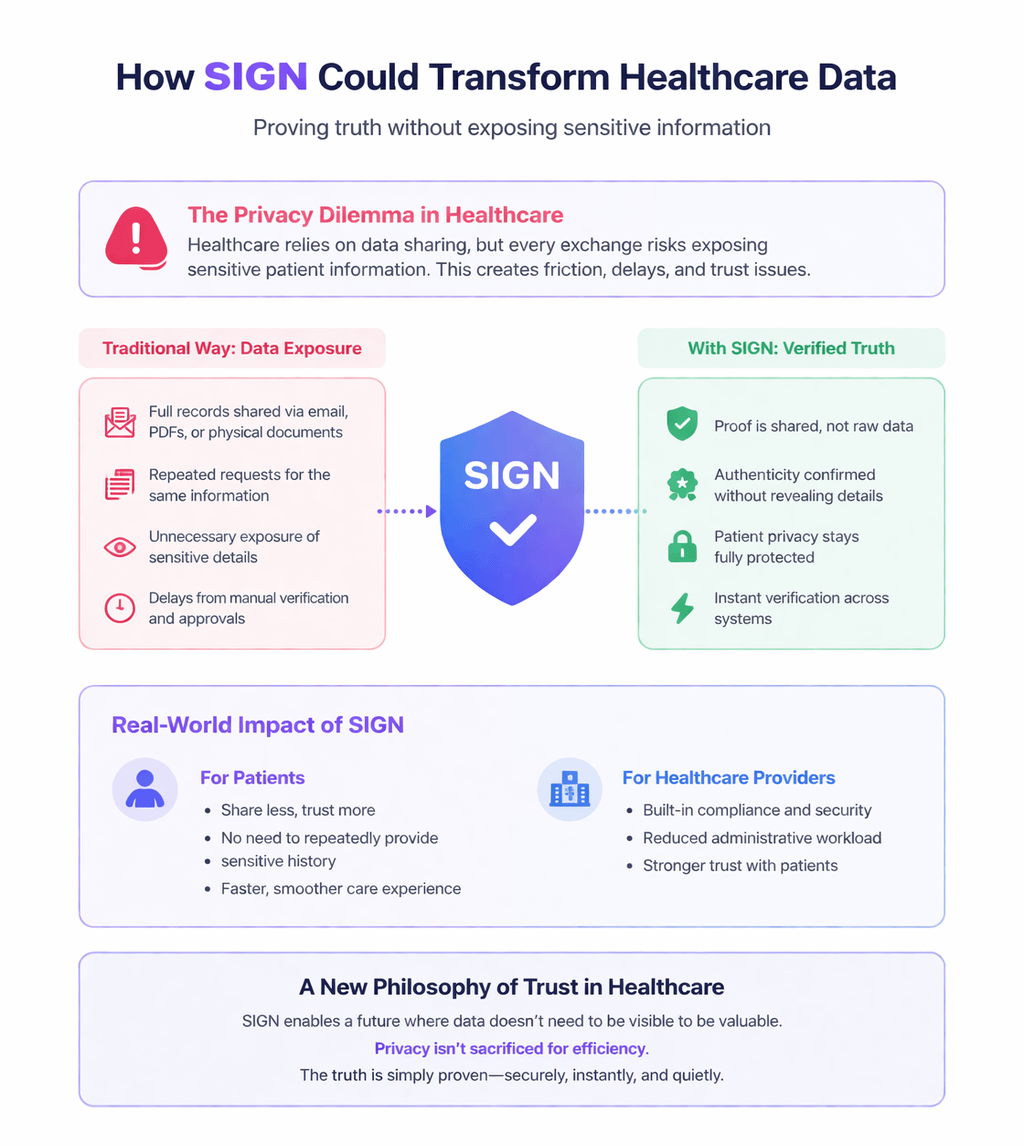
The more I think about it, the more I feel that healthcare doesn’t just need better data systems—it needs a new philosophy around trust. One where privacy isn’t sacrificed for efficiency, and efficiency doesn’t come at the cost of control. SIGN represents that balance. Not by making data louder or more accessible, but by making truth quieter, more precise, and instantly verifiable. And maybe that’s the future we’ve been missing all along—not a system where everything is visible, but one where everything important is simply… proven.@SignOfficial