
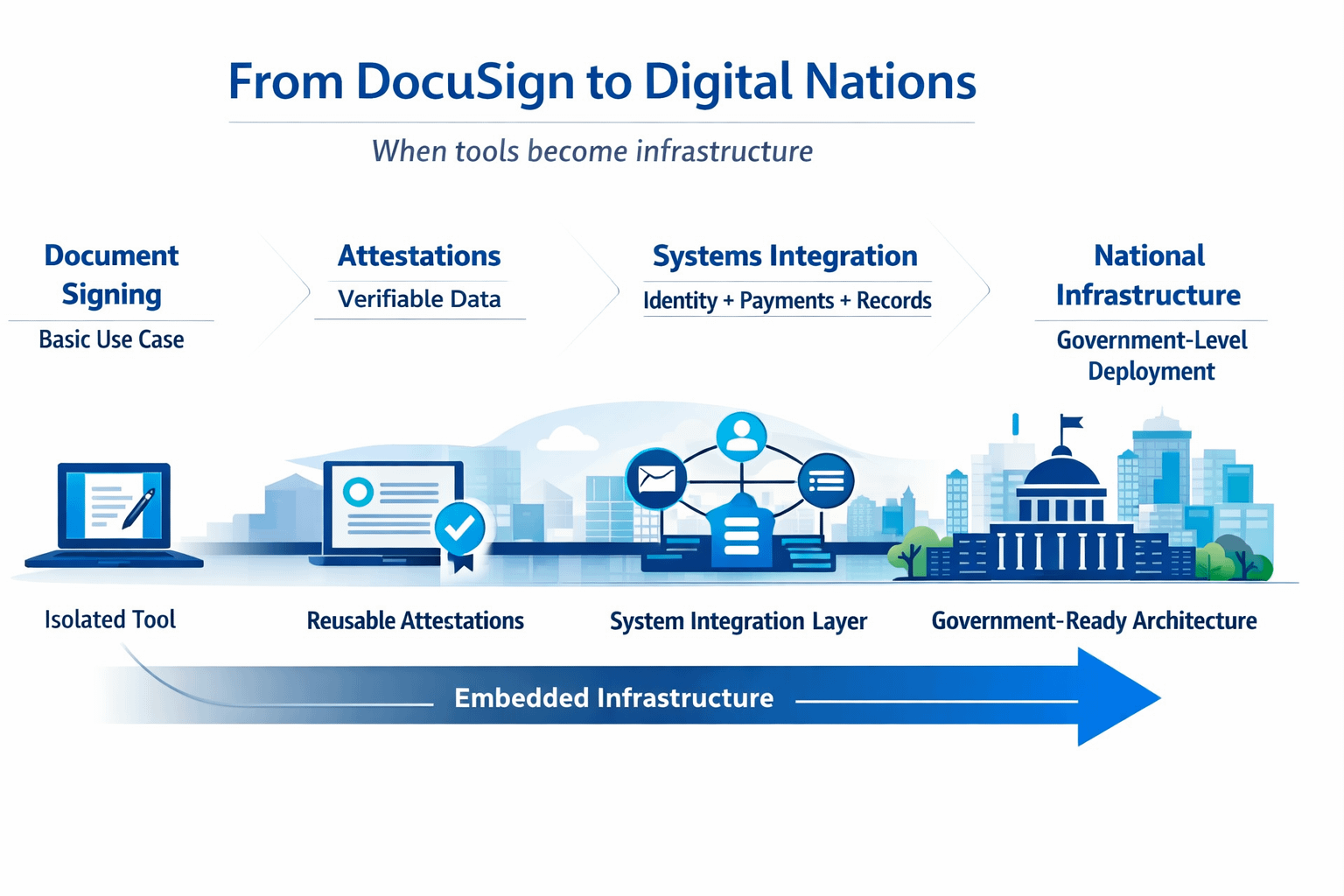
At first glance, SIGN felt like one of those projects you’ve seen a dozen times before.
Sign a document, store it on-chain, call it innovation. Nothing new, nothing exciting. Easy to ignore.
Then I looked a bit deeper.
And that’s when it started to shift.
Because this isn’t really about documents. It’s about infrastructure. The kind that doesn’t show up on a chart, but ends up sitting underneath systems people actually depend on.
The S.I.G.N. direction makes that clearer.
What they’re building isn’t just a tool, it’s more like a framework governments could plug into. A way to run identity, payments, and records in a system that’s both controlled and connected. Private where it needs to be, but still able to interact with public networks.
That bridge is the interesting part.
Right now, governments are stuck between two worlds. Legacy systems that are slow, fragmented, and heavy. And crypto systems that are fast, but hard to control and not always aligned with regulation.
SIGN is trying to sit in the middle.
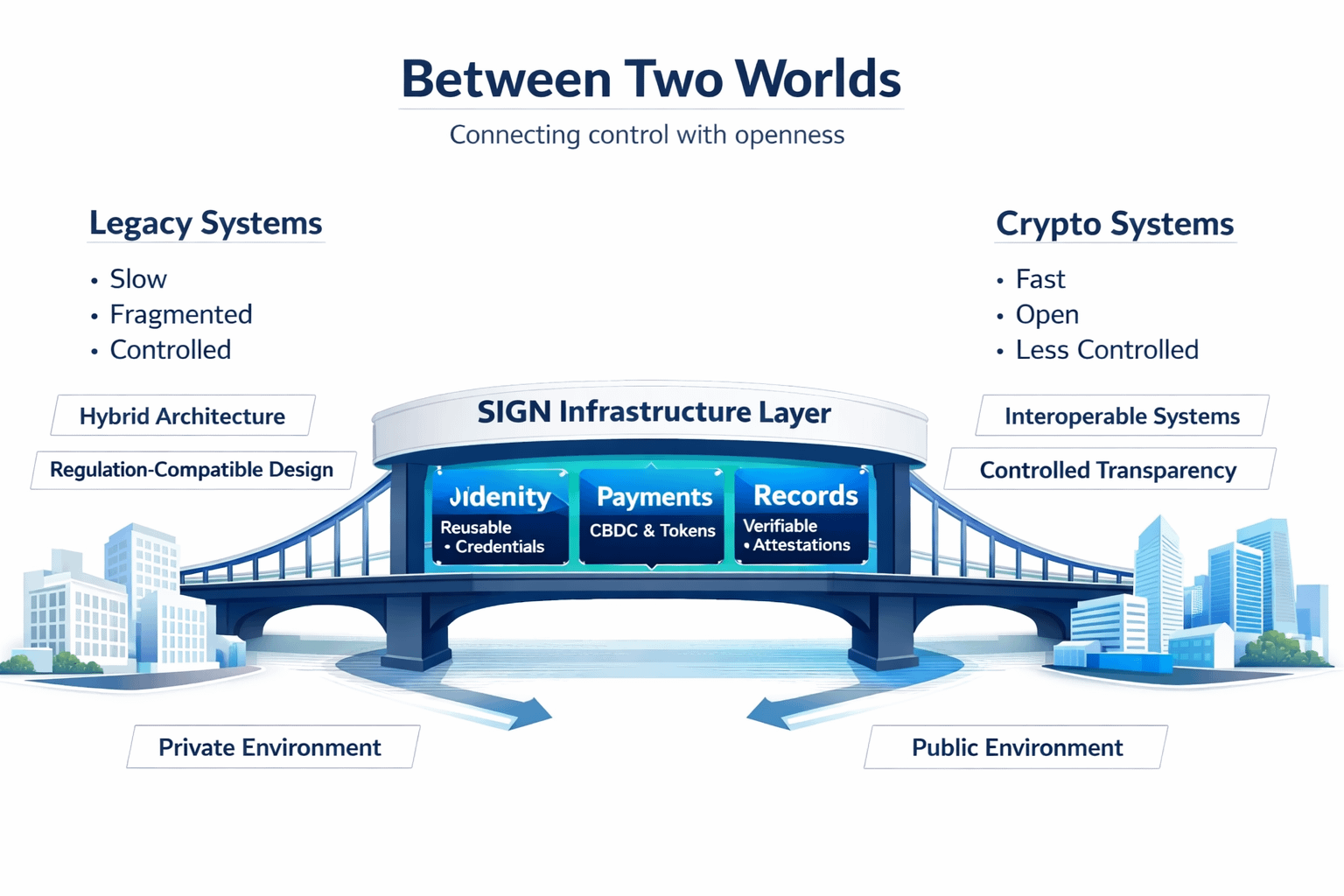
Not replacing everything, just connecting both sides in a way that actually works.
And if you break it down, most of it comes back to two things.
Identity and money.
Digital identity, but not the usual version where you upload documents over and over again. More like a system where credentials can be issued once and reused across services without restarting the process every time.
And then money.
Not just tokens, but national digital currencies. Systems where value can move faster, settle cleaner, and still stay within a framework governments are comfortable with. The idea isn’t to isolate these systems, but to let them connect outward when needed.
That’s where it stops feeling theoretical.
Because there are already signs of this being tested in the real world. Not just whitepapers or demos, but actual attempts to plug this into national systems. That changes how I read the project.
It’s not just competing for attention inside crypto anymore.
It’s trying to fit into environments where failure actually matters.
And that’s a different level of pressure.
Of course, that doesn’t make it easy.
Government adoption is slow. Priorities change. Political shifts can stall or kill projects entirely. And scaling something like this across multiple countries isn’t just a technical problem, it’s operational and regulatory at the same time.
So I’m not assuming this all works out.
But I can see the direction.
While most of the market is still focused on short-term narratives, this feels like it’s aiming at something more structural. Less about trading, more about being part of systems that actually move money, verify identity, and handle real-world processes.
That kind of positioning doesn’t show up quickly.
But if it works, it tends to matter more than most people expect.
And that’s why I keep coming back to it.
Not because it’s exciting.
Because it feels like it’s stepping into a part of the system most projects avoid.
The part where things get complicated, slow, and real.