I was sitting in the back of a dim coffee shop last week scrolling through yet another whitepaper about on-chain governance and I found myself doing that involuntary eye roll we all do when a founder starts talking about replacing the state with a smart contract. We have been sold this dream of digital utopias for a decade and usually it is just a high-octane narrative wrapped in a low-liquidity token with absolutely nothing behind the curtain. But then I stumbled across some updates from Sign and for the first time in a while I actually stopped mid-scoff because the trajectory here does not look like the typical desperate pivot of a dying protocol. Most of these projects are just playing house in a sandbox but these guys have been quietly building a bridge to the actual world since 2021 and their revenue numbers are starting to look like a real business instead of a venture capital charity case.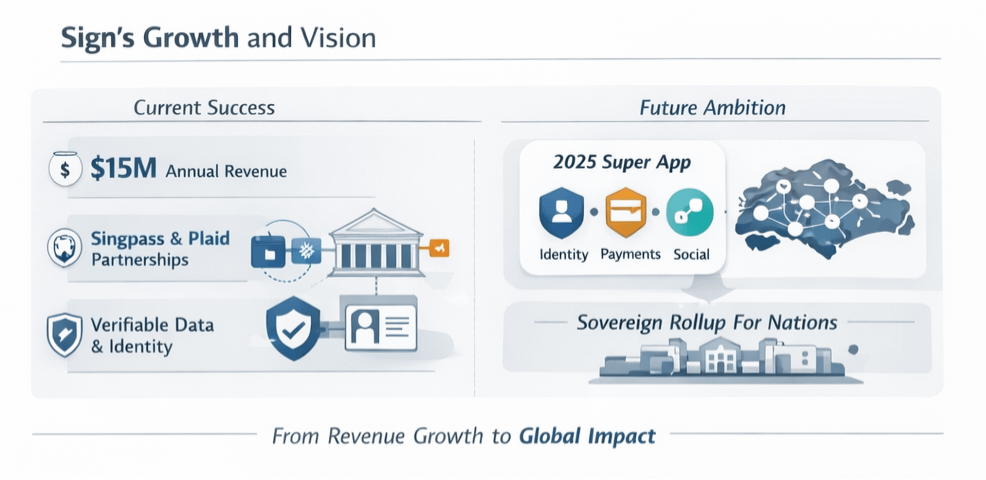
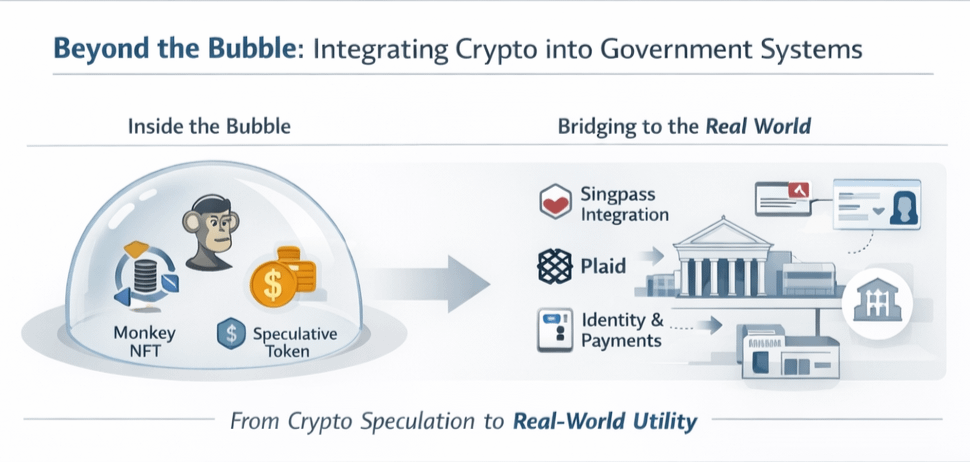
The old way of thinking about blockchain was all about the bubble where we pretended that the only things worth verifying were monkey pictures and decentralized exchange swaps. Sign is effectively taking a sledgehammer to that glass wall by integrating with Singpass and Plaid which is a massive deal because it means they are touching the kind of boring but essential infrastructure that keeps the real economy moving. When a project hits fifteen million in revenue by matching its own capital raise it tells me that someone out there is actually paying for the utility rather than just speculating on the roadmap. While the rest of the industry is busy arguing over gas fees on the fourteenth layer two solution this team is out there proving that verifiable financial data and identity are the only things that actually matter when you leave the crypto discord.
Of course I have to be the skeptic here because the grand vision for a 2025 super app feels like a massive gamble given that even the biggest tech giants have tripped over their own shoelaces trying to build an all in one platform. Identity and payments and social all tied together through attestations sounds great in a pitch deck but the reality of user acquisition is a bone deep grind that breaks most teams. However the move toward a sovereign rollup is where my cynicism starts to turn into genuine curiosity because they aren't just building another app but are essentially offering a plug and play blockchain stack for actual countries. Instead of a fragmented mess of paper records and siloed databases they are pitching a shared verification layer that could theoretically allow a government to deploy identity and payment systems without starting from scratch.
The friction is going to be immense because moving from technical theory to national infrastructure is not just a coding challenge but a political nightmare. You have to deal with cross-chain finality issues and the messy reality of different regulatory jurisdictions that do not play well together plus the looming threat of vendor lock-in if a state becomes too dependent on a single provider. It is an incredibly ambitious play that could easily collapse under its own weight if the execution misses by even a few inches. But Sign is betting that the world cares more about the proof than the process and if they can make a single attestation reusable across a dozen different systems they will have solved a problem that has haunted digital infrastructure for thirty years. It is the difference between a local library filing system and a global shipping container terminal where the value is not in the cargo itself but in the standardized way we verify and move it across the world.