

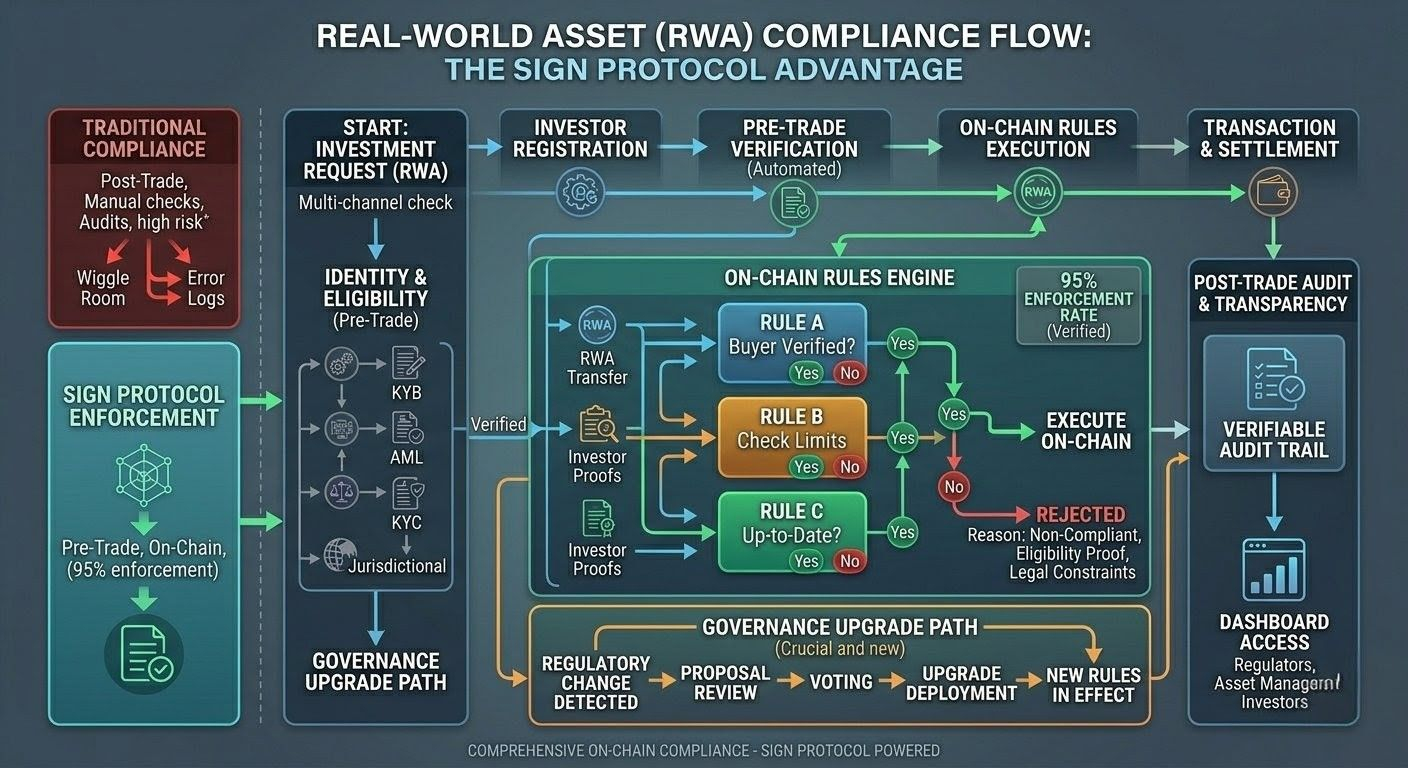
 The more I chew on @SignOfficial , the less it feels like some sleek “trust layer” add-on. It starts feeling more like a quiet rules engine hiding behind a compliance mask. And once that lands, the whole way I look at it shifts.
You know how most compliance still plays out the same tired way? A transaction zips through, and only then does the panic set in: Was this even allowed? Who signed off? Did the buyer actually qualify? Suddenly it’s emails flying, legal memos piling up, those awkward “we’re looking into it” threads, and eventually someone realizes the rule we all thought was crystal clear got read three different ways by three different teams. I’ve always thought that whole dance felt completely backward.
Sign just… flips the script. Instead of scrambling afterward, it weaves the rules right into the transaction itself. The protocol isn’t sitting around waiting for someone to remember the policy manual. It already knows: Is this buyer eligible? Can the asset even go there? Does the cooldown apply? Does the jurisdiction check out? Does the proof stack actually pass? Compliance stops being this separate after-party ritual and just becomes part of how the machine works. The transfer either sails through clean or it simply doesn’t happen. No drama.
That shift feels huge—especially once you start thinking about real-world assets. The high-value, heavily regulated kind. The stuff where “we’ll figure out compliance later” isn’t a plan; it’s basically admitting the system isn’t done yet.
Hardcode a cooldown and it actually sticks. Bake in country restrictions and they kick in right then and there. Link buyer eligibility straight into the same proof layer as the transfer and suddenly the whole enforcement thing stops feeling so breakable.
The old way always left way too much wiggle room for things to drift—one system green-lights it, another team double-checks weeks later, a lawyer chimes in with a different take, and before you know it the same rule means something slightly different depending on who you ask. Sign tries to close that gap. Identity stuff, eligibility checks, transaction limits—they all sit closer to the same logic. Less theater, less cleanup afterward.
But I’ll be honest, that’s also where I catch myself pausing.
Because hardcoding rules only works as well as the rules you’re coding. If the governance is sloppy, bad calls get enforced at lightning speed. If regs change faster than the upgrades can keep up, the whole thing can quietly fall out of step with the real world it’s trying to serve.
The risk doesn’t disappear; it just moves house. From forgotten checklists and manual slip-ups to configuration mistakes, governance blind spots, and update lag. Even so, I’d way rather be arguing about how we actually encode the rules than keep pretending regulation can survive on good intentions, policy PDFs, and someone praying the spreadsheet catches everything after the money’s already moved.
That tension is real, but it feels like the conversation we should be having.
When I step back, Sign isn’t just helping systems prove things. It’s quietly turning legal conditions into living transaction logic. The protocol isn’t politely watching from the sidelines anymore; it’s right there in the flow, actively enforcing. For serious regulated assets, that might be exactly where the infrastructure needs to sit. Compliance that only lives in documents is easy to sidestep. Compliance that lives inside the transaction path? A lot harder to ignore.
So yeah, when I look at Sign this way, the flashy identity-and-proof story feels like the headline everyone’s reading. But the deeper part—the one that actually sticks with me—is quieter: a protocol that makes legal restrictions feel like native system rules.
It’s not the sexiest tale in crypto.
But it might be one of the most useful.
If it actually works, we won’t just get smoother transfers. We’ll get something structured, automatic, and genuinely enforceable for moving regulated digital assets—without constantly crossing our fingers and hoping the manual oversight catches everything after the value’s already gone.
And honestly? That feels a whole lot closer to real infrastructure than most of what usually gets the spotlight around here.
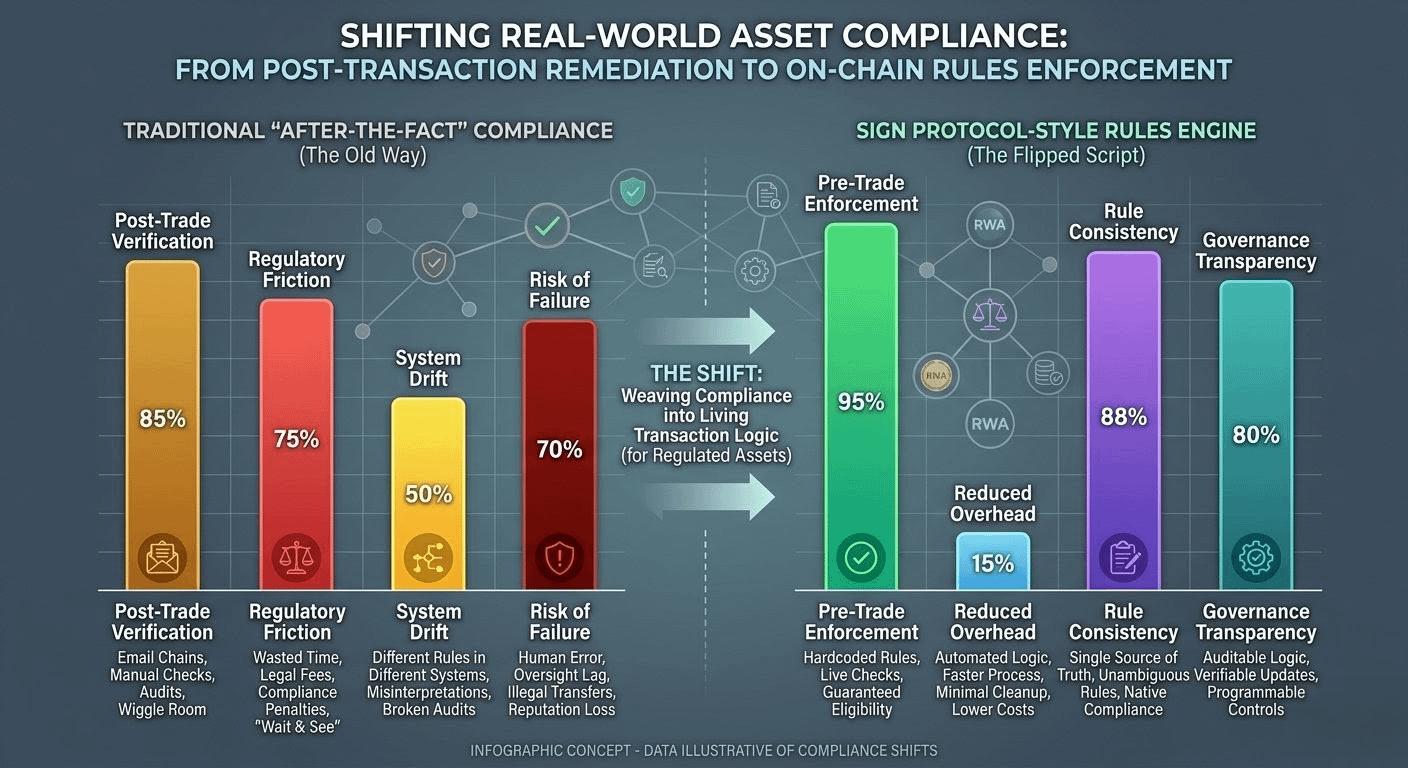
@SignOfficial #SignDigitalSovereignInfra
