

I’ll be honest, I wasn’t searching for anything deep when I first came across Sign Protocol. It just popped up while I was scrolling, one of those moments where you pause for a second without really knowing why. At first glance, it looked like another blockchain project trying to sound important. But the more I read, the more I felt like this wasn’t just about technology. It was about something I deal with every day without even noticing… trust.
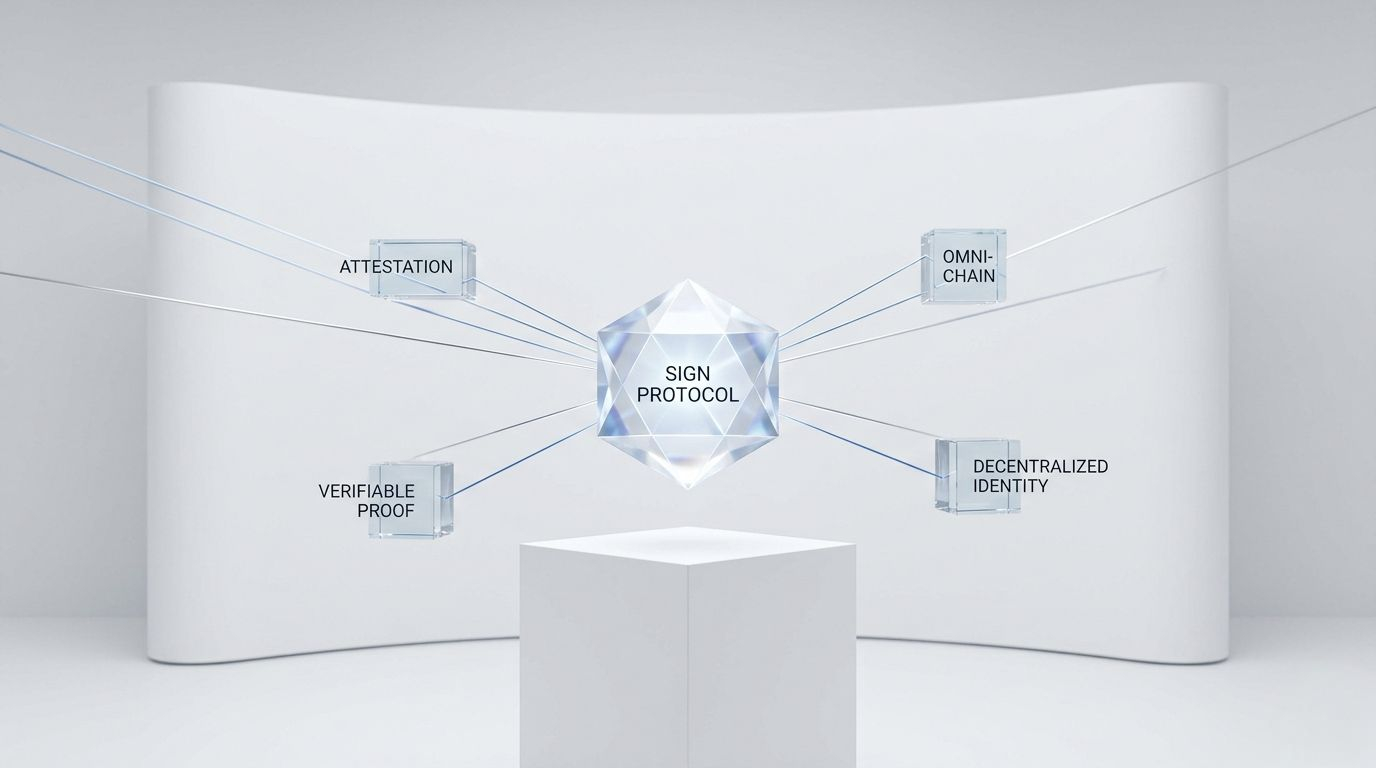
I started thinking about how much of my life online depends on assumptions. When I send money, sign up for a service, or even download a document, I’m trusting that everything behind the scenes is working honestly. I trust that companies won’t change my data. I trust that what I see is real. But if I’m being real with myself, that trust isn’t as solid as I pretend it is. It’s convenient, not reliable.
That’s where Sign Protocol started to make sense to me. From what I’ve understood, it’s trying to build something called an omni-chain attestation system. Sounds complicated, I know, but the idea is actually pretty simple when I break it down in my head. It’s about creating proofs for information, proofs that can exist across multiple blockchains, not just one isolated system. So when something is signed or verified, it becomes something you can rely on without needing to trust a middleman.
That part hit me. Because right now, everything online feels like it needs a middle layer. A company, a platform, a server. And we just hope they don’t mess things up.
I kept digging, and I came across how they’re using tools like TokenTable. Now this part felt very real, especially in the crypto space. I’ve seen so many projects distribute tokens in ways that are unclear. There’s always that question in the back of my mind… who actually got what? Was it fair? Was there manipulation? Most of the time, there’s no clear answer.
What Sign Protocol seems to be doing here is turning those unknowns into something visible. Not just visible, but verifiable. That’s a big difference. It’s not about trusting what someone says happened, it’s about being able to prove it.

But then I started thinking beyond crypto. What if this kind of system moves into everyday life? Like when I sign a contract or buy something online. Maybe I wouldn’t even know there’s a blockchain behind it. I’d just feel that what I’m doing is secure and can’t be altered later.
And honestly, that sounds great… but also a bit uncomfortable.
Because if everything becomes permanent and provable, there’s no room for mistakes. Right now, the internet has a certain flexibility. Things can be edited, corrected, sometimes even erased. But in a system built on attestation, once something is recorded, it stays there. Forever.
I’m not sure we fully understand what that means yet.
I also noticed how some governments are starting to explore this kind of technology. That didn’t surprise me, but it made me think deeper. It feels like they’re trying to take control of their own digital systems. Instead of relying on global tech companies, they want something more independent, something they can verify on their own terms.
And in today’s world, where data is everything, that makes sense. Control over information is becoming just as important as control over land or resources.
But even with all this potential, I can’t ignore the challenges. Building something that works across multiple blockchains isn’t easy. It sounds powerful, but the execution is where things usually fall apart. Coordinating different systems, handling large volumes of data, keeping everything fast and efficient… that’s a serious technical hurdle.
And then there’s the market itself. I’ve been around crypto long enough to know how unpredictable it can be. People don’t always invest based on logic. Sometimes it’s hype, sometimes it’s timing, sometimes it’s just luck. A project can be solving a real problem and still get ignored, while something with less substance takes off overnight.
So I keep asking myself where Sign Protocol fits into all this. Is it something that will quietly grow and become part of the foundation of the internet? Or is it another ambitious idea that struggles to gain real adoption?
What I find most interesting is how this whole concept changes the way I think. It shifts the focus from trusting people or companies to trusting proof itself. That’s a big shift. It removes emotion from trust and replaces it with verification.
But for this to actually work on a global level, it has to become invisible. I don’t think most people care about blockchain or attestation layers. They just want things to work. Like when I send an email, I don’t think about the protocols behind it. It just happens. If Sign Protocol can reach that level of simplicity, then maybe it has a real chance.
Right now, though, it still feels like an experiment. A very important one, but still something that’s being tested in real time.
And maybe that’s the right way to look at it. Not as a finished solution, but as a step toward something bigger.

But there’s one thought I can’t shake. If we really move into a world where everything is provable, where nothing can be faked or altered, are we actually ready for that level of truth? Or have we become so used to uncertainty that complete transparency might feel like too much?
I guess that’s the real question I’m left with… is Sign Protocol building the future, or are we still figuring out if we even want that future in the first place?
