
i thought this was simple at first. like really simple. governments choose layer 1 or layer 2 and then they just build on top of it and that is it. i did not question it much. it looked like one of those normal decisions where you compare features and pick the better one.
but when i started reading deeper into how both actually work something did not feel right. it was not fitting into that simple comparison in my head. i kept trying to see which one is better but the more i looked the more it felt like i am asking the wrong question.
i started with layer 2 because honestly it looked stronger. it gives full control. governments can run their own chain. they control block production. they decide how transactions are ordered. they even choose the consensus like poa or pbft or something custom. so at that point i was thinking okay this is real control. this is what sovereignty looks like in a digital system.
but then i noticed something small that changed the whole picture for me. layer 2 is not fully alone. it still connects back
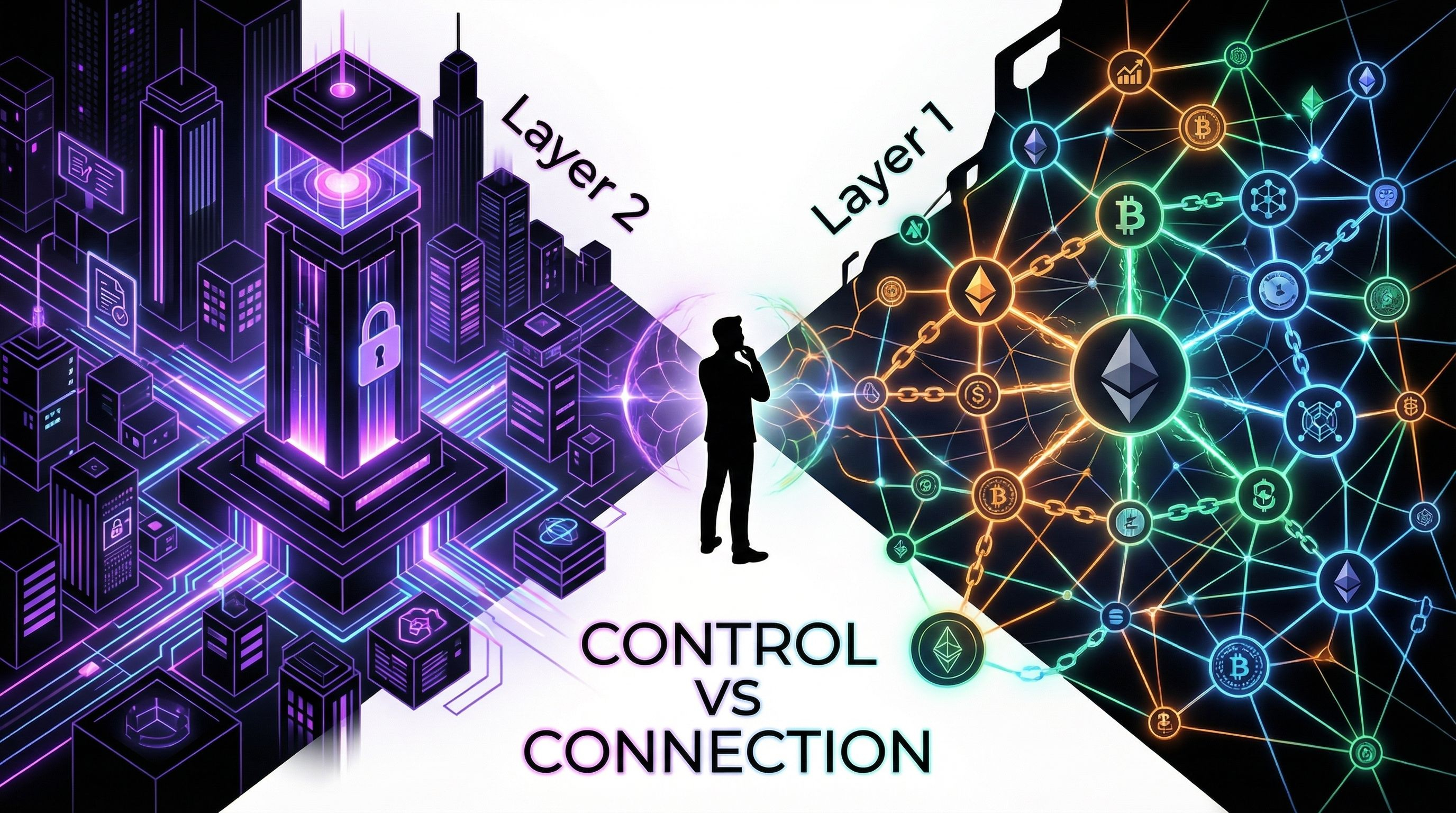
to layer 1. it sends its state there. it depends on it for security. and if something breaks users can exit back to layer 1. so now it did not feel like complete independence anymore. it felt more like controlled independence. like you are running your own system but still standing on another system.
that part confused me a bit because i was not expecting that. i thought independence means fully separate but here it is not fully separate. it is designed to stay connected.
then i moved to layer 1 and i was already thinking this one will be weaker. like less control and more limitations. but again i was wrong in that assumption.
in layer 1 they are not building a new chain. they are using smart contracts. but those contracts are not static. they can be upgraded using proxy patterns. they can control changes using multisig. they can define access rules. so control is still there. just not at the infrastructure level but at the contract level.
and then something else stood out which i did not expect to be this important. layer 1 connects directly to existing defi systems. no bridge needed. no extra layer. it is already part of a live ecosystem. liquidity is there. exchanges are there. tools are already working.
this is where i started to feel stuck between both.
layer 2 gives control over the system.
layer 1 gives access to an existing system.
and both of these things matter.
i kept going back and forth in my head trying to decide which one makes more sense. but then it finally clicked in a very simple way.
they are not solving the same problem.
layer 2 is about running your own environment.
layer 1 is about plugging into a bigger environment.
and once i saw it like that everything became clear. i stopped trying to compare them directly because the comparison itself was wrong.
layer 2 is for when control is the priority. when you want to decide everything from consensus to transaction flow. when you want your own rules even if it means more complexity.
layer 1 is for when connection is the priority. when you want to use what already exists. when you want faster deployment and immediate access to liquidity and tools.
so now it does not feel like one is better than the other. it feels like they are built for different intentions.
i think the mistake i made at the start is the same mistake most people make. we look at the technology first. we compare features. we try to rank them.
but the real decision is not happening at that level.
it is happening at the system level.
what kind of control do you want.
what kind of system do you want to be part of.
once that is clear the rest becomes obvious.
and honestly it is much simpler than i thought.
#signdigitalsovereigninfra $SIGN
@SignOfficial #SignDigitalSovereignInfra