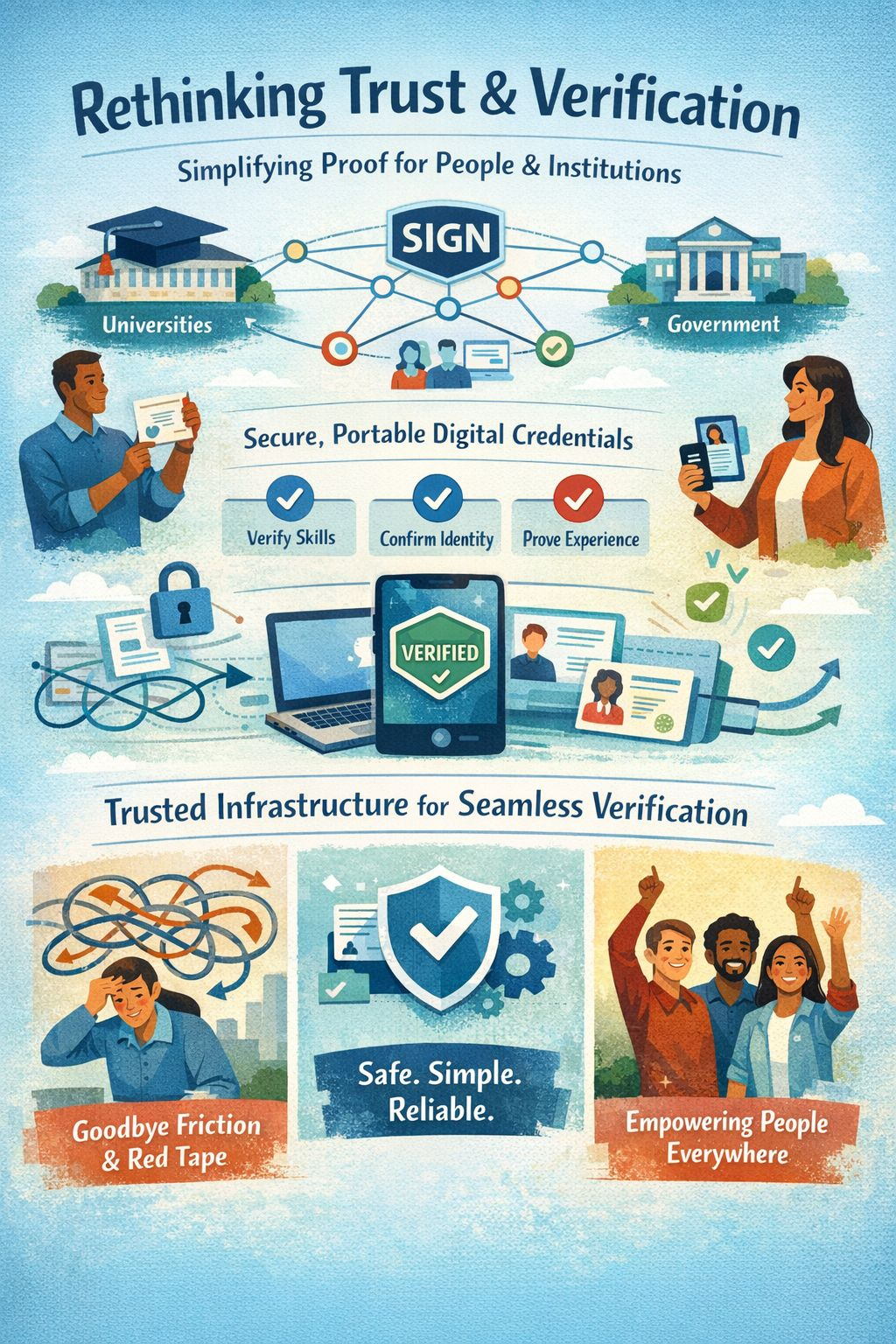
I was sitting in a coffee shop last year when someone I know slightly mentioned they'd been offered a job at a company I'd never heard of. They seemed genuinely interested but there was this visible hesitation in how they talked about it. When I asked why they admitted they couldn't really verify anything about the organization. Not their credentials not their track record not even whether the person who hired them was actually authorized to do so.
It struck me as odd that in 2024 after decades of digital systems this was still a problem.
I've been around long enough to remember when the internet was supposed to solve everything. Identity. Trust. Verification. All of it. We built databases we created authentication systems we layered on security protocols. And yet here we were in a coffee shop and someone couldn't easily verify basic facts about an organization offering them a job.
The deeper I looked into it the more I realized the issue wasn't technology itself. It was fragmentation. Every institution kept their credential records in separate silos. Your diploma lived in your university's system. Your work history was scattered across LinkedIn past employers' internal databases and maybe some official registry somewhere. Professional licenses existed in a different system entirely. Background checks in another system. Social security records in yet another.
So when someone needed to prove something about themselves or their qualifications there was no clean verifiable way to do it that didn't involve creating new documents getting copies mailed waiting for phone calls or paying verification services to hunt through various archives.
This friction is everywhere. I didn't notice it until I started looking for it and then I couldn't stop seeing it. A nurse changing jobs had to get her licensing verified all over again even though those licenses were already officially recorded. A consultant with years of published work had to manually prove their experience because there was no connected system linking their publications to their professional identity. A teacher moving between countries couldn't transfer their credentials because each country's education system operated on entirely different platforms.
This is where I started paying attention to SIGN not because it promised to be revolutionary but because it seemed to actually address something broken without pretending the problem was simpler than it was.
The core idea is straightforward. SIGN creates a shared infrastructure where different institutions can issue store and verify digital credentials in a way that's interoperable and trustworthy. Not a centralized database. That would recreate the same problems. Instead a network where credentials can travel with people across different systems and anyone who needs to verify something can check it without having to contact the original issuer.
Think about what that actually means practically. A college graduate could instantly prove their degree to a potential employer without waiting for a transcript. A professional could maintain a verifiable record of their licenses and certifications that's always current. A company could verify someone's background in hours instead of weeks. Even governments or civic organizations could issue and track credentials without maintaining massive databases that become targets and security nightmares.
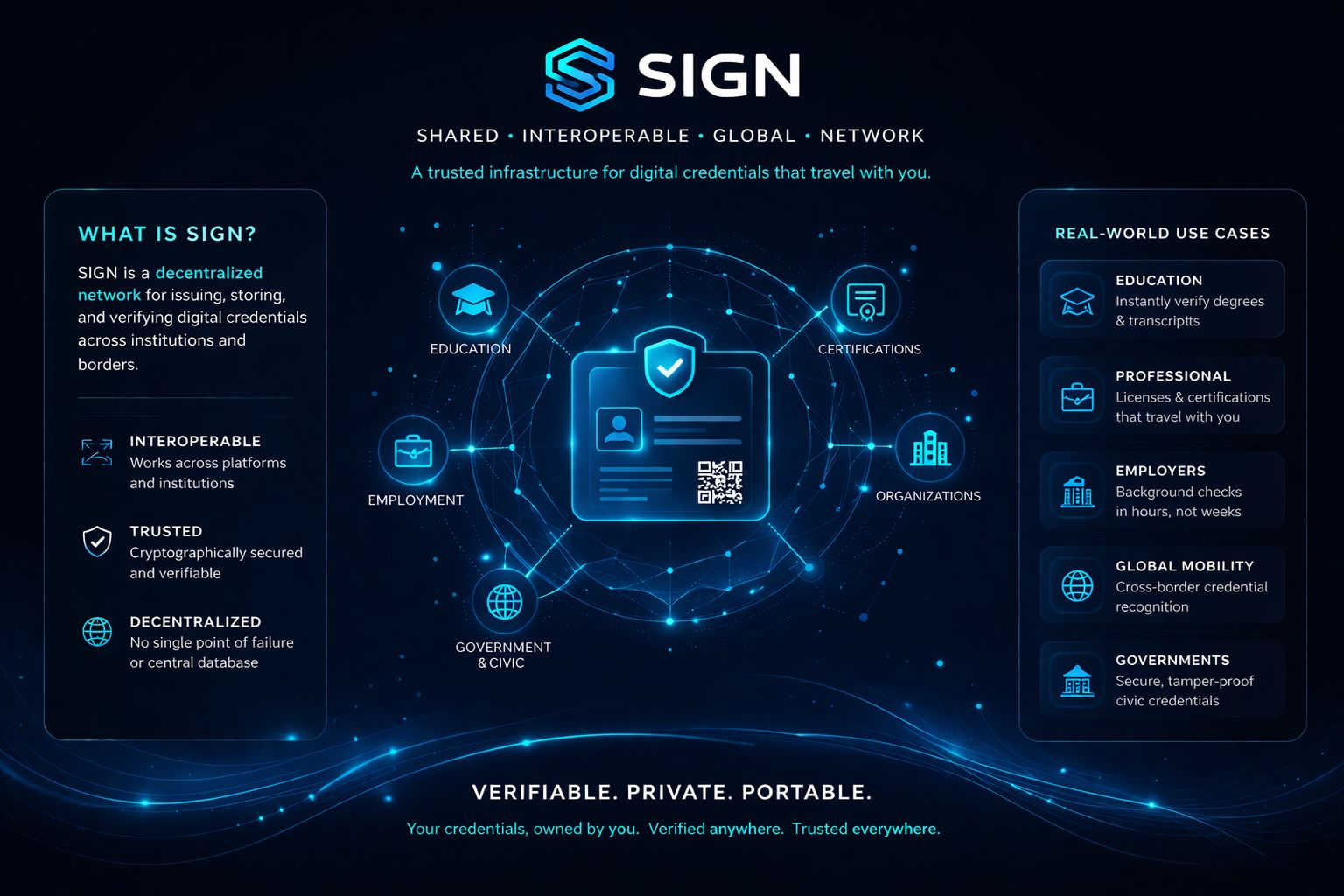
But here's what I appreciate about how SIGN approaches this. It's not framed as a silver bullet. The people working on it seem genuinely aware of the complexity. Building trust at scale is hard. Creating systems that work across different institutions different countries different regulatory frameworks. That's genuinely difficult. They're not glossing over it.
The token side of it which funds the infrastructure is designed with what seems like thoughtful distribution. Rather than a typical startup model where early insiders grab everything there's actual attention to how tokens get distributed to people who contribute to the network's usefulness and reliability. It's not perfect. Nothing is. But it's a deliberate choice to think about fairness in how value gets shared.
What I've noticed is that the people skeptical of SIGN tend to be skeptical for good reasons. They've seen credential systems fail before. They're worried about adoption. If institutions don't actually use it it doesn't matter how good the technology is. They're concerned about regulatory barriers. These aren't concerns born from not understanding the project. They're concerns born from understanding how institutions actually work.
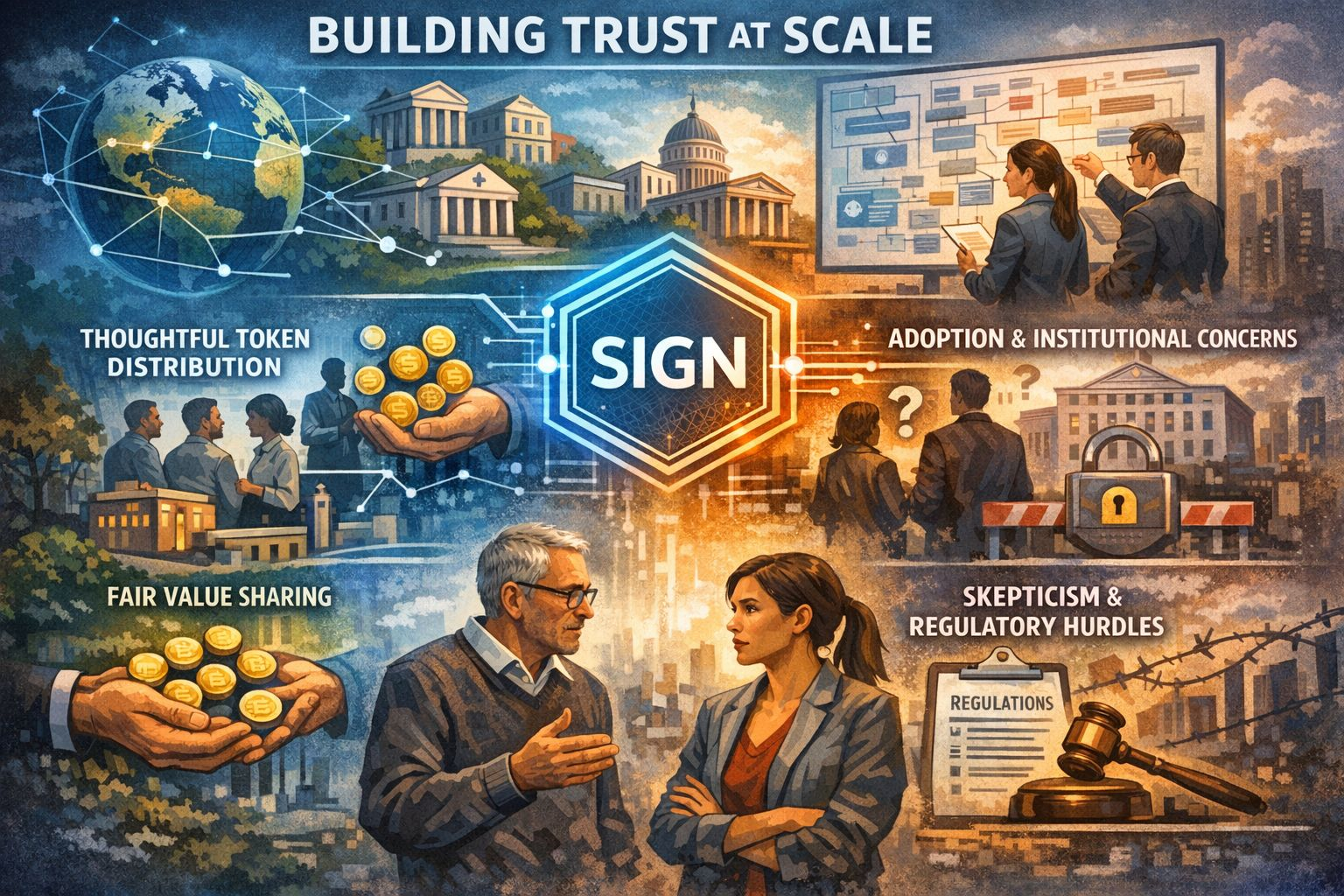
I've spent enough time in different systems to know that good technology doesn't automatically win. Better doesn't mean adopted. The graveyard is full of technically superior solutions that never took off because getting institutions to change their behavior is harder than building the tool in the first place. SIGN's creators seem to understand this too which is why they're not relying on hype. They're relying on usefulness.
The more I've looked into this the more I think the real question isn't whether SIGN will change everything. The question is whether enough institutions will eventually find it useful enough to adopt it and whether that adoption will actually solve the verification problems it's designed for. That's a much quieter more uncertain question than most projects want to sit with.
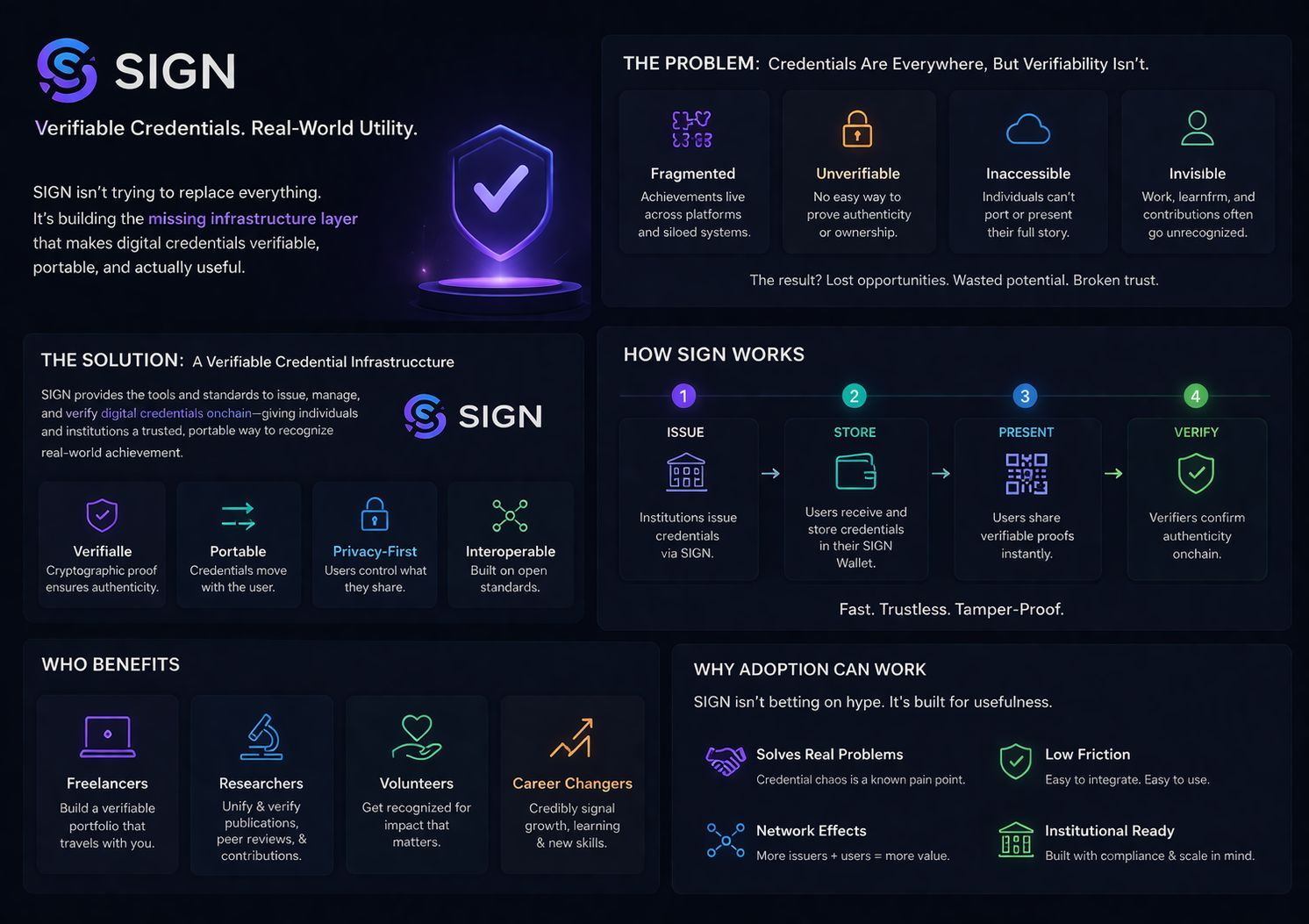
I've also noticed that the credential problem I keep running into shows up everywhere once you start looking for it. A freelancer can't easily build a verifiable portfolio. A researcher's work is scattered across platforms. A volunteer's contributions exist nowhere officially. A person changing careers has no way to credibly signal their growth and learning because there's no system connecting their various experiences.
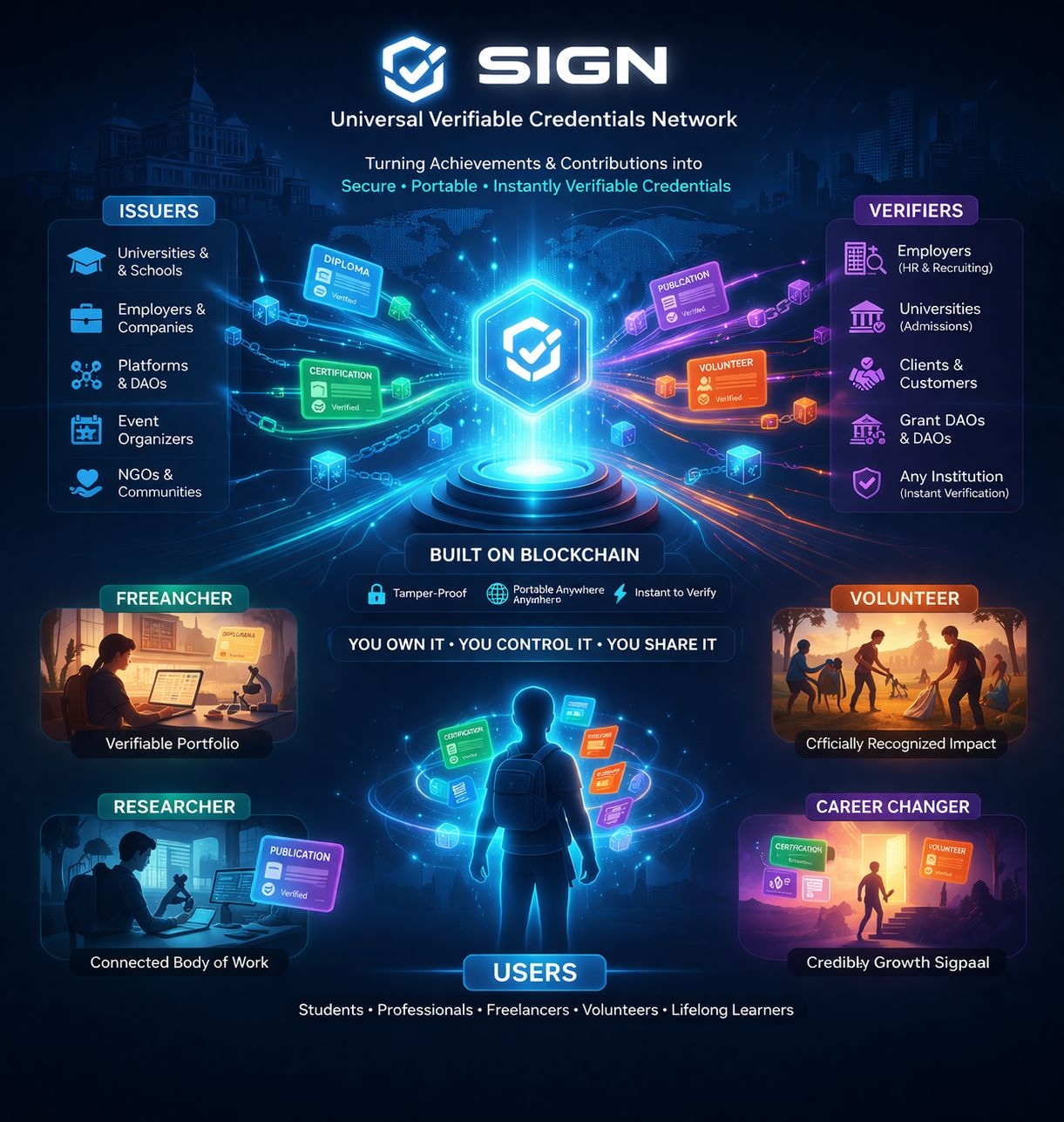
These aren't catastrophic problems. They're friction problems. But friction compounds. It slows people down. It creates unnecessary barriers. It means institutions can't easily find the people they need and people can't easily prove what they're capable of.
The more I think about it the more I realize that fixing this isn't just about technology. It's about rethinking how institutions relate to each other and how they think about proof. It's about creating a layer of infrastructure that benefits everyone by making basic verification simpler and more trustworthy.
Maybe that's what makes SIGN worth paying attention to. It's solving a real problem people actually experience without pretending that solution will be easy or instantaneous. That kind of thinking humble practical aware of its own limitations is rare. And it might actually work.
@SignOfficial $SIGN #SignDigitalSovereignInfra