
I’ve seen enough cycles in crypto to know one thing: big claims are easy. Real systems that survive pressure are not.
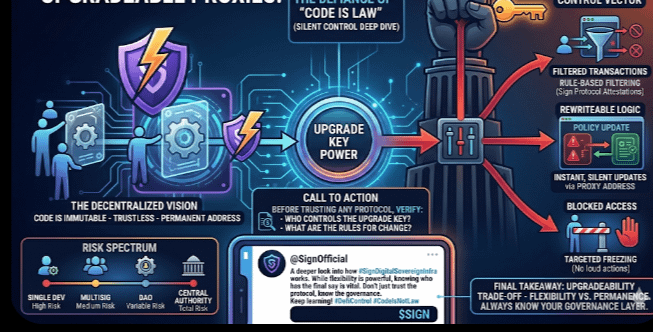
So when I hear phrases like “fail-safe infrastructure” or “sovereign-grade systems,” I don’t get excited—I get cautious. Because most projects sound strong during good times, but disappear when stress hits. That’s why I started looking deeper into Sign Protocol. Not because of hype, but because it seems to be doing something different: actually being used.
At its core, the idea is simple but powerful—build systems that don’t break when everything else does.
The first pillar is evidence over hype. Instead of relying on centralized databases that can go offline or be manipulated, Sign uses cryptographic attestations. These act like tamper-proof digital receipts for identity, ownership, and compliance. In a crisis, “who owns what” shouldn’t depend on trust in a single authority—it should be verifiable anywhere, anytime. This isn’t about replacing governments or banks. It’s about creating a parallel layer that stays functional when traditional systems fail. If a bank freezes or a database is compromised, these records don’t disappear. They remain accessible, allowing essential functions like identity verification or value transfer to continue. That’s not theory—that’s resilience.
The third pillar is the hybrid trust model. Governments don’t move fast—and for good reason. They can’t afford mistakes with public data. Sign acknowledges this by keeping sensitive data off-chain or private (using technologies like zero-knowledge proofs), while still allowing on-chain verification. That balance matters. It protects privacy without sacrificing transparency.
What really stands out is the shift from whitepapers to real-world use. From digital currency experiments in Central Asia to identity infrastructure in places like Sierra Leone, this isn’t just an idea sitting on paper. It’s being tested where it actually matters.
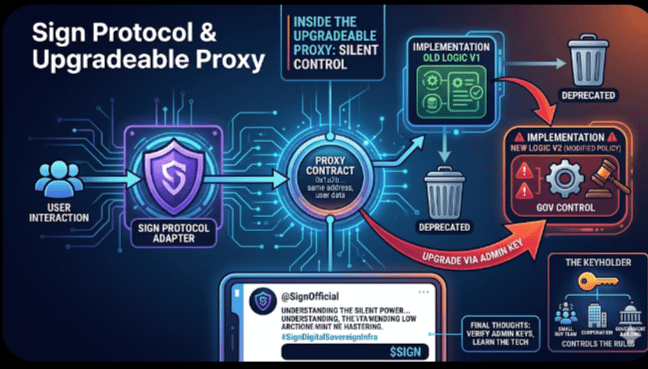
And that’s the key difference.
This space doesn’t need more tokens chasing attention. It needs infrastructure that can handle stress—because stress is the real test. Markets crash. Banks freeze. Systems fail. We’ve all seen it. If something can’t handle that, it’s useless when it matters most.
That’s why the focus on “shock resistance” is important. It’s quiet work, not flashy—but it’s foundational. It’s about how trust is built, verified, and maintained under pressure.
That said, I’m not blindly convinced. Sovereign-level infrastructure is serious. One weak point, and the entire system loses credibility. Governments require security, accountability, and long-term reliability—nothing can be half-baked at that level.
But I respect the direction.
If blockchain has real long-term value, it won’t come from speculation or memes. It will come from systems that keep working when everything else stops. Systems that become so reliable, they fade into the background.
Because true adoption doesn’t look like people buying tokens. It looks like people accessing their identity or funds during a crisis—without even realizing blockchain is involved.
I stay cautious. But I also watch closely.
Because sometimes, the most important progress is the quiet kind.pic helena