
I didn’t pay much attention to the deeper infrastructure behind crypto systems at first. Most of the time the conversation revolves around markets, tokens, or the next new application. But the more I sit with it, the more I start thinking about the foundations those things rely on.
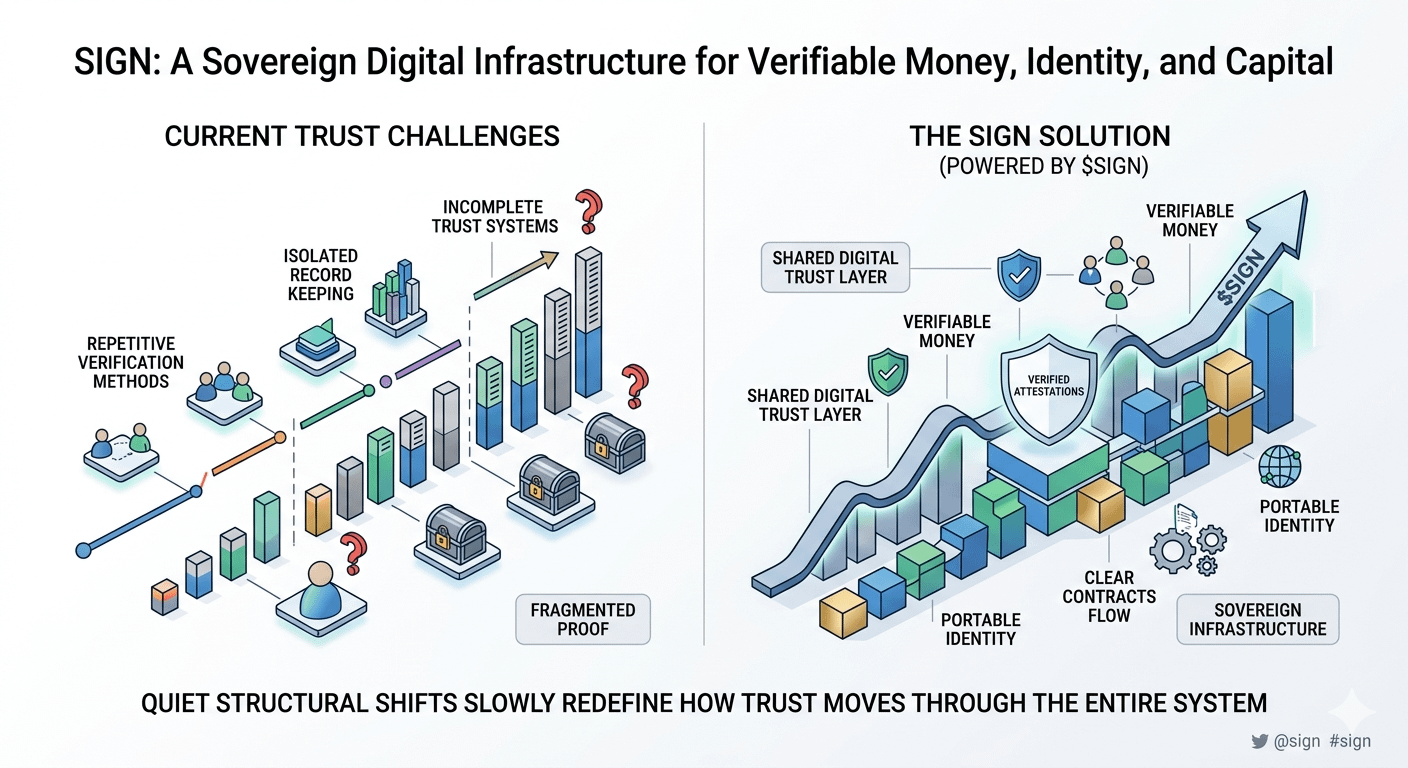
Something feels slightly incomplete. We’ve built systems where value can move freely, but proving things like identity, credibility, or ownership across platforms is still surprisingly fragmented.
The more I think about it, the more it feels like different parts of the digital world are solving the same trust problem over and over again. Each platform keeps its own records, its own verification methods, and its own way of deciding what information is valid.
While reflecting on this, I started looking more closely at what @SignOfficial is trying to do. The idea behind $SIGN isn’t just about storing attestations. What’s interesting here is how it frames verification as a shared piece of digital infrastructure.
It made me realize that if money, identity, and capital are all becoming digital, the systems that verify them probably need to evolve too.
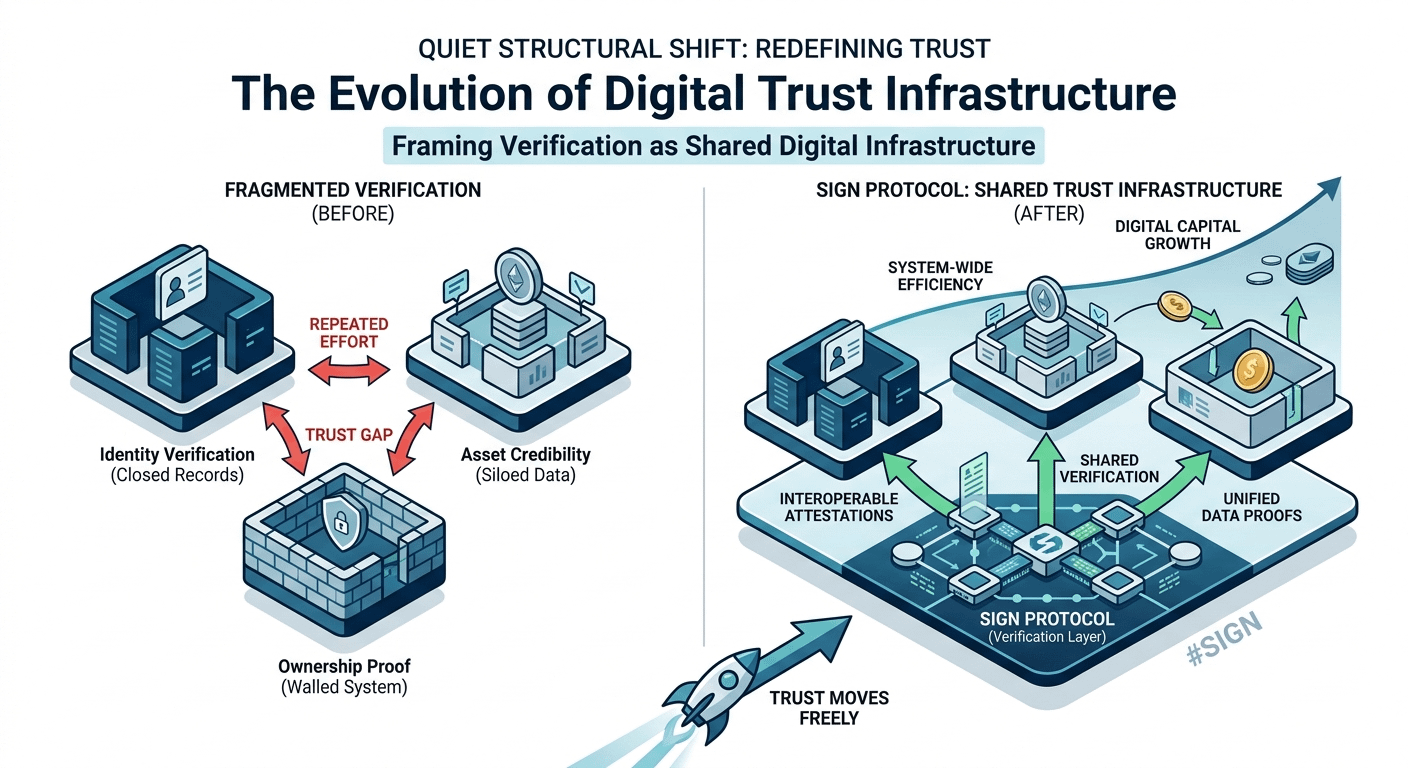
And sometimes the most important shifts in technology aren’t loud innovations they’re quiet structural changes that slowly redefine how trust moves through the entire system.