$SIGN is quietly positioning itself as infrastructure rather than just another speculative crypto asset. While many projects focus on short-term narratives, the long-term vision here is centered on building a verifiable trust layer for the internet — something that could support identity, agreements, and large-scale digital distribution systems.
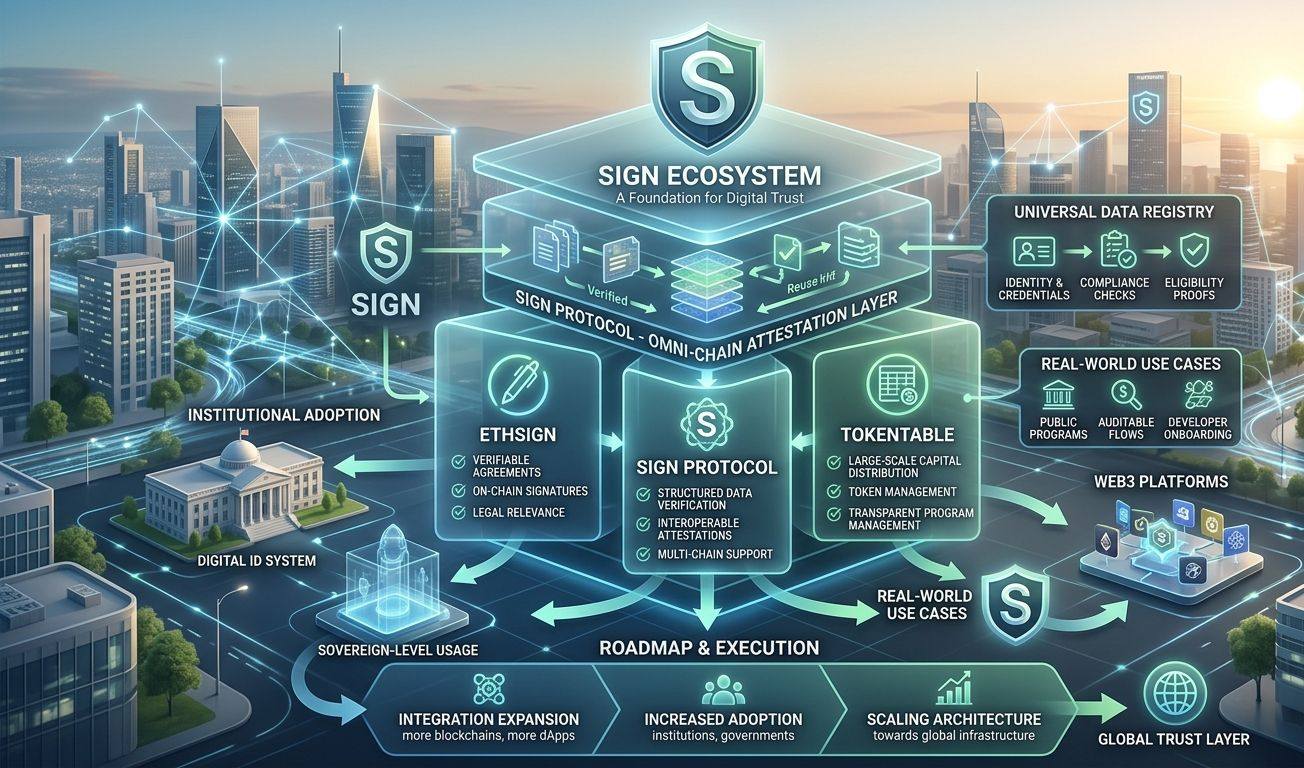
At the core of the ecosystem is Sign Protocol, an omni-chain attestation layer designed to verify and store structured data across multiple blockchains. In simple terms, it allows information such as identity, credentials, compliance checks, and eligibility proofs to be verified once and reused across different applications. As more services move toward digital identity and on-chain verification, this type of reusable trust infrastructure becomes increasingly valuable.
One of the more compelling aspects of the project is its real-world direction. Instead of focusing purely on retail users, the ecosystem is being positioned for institutional and sovereign-level adoption. The broader vision revolves around enabling governments, organizations, and Web3 platforms to build transparent and auditable systems for digital identity, capital distribution, and public programs. This gives the project a clear narrative beyond speculation — it aims to become part of the digital infrastructure layer that operates behind the scenes.
The development of the ecosystem already reflects this direction through a growing product stack. Sign Protocol serves as the verification and attestation layer. TokenTable focuses on large-scale token and capital distribution, helping teams and organizations manage complex distribution programs transparently. EthSign enables verifiable agreements and digital signatures, bringing legally relevant documentation into the on-chain world. Together, these products form a toolkit designed to solve real problems around trust, verification, and coordination.
From a roadmap perspective, the focus appears to be on expanding integrations, increasing adoption, and scaling the broader SIGN architecture. The next phase of growth will likely revolve around onboarding more developers and institutions, strengthening partnerships, and pushing real-world use cases. As regulatory clarity and demand for verifiable digital systems grow, infrastructure projects that enable compliance and transparency may become increasingly important.
Ultimately, the long-term value of the $SIGN ecosystem will depend on execution and real usage. If adoption continues to expand and the infrastructure becomes embedded in real systems, the project could evolve from a niche Web3 tool into a foundational layer for digital trust.
@SignOfficial #SignDigitalSovereignInfra $SIGN