
Government benefit distribution has a problem that has existed as long as governments have. distributed benefits. the money goes out. some of it reaches the right people. some of it doesn't. duplicates happen. ineligible recipients receive payments. eligible recipients get missed. the audit happens months later. by then the money is gone and the system moves on.
From what i understand about TokenTable — the asset distribution engine inside Sign's framework — the design assumption is that. these failures are not inevitable. they are a consequence of systems that were not built. to prevent them at the point of distribution.
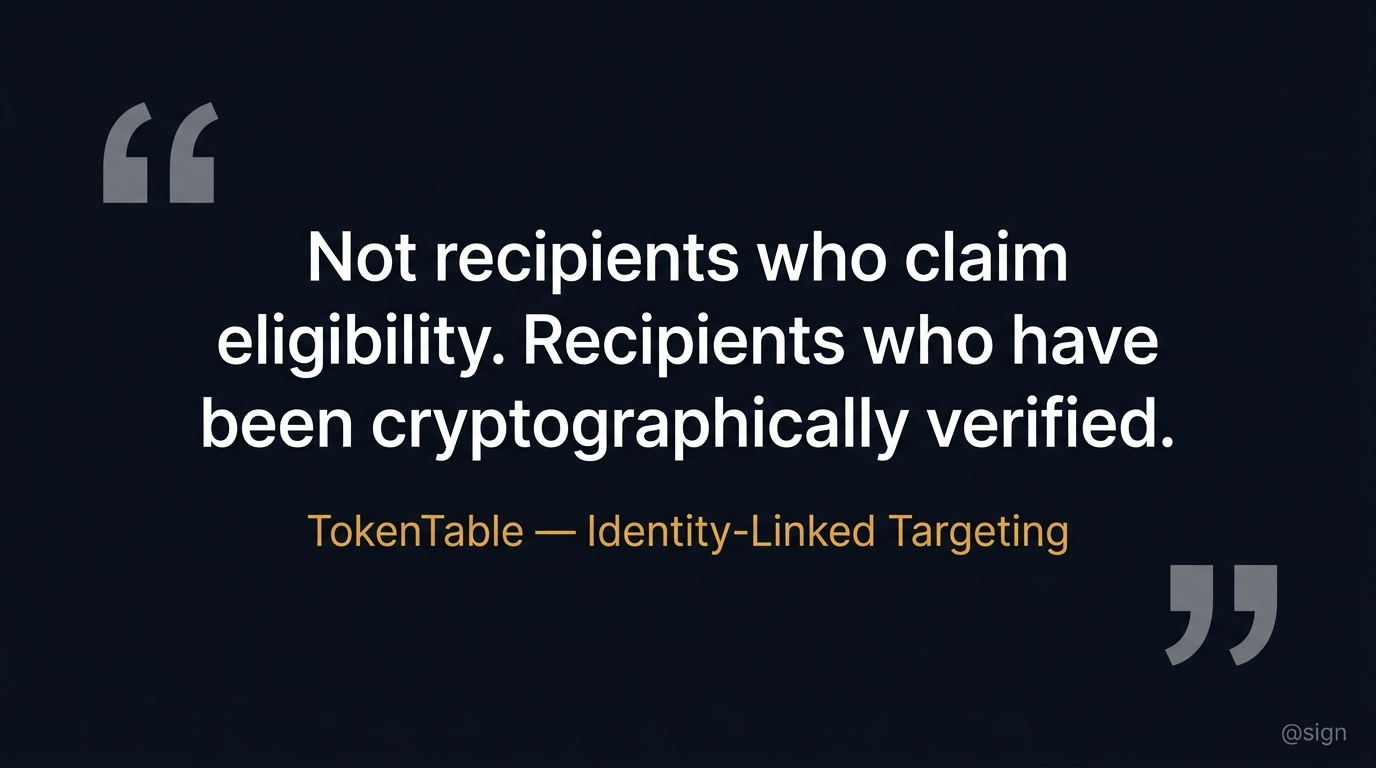
TokenTable serves 40 million users globally. it is a high-throughput programmable system for asset issuance. and distribution, and the architecture connects directly to Sign Protocol's identity layer. this connection is what makes precise targeting possible. distributions reach only verified eligible recipients. — not recipients who claim to be eligible. , recipients who have been cryptographically verified. attribute-based. targeting means distribution can be based on specific identity attributes. — age, location, status — so a subsidy for farmers reaches farmers, a pension reaches pensioners, an education stipend reaches students. duplicate prevention is technical, not procedural — the system blocks duplicate claims at the infrastructure level, not through manual review afterward.
The conditional logic layer is where the programmability becomes specific. vesting schedules release funds at defined time intervals for long-term benefits. multi-stage conditions require multiple. eligibility criteria to be satisfied before a payment executes. usage restrictions limit how distributed assets can be spent. geographic constraints restrict use to specific regions or localities. the whitepaper describes this as technical enforcement of distribution rules — governments. implement policy objectives through the system itself, not through manual oversight sitting on top of it.
Multi-chain distribution means. governments can choose. the appropriate infrastructure per program. sensitive financial assistance goes through Hyperledger Fabric X CBDC for privacy. public benefits and subsidies that require transparency go through the. public stablecoin chain. a unified cross-chain view shows citizen benefits across. both systems simultaneously.
then there is the real-world asset side. TokenTable handles. land registry integration. — direct synchronization with national land. title databases in real time. property databases, cadastral systems, tax records, municipal information. asset classes include residential, commercial, and agricultural. real estate with fractional ownership capabilities. art and cultural heritage with. blockchain-verified provenance. government assets — public. infrastructure, natural resources, sovereign wealth. securities — government bonds, treasury securities. transfer restrictions are programmable — cooling-off periods, investor accreditation requirements, jurisdictional restrictions. enforced at the contract level. KYC/AML. compliance runs through Sign Protocol identity attestations. ownership history is complete and. immutable, supporting legal proceedings. and dispute resolution.
the whitepaper's technical specifications. for TokenTable are worth noting — unlimited maximum distribution size, processing throughput at maximum blockchain TPS, distribution. scheduling at second- level granularity and calendar months, audit trail. stored on-chain.
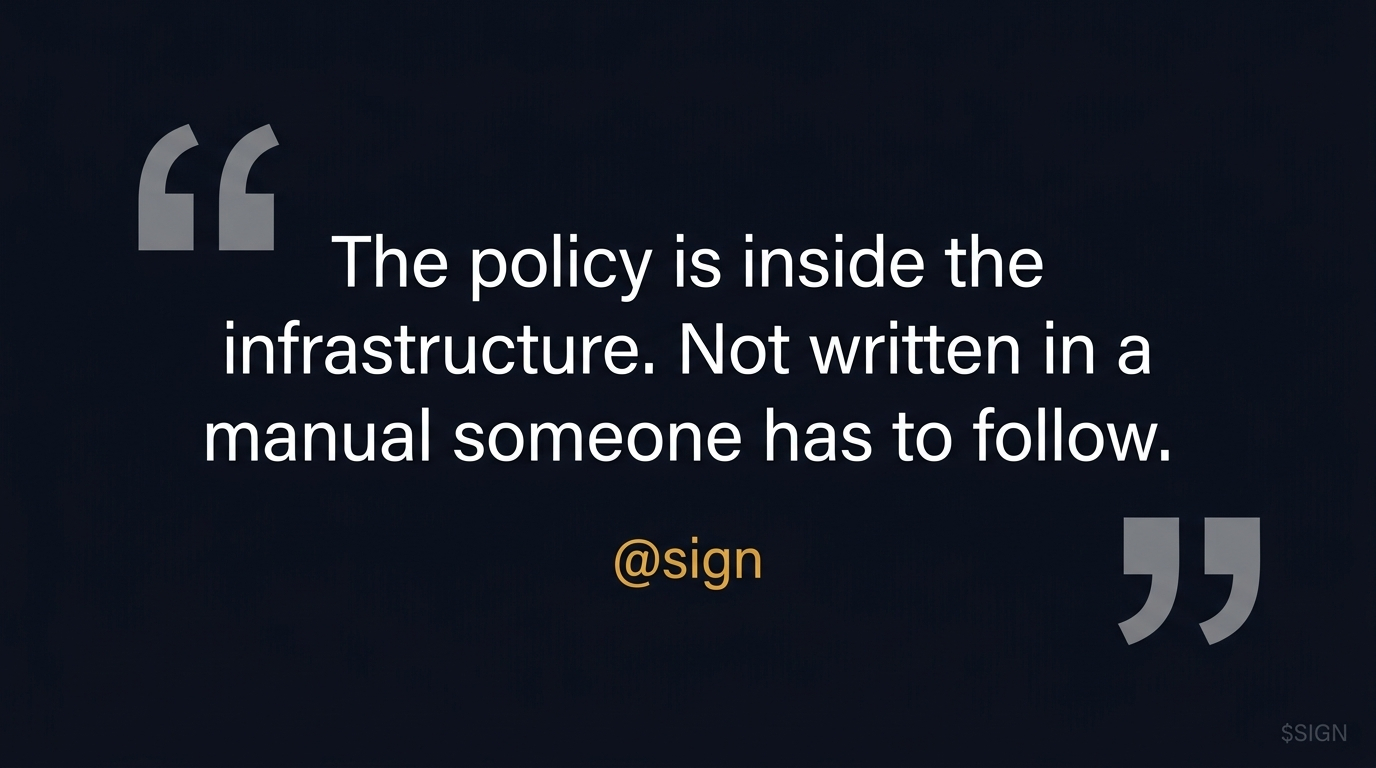
what this platform. produces is a distribution system. where the policy is inside the infrastructure, not written in a manual that someone. has to follow. the right person receives the benefit. the wrong person cannot. the record of every distribution is permanent. and when assets are. tokenized, their history is complete from the moment of creation.
most government. distribution systems are designed to. process payments. this one is designed to ensure the payment reaches. exactly who it was meant for, under exactly the conditions. it was meant to be used.
if a government subsidy program ran on. infrastructure like this, what problem do you think it would solve first?