
The U.S. Dollar Index (#DXY) measures the strength of the U.S. dollar against a basket of major global currencies. It’s one of the most important indicators in macro trading, widely used across forex, commodities, and even crypto markets.
💱 Which currencies are included?
The DXY is composed of six major currencies:
🇪🇺 Euro (EUR) – ~57.6%
🇯🇵 Japanese Yen (JPY) – ~13.6%
🇬🇧 British Pound (GBP) – ~11.9%
🇨🇦 Canadian Dollar (CAD) – ~9.1%
🇸🇪 Swedish Krona (SEK) – ~4.2%
🇨🇭 Swiss Franc (CHF) – ~3.6%
👉 The euro dominates the index, meaning DXY often moves inversely to EUR/USD.
📊 The core idea
When the U.S. Dollar Index rises, it means:
👉 The U.S. dollar is strengthening relative to the basket
So in general.
EUR/USD ↓
GBP/USD ↓
JPY/USD ↓
etc.
📈 How traders use DXY
Dollar strength → DXY up → pressure on risk assets (stocks, crypto, gold)
Dollar weakness → DXY down → risk assets tend to perform better
For example:
Strong DXY = tighter liquidity
Weak DXY = more favorable environment for risk-on markets
🔍 Why it matters
DXY reflects global demand for the U.S. dollar, often driven by:
◾Interest rates (Fed policy)
◾Economic strength
◾Risk sentiment (safe haven demand)
That’s why it’s a key tool for traders looking to understand macro direction and liquidity flows
DXY isn’t just a forex indicator — it’s a macro compass.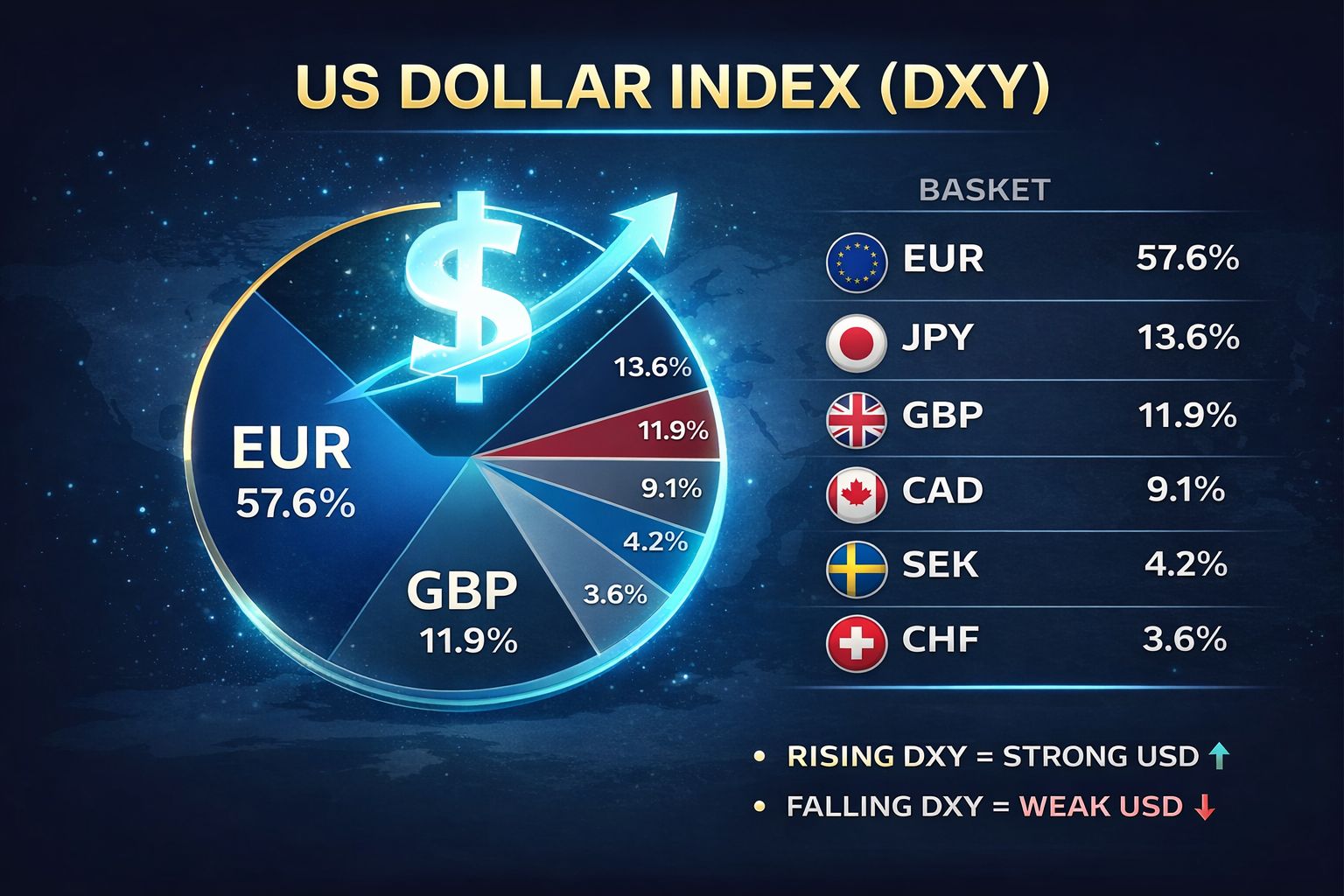
If you understand where the dollar is going, you’re already one step ahead in reading global markets.