

I think the real shift in SIGN Protocol is not identity. It is how proof starts to behave in daily use. Attestations stop being one-time checks and begin acting like reusable evidence you can carry across contexts.
I keep coming back to this idea that most credentials today are static. You show them once. They sit in silos. They do not travel well. SIGN flips that by turning attestations into reusable evidence. Not just claims but something that can be checked, moved and used again without asking twice.
In practice that feels different. If I have an attestation proving I completed a task or met some criteria I do not need to redo the process for every platform. The same piece of evidence can be verified across contexts. That starts to reduce friction in a very real way not just conceptually.
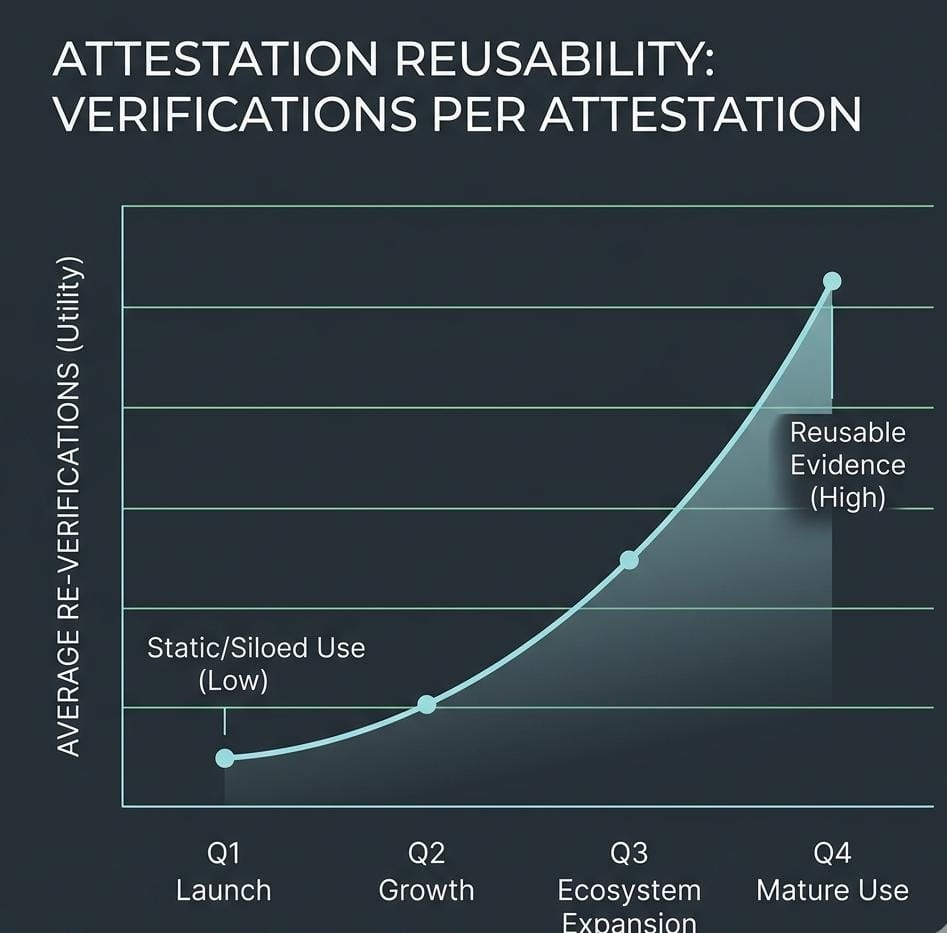
What makes this work is how SIGN structures attestations on chain. They are not just stored data. They carry a relationship between the attestor and the user. That relationship becomes the anchor of trust. I think this is where the system gets interesting because trust is no longer platform owned. It is tied to whoever issues the attestation.
But that also raises a question I keep thinking about. How much do we trust the attestors themselves? If an attestor has weak standards the evidence still exists on chain but its value drops. So the quality of the network depends heavily on who is issuing these credentials not just how they are stored.
The cross chain aspect is another shift that feels more practical than it sounds. Evidence that can move across chains means users are not locked into one ecosystem. I see this as less about interoperability buzzwords and more about continuity. Your history does not reset when you switch environments.
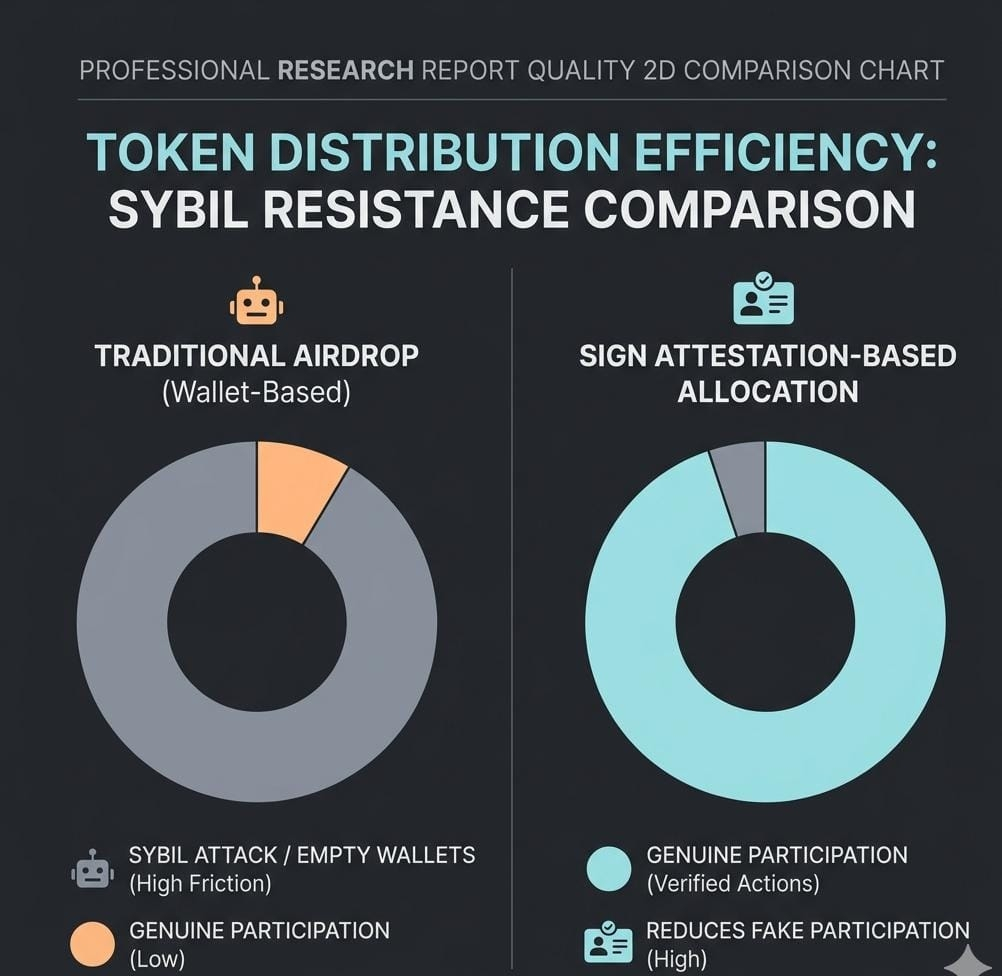
Token distribution is where this becomes very tangible. Instead of broad airdrops based on wallets alone SIGN allows distribution based on verified actions. That changes the game for Sybil resistance. If rewards are tied to attestations it becomes harder to fake participation at scale.
Still I wonder how far this can go without introducing new forms of gaming. If users know what kind of attestations are rewarded they might optimize for that instead of genuine activity. The system reduces one type of abuse but it may invite another.
What I find most compelling is how identity emerges indirectly here. SIGN does not try to define identity upfront. It lets identity form through accumulated attestations. Over time that creates a layered profile of evidence. Not perfect but harder to fake than a single data point.
At the same time there is a design tension. More attestations mean richer identity but also more complexity. If users cannot easily understand or manage their own evidence the system risks becoming opaque again just in a different way.
I see SIGN less as an identity solution and more as an evidence infrastructure. That distinction matters. It is not trying to say who you are. It is trying to show what can be proven about you and let that proof travel.
If this model holds everyday use changes quietly. Less repetition. Fewer redundant checks. More weight on what has already been verified. That is a subtle shift but it compounds over time.
The real question is whether the network of attestors can maintain credibility as it scales. And whether users will actually value reusable evidence enough to change their behavior.
Does on chain evidence become something people rely on daily or does it stay a niche layer for distribution and credentials? And how does SIGN ensure that the trust behind each attestation stays meaningful as more actors join?