
Sign Protocol’s Control Center: Oversight or Hidden Centralization? 🤔
Honestly, I used to think “distributed ledger” automatically meant distributed power. That assumption started to crack when I dug into the Sign Protocol whitepaper, especially the section on the Control Center for Central Bank Oversight.
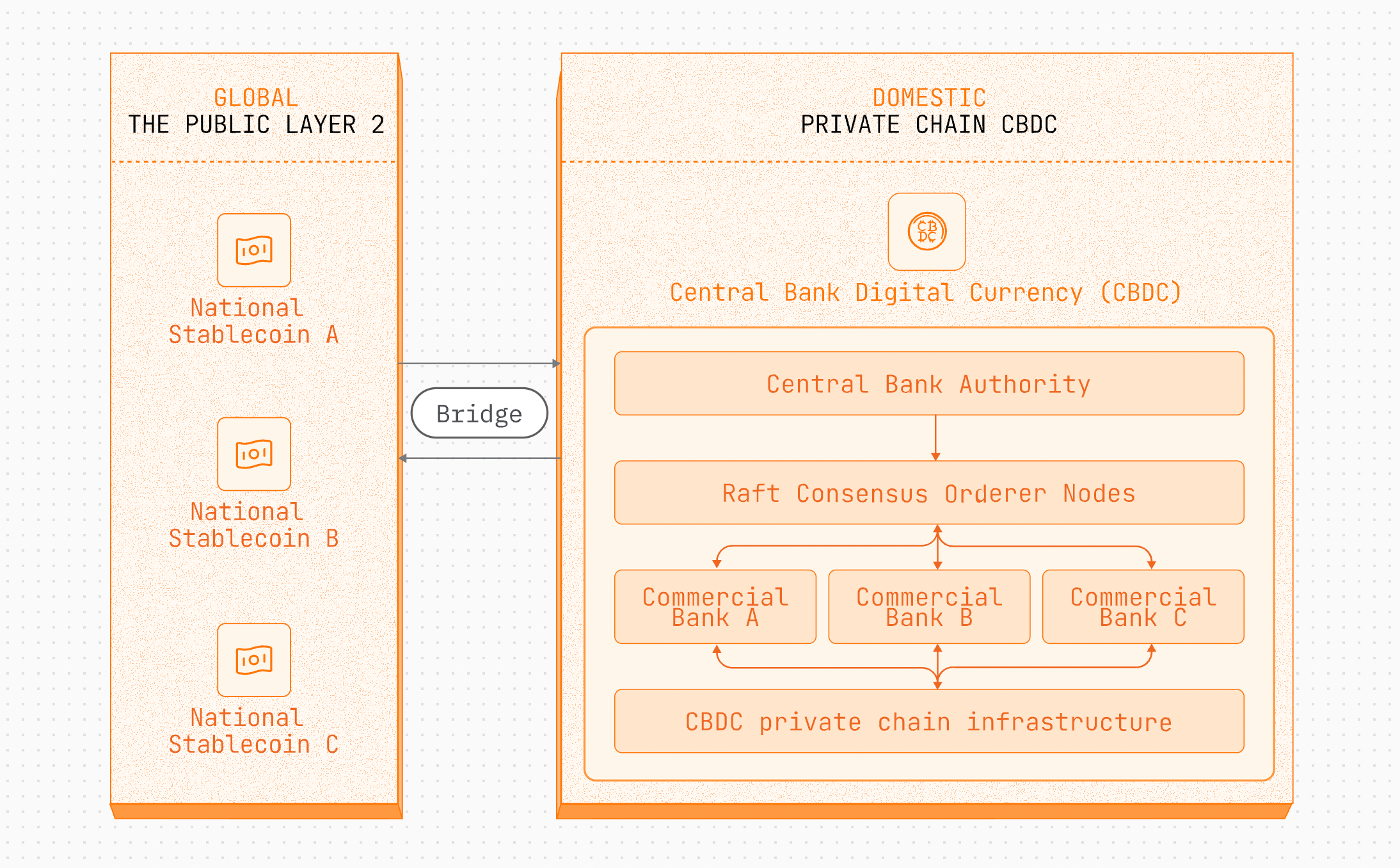
At first glance, the architecture feels modern, even progressive. You’ve got multiple participants, nodes, validation layers — the usual ingredients that signal decentralization. But then you notice something subtle: the Control Center isn’t just a monitoring tool… it’s a coordination nerve center.
And that changes everything.
The key insight here is how authority is structured. The central bank, through this Control Center, maintains real-time visibility across the entire network — transaction flows, node behavior, system health. On paper, that sounds reasonable. After all, a CBDC system should prioritize stability and compliance.
But look closer.
This isn’t just passive oversight. The design implies the ability to intervene, enforce, and potentially override. In other words, while commercial banks or participants may operate nodes and validate transactions, the final layer of control still routes back to a single entity.
So the system distributes operations, but not authority.
Now compare that to something like Ethereum.
In Ethereum’s model, no single entity has ultimate visibility or control. Validators operate independently, governance is messy and slow, and consensus emerges organically. It’s inefficient at times, sure — but that inefficiency is actually a feature. It prevents centralized dominance.
In contrast, a permissioned CBDC network like this feels… optimized.
Too optimized, maybe.
Because when one entity has a Control Center with full network insight, you’re not just improving efficiency — you’re redefining decentralization into something more controlled, more curated.
And here’s where it gets interesting.
The narrative often frames these systems as “blockchain-based,” which leads people to assume they inherit blockchain’s core philosophy: trust minimization. But in reality, this model reintroduces trust — just in a different form.
You’re not trusting intermediaries anymore.
You’re trusting the system designer.
You’re trusting the entity behind the Control Center.
And that raises a deeper question: is this evolution, or is it just a digital version of the same centralized structure we already have?
Because if the central bank can observe everything and potentially act on that information in real time, then the ledger becomes less of a neutral ground and more of a governed space.
Almost like a financial operating system… with admin privileges firmly held at the top.
There’s also an interesting contradiction here.
On one hand, distributing nodes across commercial banks improves resilience. It reduces single points of failure, increases redundancy, and creates a more robust infrastructure.
But on the other hand, centralizing oversight through a Control Center creates a different kind of dependency — one that’s not technical, but institutional.
So the system becomes decentralized in form, but centralized in function.
And that distinction matters more than we usually admit.
Because when things go wrong — and eventually, they always do — the question isn’t just who validates transactions, but who decides what’s valid in the first place.
That’s where real power sits.
Not in running nodes.
But in defining the rules those nodes must follow.
And if those rules can be monitored, adjusted, or enforced through a centralized Control Center, then we’re looking at a hybrid model that blurs the line between blockchain and traditional finance.
Which isn’t necessarily bad.
But it’s definitely different from what many people expect when they hear “decentralized network.”
So now I’m watching this space a bit differently.
Less focused on the technology itself, and more on the power dynamics it encodes.
Because maybe the real question isn’t whether CBDCs use blockchain…
…but whether t

 $SIGN hey preserve the spirit of it.
Or qu