
1. Project Introduction
TuringBitChain (hereinafter referred to as TBC) is a public chain based on the UTXO model that FORKs the original Bitcoin protocol. Starting from the most basic TXID generation method, it further improves the parallel performance and innovatively proposes a Layer-1 smart contract solution on the UTXO model. While ensuring sufficient decentralization, it can achieve unlimited expansion.
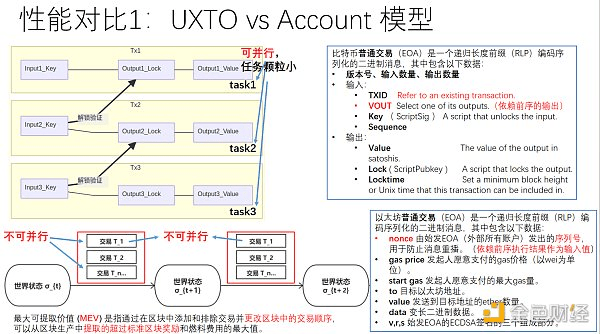
What is the UTXO model? The so-called UTXO model, in simple terms, is a special account accounting model. Its Chinese meaning is called "unspent transaction output". It is very different from the traditional account balance model of ETH and banks: this model only records the transaction itself, not the result of the transaction. Compared with account balance models such as ETH, the UTXO model has the following two advantages: 1: If the user enables a new address for transfer and transaction, the relationship between the new address and the original address is difficult to track, which can better guarantee the privacy of the user; 2: The UTXO model can theoretically use different UTXOs to issue multiple transactions in parallel and broadcast them to the network. The original intention of Bitcoin design is to achieve full transparency, fairness and auditability. UTXO can help Bitcoin achieve these goals. Therefore, BTC uses the UTXO model as its underlying storage data structure, and BTC can also solve the double spending problem without relying on a trusted third party.
2. Project Vision
The biggest challenge facing blockchain technology has always been the problem of capacity expansion. Different public chains have been trying to solve this problem with different technical routes, such as Ethereum's sharding solution. Due to the high concurrency characteristics of the UTXO model, many public chains choose the UTXO route for capacity expansion. However, most UTXO model public chains currently do not have Layer-1 smart contracts and cannot implement complex business logic.
We briefly investigated several other public chains, such as: Conflux is a UTXO model, and uses ESpace to implement smart contracts compatible with EVM and non-BVM. Nervos has built a second layer similar to rollup to implement smart contracts. ADA has modified the UTXO model and changed it to the EUTXO model to implement smart contracts, but the EUTXO model is not compatible with BTC. STX has smart contracts, POX consensus, non-UTXO model, and good ecological development. Kas supports EVM, but there is no smart contract yet (the project roadmap says it will be supported in the future). TBC is committed to building a complete underlying protocol by connecting Bitcoin and a multi-chain architecture. It currently supports NFT, Defi, data storage, BTCFI, and BTC NFT and BRC20 implemented through conventional protocols. The function of supporting Ordinals & BRC20 will also be implemented in the second quarter.
TBC's vision is to help unleash the full potential of Bitcoin and solve its congestion problem; in the future, BTC will no longer be just digital gold, not just a tool for storing value, but more likely to be used for daily transactions, including small purchases like buying coffee; and have a smart contract operating system like ETH. TBC realizes the functions that Vitalik wanted to achieve on Bitcoin, and TBC will help BTC create a prosperous BVM ecosystem similar to EVM.
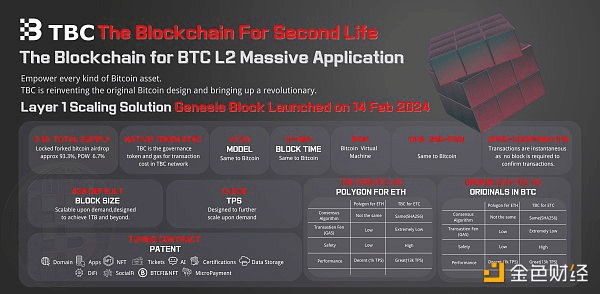
3. Project Features and Advantages
1. Decentralization: Using the same POW consensus scheme and SHA256 mining algorithm as BTC, the project was publicly released at the first time to ensure the openness of TBC. The release of TBC blocks is determined by computing power through fair competition, giving full play to the market's ability to optimize allocation.
2. Compliance and efficiency: TBC's node software is protected by intellectual property rights, and the blockchain it supports adopts the KYC mining block mechanism. When the network computing power is small, it can effectively prevent the risks of computing power attacks and asset theft, and form a market economy environment of healthy competition. In addition, through distribution in a compliant and respectful manner, using blockchain as a carrier to promote the market transformation of inventions and creations, a micropayment market for knowledge and technology products can be born, promoting the birth of individual practitioners, and promoting efficient collaboration and market distribution between micro-technologies, which has huge application space and social progress significance. TBC node software will be gradually opened to the public after the open source agreement is improved. At the current stage, participants need to contact and cooperate one-on-one.
3. Unlimited expansion: It adopts an optimized UTXO high-concurrency model and upgrades the transaction format of the traditional UTXO model to create a super node that supports high-performance parallel computing. It is a dynamically scalable public chain that can carry millions of TPS; (During the TBC test network test, the TPS reached 13,000+).
4.Layer-1 UTXO smart contract: It is the first pure layer practical Turing complete smart contract solution TuringContract based on the UTXO model, which can implement all the logic of EVM. And because of the advantages of the UTXO model, TBC has the advantages of high performance and extremely low handling fees.
5. Zero confirmation technology for transactions: FT&NFT transactions are completed instantly, with low-latency on-chain application user experience, and GAS fees decrease as the number of users increases.
6. Bitcoin operating system (feasible smart contracts): data storage, contract execution, and transaction transmission are all completed on one chain.
7. The same wallet address as the Bitcoin wallet address: TBC applies the same amount and the same technical structure to BTC, and will enable the Bitcoin 1:1 mapping function in the future; it can realize the BTCfi narrative. (Enable the use of BTC as an asset and enable BTC as a transaction unit)
8. Friendly cross-chain modular infrastructure (tentatively called TuringBridge): A) Open source application library is coming soon. B) Enable highly customizable, out-of-the-box functional applications.
4. Economic Model Analysis
1. TBC is a fair launch, no ICO, no IDO. FORK Bitcoin's original protocol pure POW model; node operations and execution operations are funded by initial contributors.
2. The TOKEN of the TBC public chain is called TBC token; the release date is February 15, 2024. The maximum supply of TBC is capped at 2.1 billion, of which 93.3% naturally existed at the time of the fork and have been locked. The remaining 6.7% is generated by POW mining.
3.TBC block interval: about every 10 minutes; Difficulty adjustment algorithm: Asert FastDAA; Mining algorithm: SHA-256 (BTC\BCH compatible); Block size: initial upper limit 4G (dynamically expanded depending on the situation).
5. Development Team
TBC's early developers come from more than 3 core technology geek teams around the world, who have many years of research experience in large blocks and expansion solutions. In addition, TBC combines the academic achievements of experts in the field of high-performance computing and has a forward-looking and systematic design. TBC's underlying invention technology was announced in September 2021, and Turing-complete high-performance Layer1 smart contract Turring-Contract also completed the design and experimentation early. In March 2022, Turing-complete high-performance Layer1 smart contract Turring-Contract was officially released.
In December 2023, the TBC Alpha testnet was launched, and the scalable solution from experts in the field of high-performance computing was verified. The execution speed of TuringContract exceeded 13k TPS. After several months of testnet testing, the TBC mainnet was officially launched on February 14, 2024.
6. Project Roadmap
1. Phase 1: (BTCfi Phase)
TBC aims to release the potential of Bitcoin to participate in Defi, NFT, LSD and other ecological applications through BVM [Bitcoin Virtual Machine]. TBC's approach is similar to what Polygon did to ETH.
2. The second stage: (promoting BVM compatibility with all UTXO chains)
a: Promote more UTXO chains to adopt BVM in the future, such as Doge's ecosystem. b: Assist the integration of UTXO BVM chain with the account model EVM chain ecosystem in the future through the mature decentralized cross-chain infrastructure-TuringBrige.
3. The third stage: (block size enters the TB stage, and the handling fee approaches 0)
TBC breaks the convention of large numbers of users leading to high fees in existing blockchains. As the network develops, TBC will show the charm of transaction fees decreasing as the number of users increases. Low transaction fees are the basis for the popularization of public chains.
4. The fourth stage (the underlying public chain built for the real virtual world) allows the top players to happen in (Bitcoin and TBC)
Since TBC is able to run massive blockchain applications and verify data on the chain, the network effect continues to increase, and TBC will assist BTC in leading the next generation of the Internet.
7. Detailed explanation of TBC core technology
TBC is a blockchain infrastructure with high performance and complete local intelligence.
A. High performance
A1. Unlimited expansion
A2. Pipeline processing is possible
B. Intelligent and complete
Each local UTXO chain is a complete Turing machine
A1 High Performance: Infinitely Scalable
High performance means high parallel scalability, using distributed computing rather than single-machine single-core computing, which includes two types of expansion: strong scalability and weak scalability.
The former fixes the problem size and increases the number of computing cores used, which reduces the total computing time accordingly, expressed as:
Time(N) = Time(1) / N
N is the number of CPU processing cores
The latter is to increase the number of computing cores while expanding the problem scale, so that the computing time can maintain a stable level, which can be expressed as:
Workload(1)/1 ~? Workload(N)/N
By studying a variety of parallel algorithms, the distributed computing model adopted by TBC can have both strong scalability and weak scalability characteristics.
A2 High performance: pipeline processing
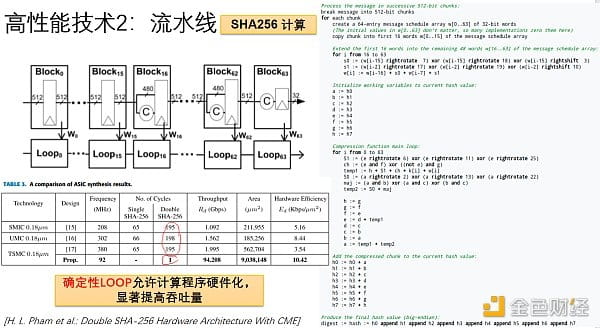 In the process of smart contract design, TBC always implements the basic concept of pipeline, so that in the future, the execution throughput of serial programs can be accelerated through hardware.
B. Intelligent and complete
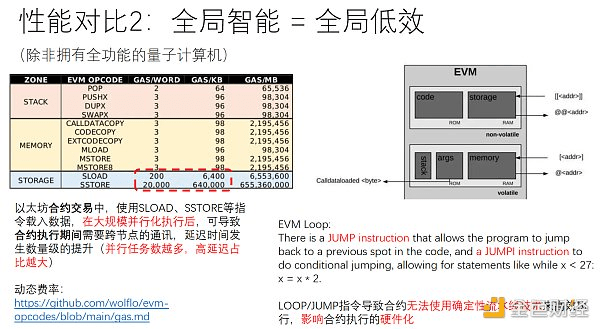
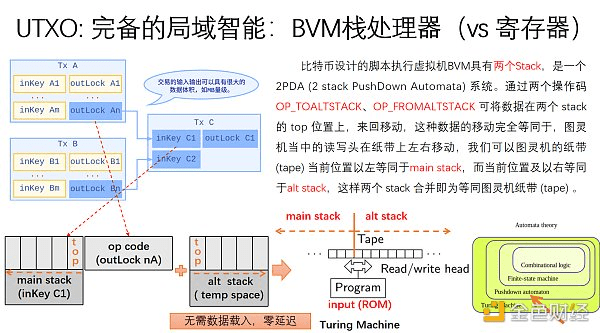
Under TBC's UTXO model, each UTXO chain is a Turing machine. A large number of concurrent Turing machines form a practical, intelligent and complete network of the blockchain. Its underlying BVM is very different from EVM.
Performance comparison between BVM and EVM underlying models
BVM stack processor
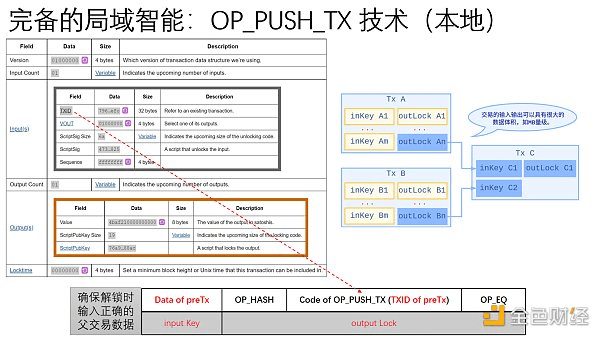
OP_PUSH_TX Technical Introduction
TBC can currently choose OP_PUSH_TX technology to incorporate upstream and downstream transaction data into the programmable data space to achieve local Turing complete capabilities. The isolated UTXO will enable different programmable spaces to execute in parallel, achieve efficient block data verification, and reduce the cost of each transaction.
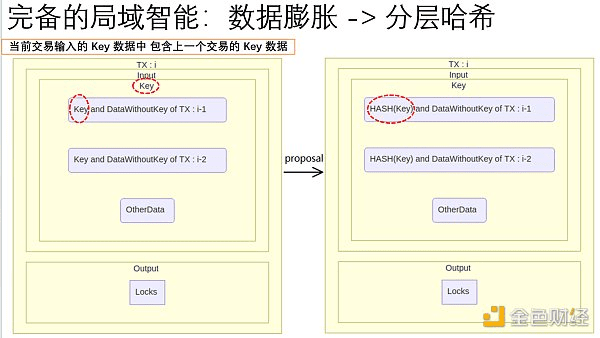
Data expansion -> hierarchical hashing
TBC solves the problem of data bloat and expansion in data transmission between nodes or in smart contracts through an original flat hierarchical hash model, providing a solid foundation for the superstructure.
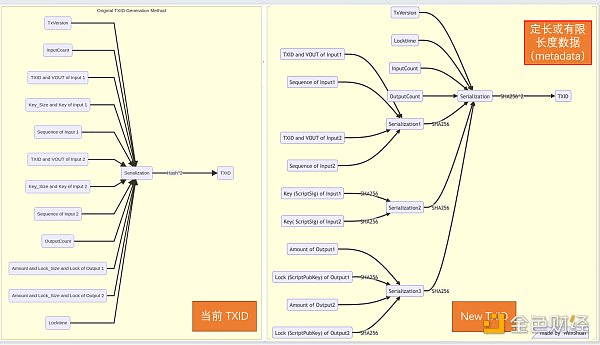
What applications can TBC, a blockchain infrastructure based on high performance and complete local intelligence, support?
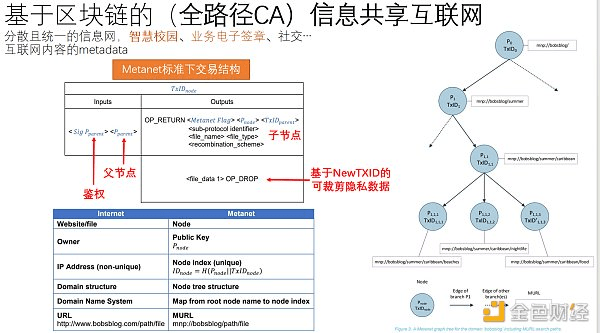
1. Full-path CA information sharing internet based on blockchain
2. User Internet applications that go beyond a single data center
By removing the control of individual data by a single data center (portal/social networking site), the current mass production relations can be transformed, and users' finance, life, education, medical care, and work can all be reshaped.
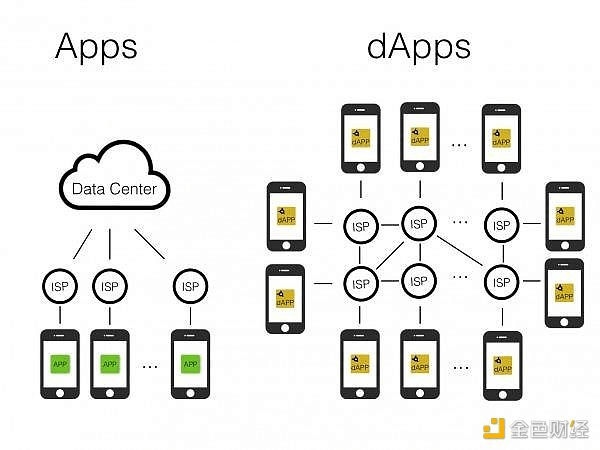
TBC has a high-performance and scalable layer of smart contracts, which can become an infrastructure, such as a telecom operator, allowing participants to reduce transaction packaging costs through technical competition and provide 95% of the functional requirements for society. The remaining functional requirements are left to the globally inefficient (quasi) EVM system.
TBC has original high-performance computing technology practices, which need to become an infrastructure and be issued in compliance with regulations worldwide. In the application field that affects people's livelihood, TBC's original compliance will leave other original jungle ecological projects behind and fully and freely exert its value.
TBC can give full play to the efficient organizational ability of laws in civilized society, and at the same time utilize the self-organizing ability of blockchain technology for value information, further feed back and promote the progress of national contract civilization, and realize a highly efficient decentralized self-organizing system under the incentive of market competition.
Originating from self-organization, and ultimately forming a highly organized electronic world is TBC's mission.
Conclusion:
TBC's slogan is "The blockchain for sencond life". It is the underlying public chain built for humans to enter the virtual world. At the same time, it is also the most important BVM virtual machine initiator of the BTC ecosystem, just like Polygon of the BTC ecosystem. The main network has just been launched. With the outbreak of the BTC ecosystem, TBC has the opportunity to become the leader of BTC L2. Let us wait and see.