
The current decline in the price of the first cryptocurrency exceeds the bounds of a typical technical correction. The market has closely approached price levels that directly affect the economic model of digital asset mining, changing the overall risk profile for investors.
At the level of $70,000, the initiative shifts from speculative traders to fundamental network participants — miners. This is why this level currently carries more weight than any moving averages or trend lines.
=========
Critical threshold of profitability
At the current difficulty of calculations and an average electricity cost of about $0.08 per kWh, a clear zone of financial pressure is being formed. New data shows that for most devices in the Antminer S21 series, which make up a significant share of the global hash rate, the breakeven point is in the range of $69,000 to $74,000.
Simply put, if the price drops below this corridor, the operational activities of many companies will stop generating profit.
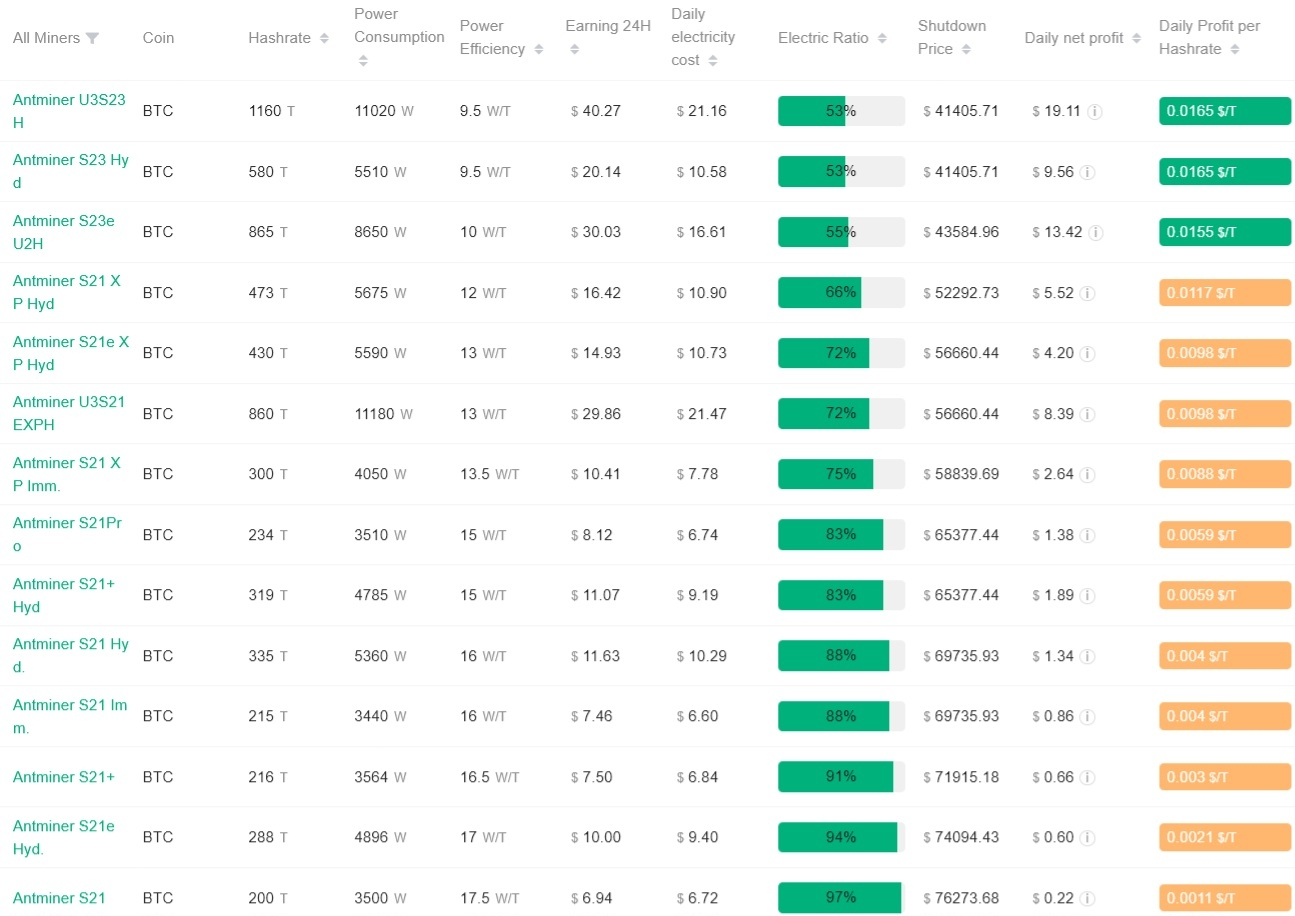
Bitcoin regularly demonstrates volatility, changing in price by thousands of dollars. However, the current moment is characterized by who exactly is experiencing stress. If above $70,000 mining remains profitable for a wide range of participants, then below this threshold profitability becomes selective.
As a result, only the most efficient players survive. Mid-tier operators, on the contrary, face cash flow gaps and pressure on balance sheets.
=======
Lack of guarantees for price support
It is important to make the necessary clarification. The so-called 'shutdown price' is not a guaranteed level of support. Miners do not control market quotes, so the asset can trade below the breakeven point for an extended period.
Nevertheless, it is in these zones that the behavioral model of industry participants changes. This, in turn, determines trading dynamics during periods of market tension.
=======
Scenarios of events
If the Bitcoin price briefly drops below $70,000 and quickly recovers, the consequences will be limited. The situation will change if the price stabilizes below this level. In that case, secondary pressure factors will come into play.
Firstly, financially unstable miners will start selling their BTC reserves to cover electricity and hosting costs. Secondly, some equipment will be physically disconnected from the network, leading to a local decrease in hash rate.
Moreover, the negative news background is transforming. Headlines about 'volatility' will be replaced by messages about a 'crisis in mining', which will further amplify investor pessimism.
========
A combination of negative factors
These factors by themselves are not fatal. However, miners' problems become dangerous when they overlap with a liquidity shortage. The market is already facing a number of challenges:
● Tight conditions of global liquidity.
● Decrease in appetite for risky assets.
● Capital outflow from spot ETFs and liquidations of derivatives.
If this list is joined by forced sales of coins by miners, the price drop may accelerate, outpacing fundamental indicators. This is how sharp and uncontrollable market movements occur — not due to the weakness of the asset itself, but due to the simultaneous realization of several risks.