

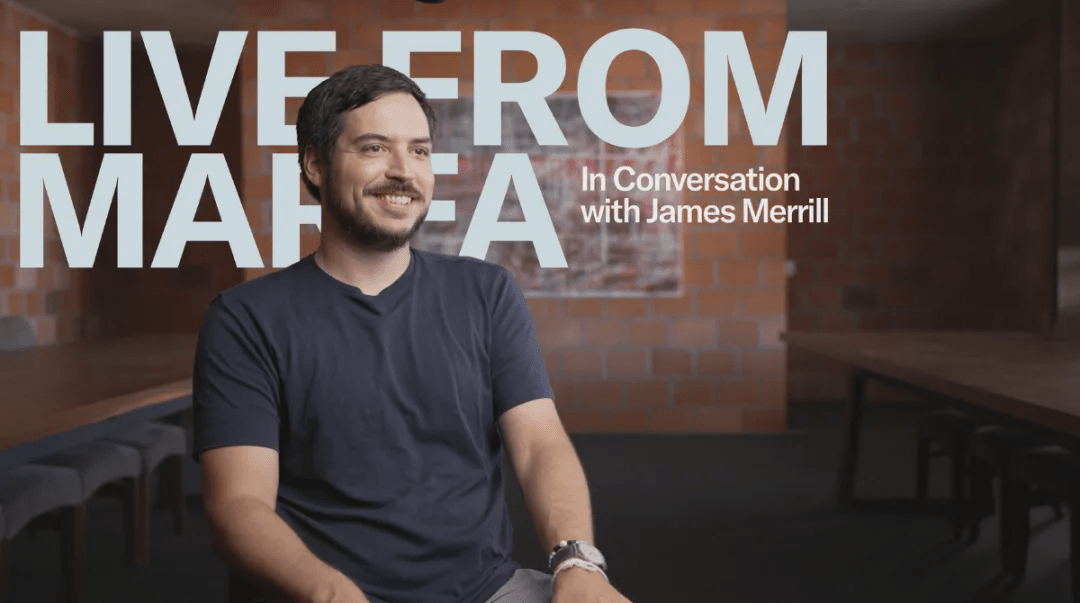
James Merrill's algorithmic painting works cleverly blend code and craft; he collaborates with custom drawing robots to transform generative algorithms into tangible works that embody both precision and flaws. His artworks celebrate the unpredictable beauty of analog materials while exploring how technology gives digital creations a lasting physical presence.
This interview took place in the lobby of the St. George Hotel during the Marfa Art Blocks weekend, where James Merrill discussed the role of emotion in his creative process, the value of imperfection, and how Marfa continues to inspire a spirit of experimentation and community among generative artists.
Note: For brevity and clarity, this interview content has been edited.
OpenSea:
Let's start with a simple self-introduction. Could you introduce yourself?
James Merrill:
I am James Merrill, an algorithmic visual artist. I came here from Vermont, and now I'm in Marfa. My expertise lies in using generative algorithms to drive drawing robots that create unique artworks through code, enabling me to work in both digital and physical spaces simultaneously.
OpenSea:
When you start creating a new piece, what usually comes first: code, an image in your mind, or the feeling or emotion you want to capture?
James Merrill:
Feeling is the true starting point of the creative process. I usually try to solve a problem; I might have an idea in my mind, and then I need to return to the fundamentals to think about how to achieve it algorithmically. In traditional painting, you can draw what you want by holding a pen, but robotic painting requires considering new factors like perspective, depth, and variations in pressure during the drawing process. I spend time addressing these fundamental issues and then apply these solutions to my work over the following year.
OpenSea:
Your artwork combines precision and emotion, and there exists a tension between control and letting go. What aspects of this tension make you feel that generative art is vibrant?
James Merrill:
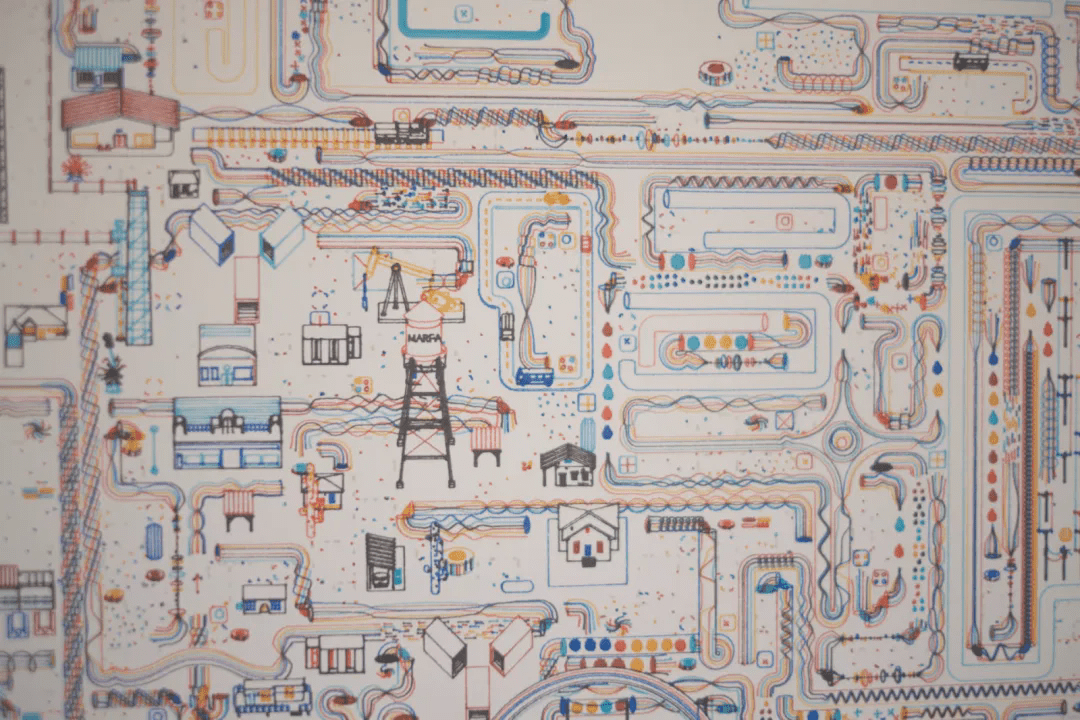
In computer art creation, perfection comes easily; computers excel at calculations and can perform thousands of computations quickly. Therefore, achieving perfection on the screen is quite simple. The role of the artist usually involves adding flaws on a digital level, but when the artwork enters the real world, flaws are everywhere — the flow of ink, the texture of paper, and even the humidity of the room. These variables are beyond human control, yet they give the work a unique personality.
I enjoy being able to give my physical works some signs of age. As a digital artist, you only need a screen, keyboard, and mouse. But when I realized I could write code to create physical paintings, I began to pay attention to the quality of the paper and ink I used; they became crucial. I started blending elements of fine art and digital art to create interesting works.
OpenSea:
How do you think people's experience of your work on digital platforms differs from experiencing it in real life?
James Merrill:
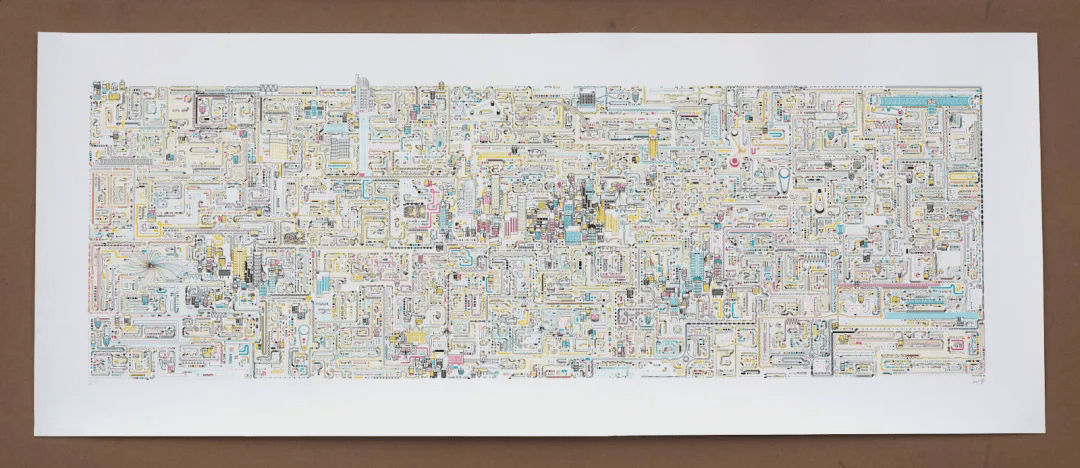
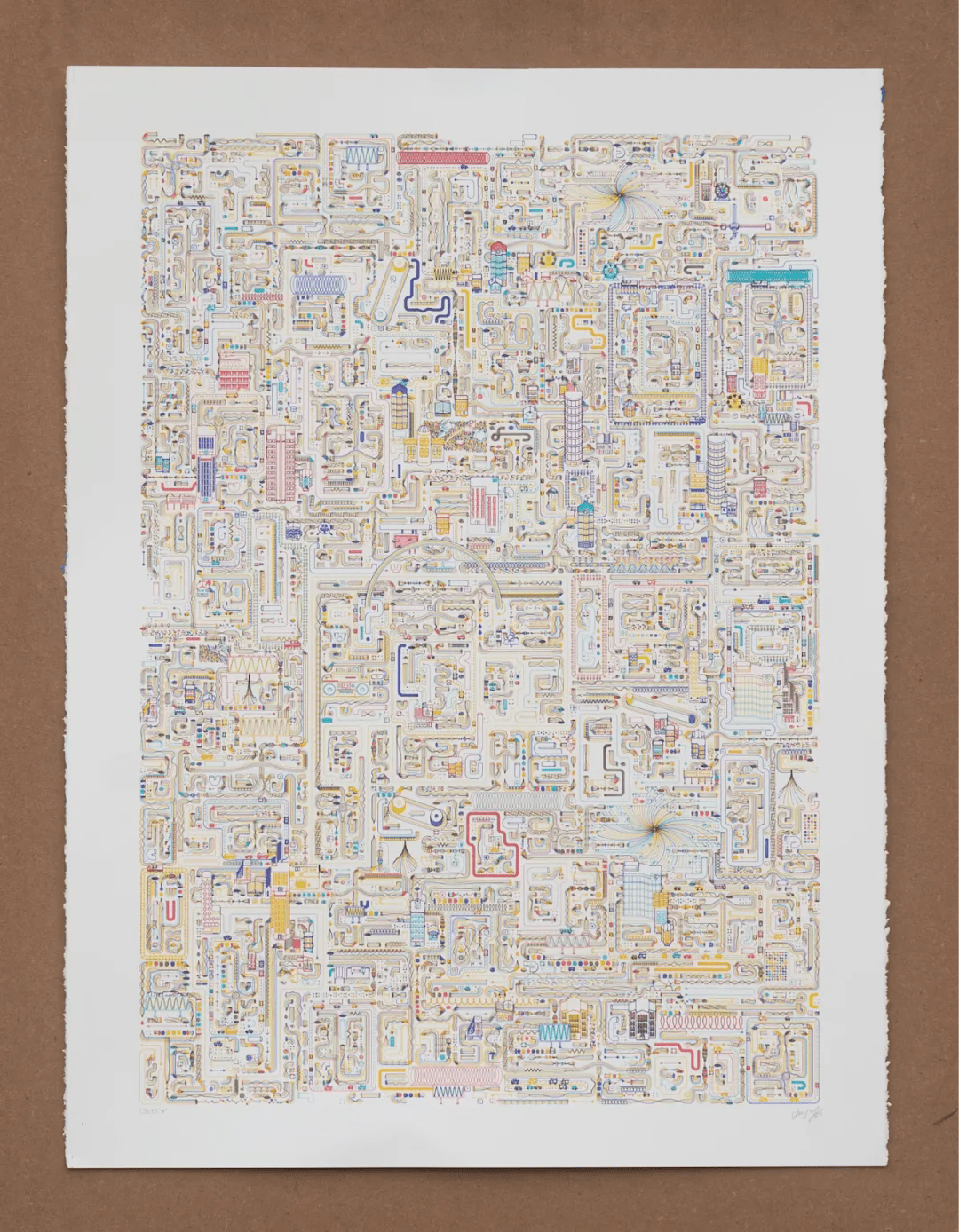
Generally, the digital version of an artwork is just a set of instructions that viewers may never see. In the 'BUSY' project that I curated for Art Blocks, the digital part must match the physical part. This is tricky because the way ink reacts in real life is hard to render on a computer. I must ensure that the digital part looks as close to the physical as possible, and proportions are important. Sometimes, I enjoy enlarging the work as much as possible, while recently, I have preferred to minimize it.
In Marfa, I created a book containing 35 very small paintings, which are derivative works of the algorithms behind 'BUSY'. This is a way to re-examine 'BUSY'. These paintings are done in a small notebook, while 'BUSY' itself is on a huge sheet of paper. I enjoy playing with proportions, and there are many aspects to explore in small, algorithm-driven works.
OpenSea:
Have you ever encountered a situation where some flaws or accidents ended up changing the final work and ultimately satisfied you?
James Merrill:
Of course, there are also some delightful surprises. Once, I was using a plotter to create a drawing that I expected would take six to eight hours to finish. Halfway through, a thunderstorm caused a power outage, and the drawing abruptly stopped. Although I couldn't recover it, I actually preferred where it stopped rather than the final product I had envisioned. Sometimes, I intentionally incorporate this unpredictability into my artistic creation.
I once spent hours sketching with the finest pen tip and then splashed ink over it to create an effect that intertwines perfection and chaos. It's always a bit strange to disrupt ideals, but it often enhances the work. For me as a digital artist, it's a way to add a direct, physical touch to computer-generated pieces.
OpenSea:
You once mentioned that you hope your work will endure. As technology continues to evolve, how do you view the issue of 'permanence'?
James Merrill:
Generative art inherently lacks permanence. Each time you run a generative algorithm, it produces different results. After refreshing the program, you'll get new results, and what you saw before disappears. We have addressed this issue digitally by placing the code on the blockchain, allowing us to regenerate different versions of the generative algorithm.
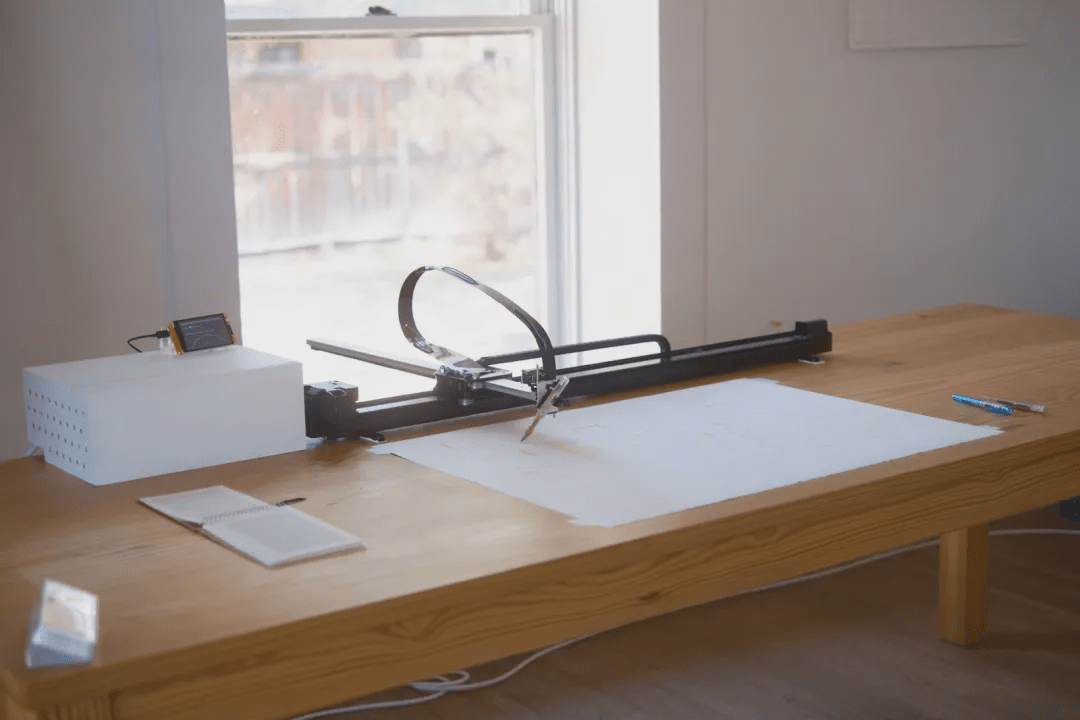
To increase permanence, I create physical works using plotters, while digital artworks are stored on the blockchain, and physical works can be hung on walls. If the right preservation materials are used, they can last for decades.
OpenSea:
You mentioned wanting to create larger plotters and improve the process. What new methods are now possible that were not before?
James Merrill:
Yes, I've acquired several new machines. I closely collaborated with a company that manufactures drawing robots, one of which is a large-format pen plotter called 'Art Frame Panorama' with variable pressure control. It allowed me to create five large illustrations for my portfolio (BUSIEST), each measuring 60 inches by 24 inches, which was previously impossible.
Creating at this size brings new challenges — prototyping requires a lot of paper and time, so the risks of each attempt are higher. I recently also got an 'Egg Bot', which can draw spherical patterns on objects like golf balls or baseballs. This machine is a replica of their early products, and I set it up here in Marfa for experimentation. Now I can create artworks that wrap around spherical objects, which is very exciting.
OpenSea:
What does coming to Marfa this weekend mean to you, especially considering the unique landscape and community here?
James Merrill:
Getting to Marfa isn't easy, and it's completely different from my hometown in Vermont. Located in a high-altitude desert area, it takes several hours to reach. You quickly feel the dedication people have put in to get here. Some have even traveled from all over the world. This year marks the fifth anniversary of Art Blocks, which is an event not to be missed, gathering many outstanding artists. For me, the essence of Marfa lies in the people; one-on-one communication is crucial and greatly inspires my artistic creation.
Every year, I leave with notes and inspiration that become my 'homework' for the coming year, forming an evolving chain in my work. Last year, I didn't use 3D printing or laser engraving, but after interacting with other artists, I started experimenting with these technologies. I always learn new things here, and I hope to share my creations and inspire others.
OpenSea:
It's amazing; being here really fosters fantastic connections, especially in the field of digital art where people are often scattered and anonymous. Being in a physical space to share your creative process and tools is truly a breakthrough.
James Merrill:
That's right. As a generative artist with a background in software engineering, I'm used to teamwork and exchanging ideas with others. However, as an artist, I often work alone and inevitably feel lonely. Interacting with other artists is refreshing; they bring new ideas and help me overcome creative obstacles, which is crucial for me.
OpenSea:
Thank you very much for taking the time to share your process with us.
James Merrill:
Thank you; I cherish this opportunity.
Disclaimer: This content is for informational purposes only and should not be considered financial or trading advice. Mentioning specific projects, products, services, or tokens does not constitute endorsement, sponsorship, or recommendation by OpenSea. OpenSea does not guarantee the accuracy or completeness of the information provided. Readers should verify any statements in this article before taking action, and it is the reader's responsibility to conduct due diligence before making any decisions.

Content on OpenSea that you care about
Browse | Create | Buy | Sell | Auction

Follow collection on OpenSea Binance channel
Stay updated with the latest news