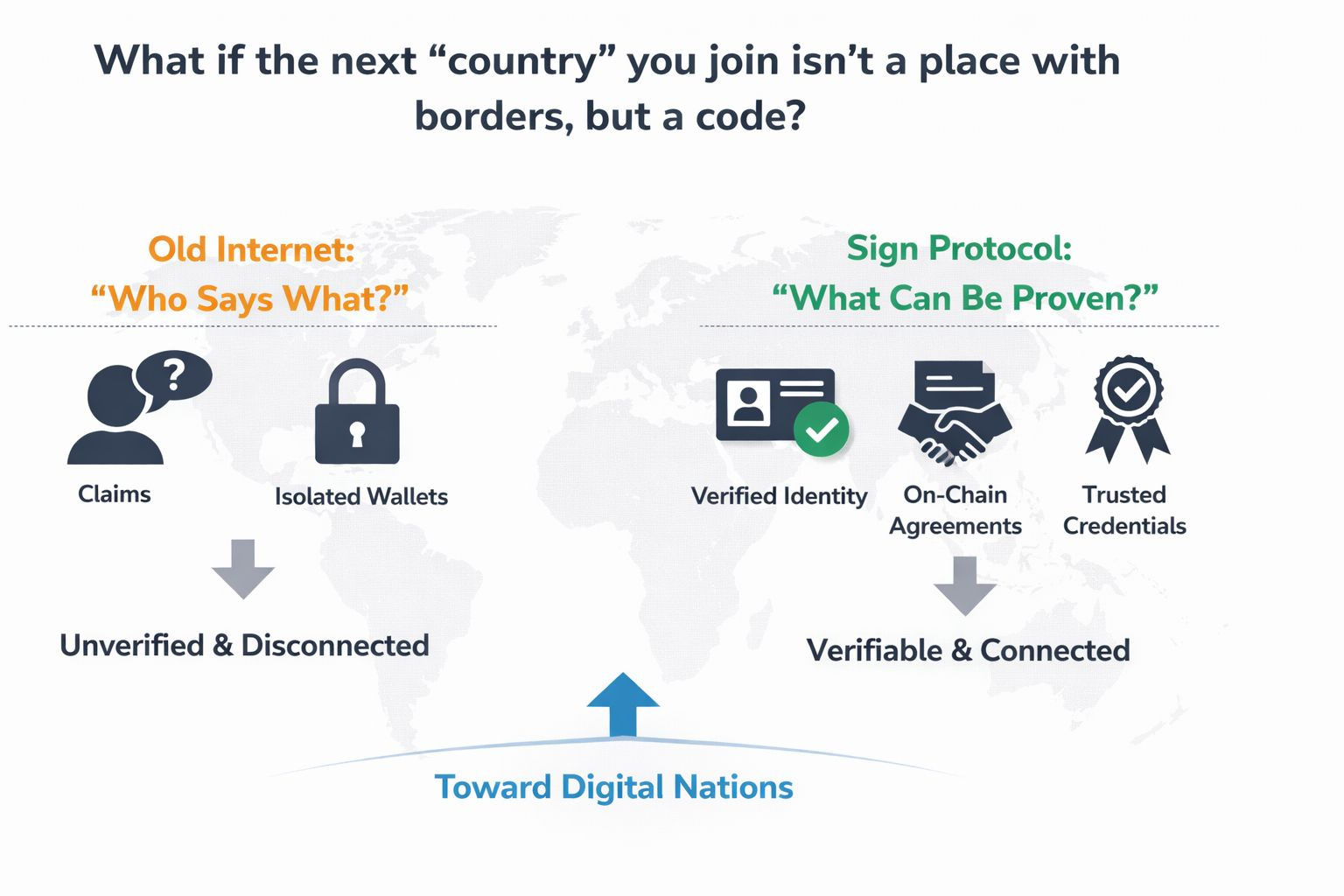
What if the next "country" you join isn't a place with borders, but a code?
I keep thinking about that when I look at @SignOfficial and the part that $SIGN is starting to play. This doesn't seem like just another crypto infrastructure project to me.
It seems like the first step toward something much bigger: digital nations based on trust that you can actually check.
Attestations are what Sign Protocol is all about. It may sound complicated, but it's really not.
It's just proof of identity, agreements, and credentials that can be checked on-chain.
I see that this changes the internet from "who says what" to "what can actually be proven."
In digital nations, identity is everything. Not usernames, but reputations that can be moved.
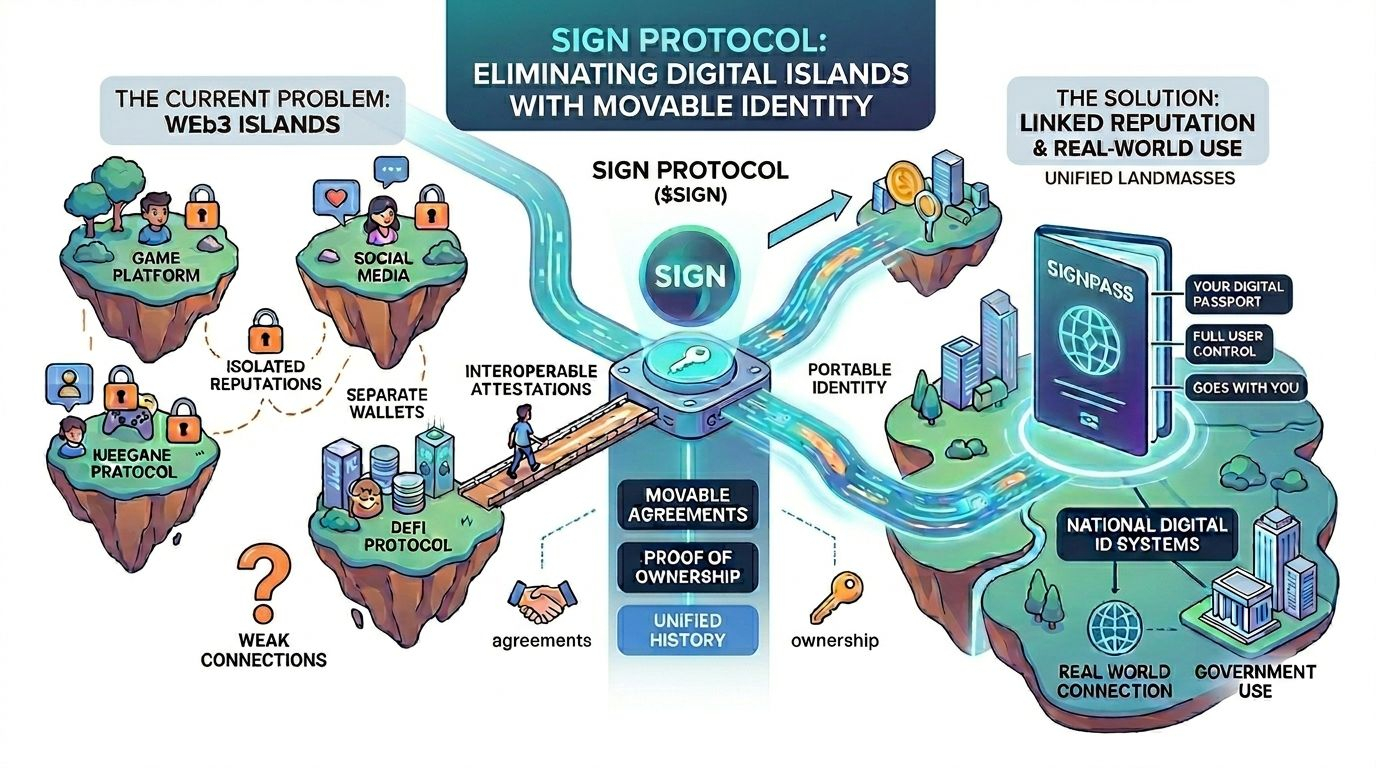
Not separate wallets, but histories that are linked. $SIGN makes it possible for identity, agreements, and proof of ownership to move between platforms without having to reset them each time.
A lot of Web3 projects act like islands. You build your reputation in one place, and it doesn't usually carry over.
Sign Protocol quietly changes that by making attestations that can be used anywhere.
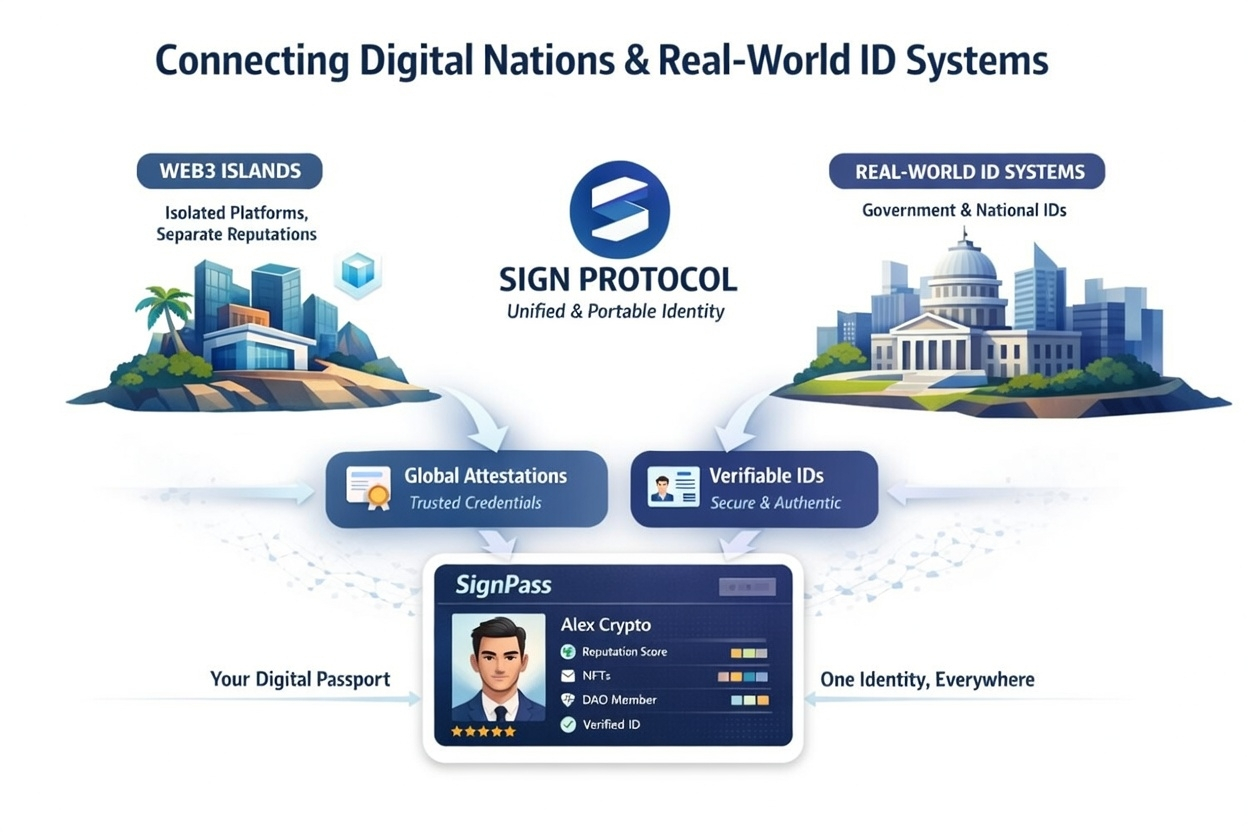
SignPass is a big part of this. From my point of view, this is where it starts to feel real: a digital passport that you can control and that goes with you.
Then there are the National Digital ID systems. @SignOfficial isn't just thinking about people who use crypto; they're also thinking about people in the real world.
Digital nations and regular governments need a way to connect, and verifiable IDs could be that way.
I was interested in the Sierra Leone partnership. This isn't just a theory; a real government is working with Sign.
Attestations can be used on a national level, where trust and verification are important on a large scale.
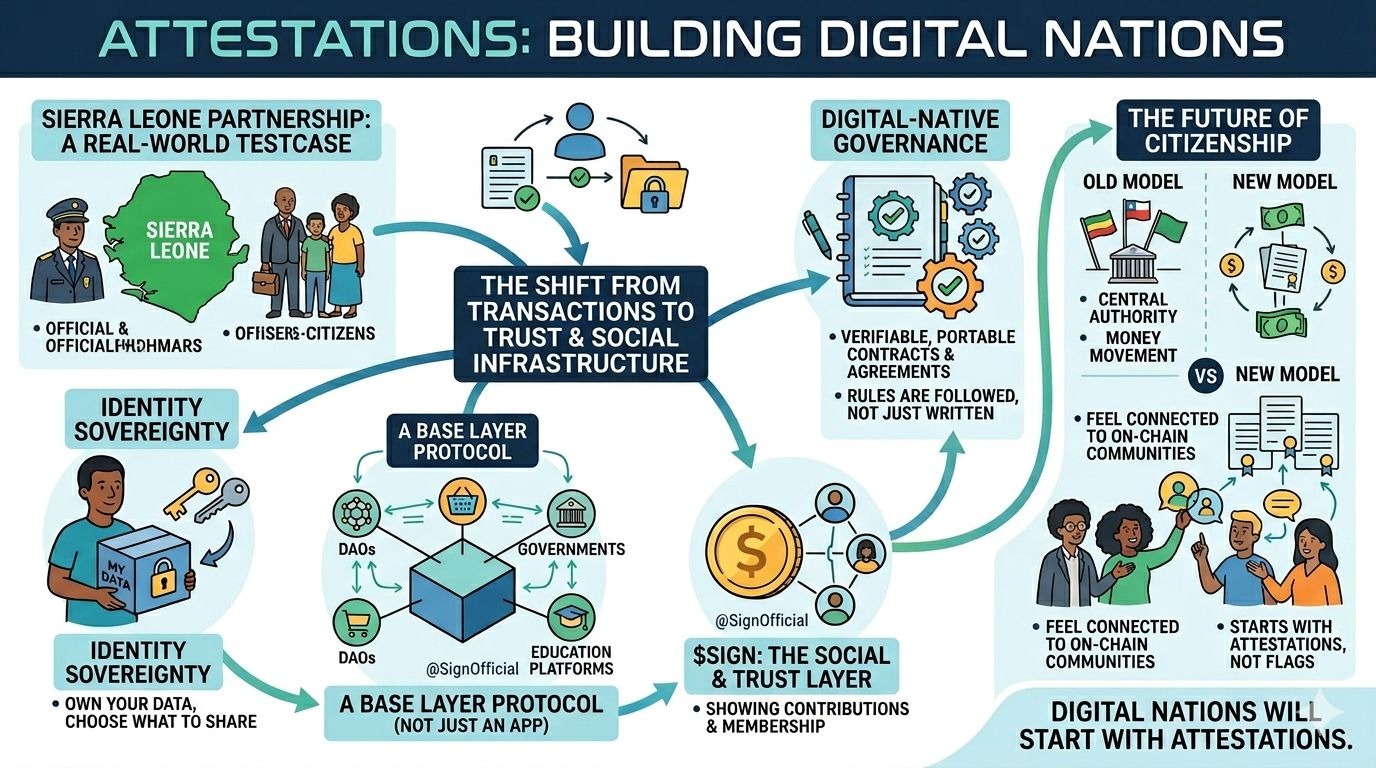
Identity sovereignty is at the heart of it. You own your data and can choose what to share.
That changes the usual model and fits perfectly with what digital nations will need.
@SignOfficial is making a base layer, not just one app. They can all connect and check actions without having to rely on a central authority, like DAOs, marketplaces, governments, and education platforms.
It's clear that contracts, certifications, and proof of agreements can all be made verifiable, portable, and open in the real world.
That makes it possible for digital-native governance, where rules aren't just written down; they're also followed.
What stands out to me is how this could change what it means to be a citizen.
Digital nations will need more than just tokens. They will also need ways to show that someone is a member, has made a contribution, or has taken part.
That layer has $SIGN in it. Cryptocurrency is changing from a financial to a social infrastructure.
In the past, cycles were about moving money. Now, they're about getting people together.
Sign Protocol fits here because it focuses on trust and identity, not just transactions. One interesting idea is that one protocol won't be enough to build digital nations.
There will be a stack of payments, identity, governance, and storage. The "trust layer" is what @SignOfficial owns quietly, and it could be the most important part of all.
I keep asking myself what citizenship means if people start to feel more connected to on-chain communities than to real-life ones.
If digital nations do become real, they won't start with flags.
They will start with attestations.