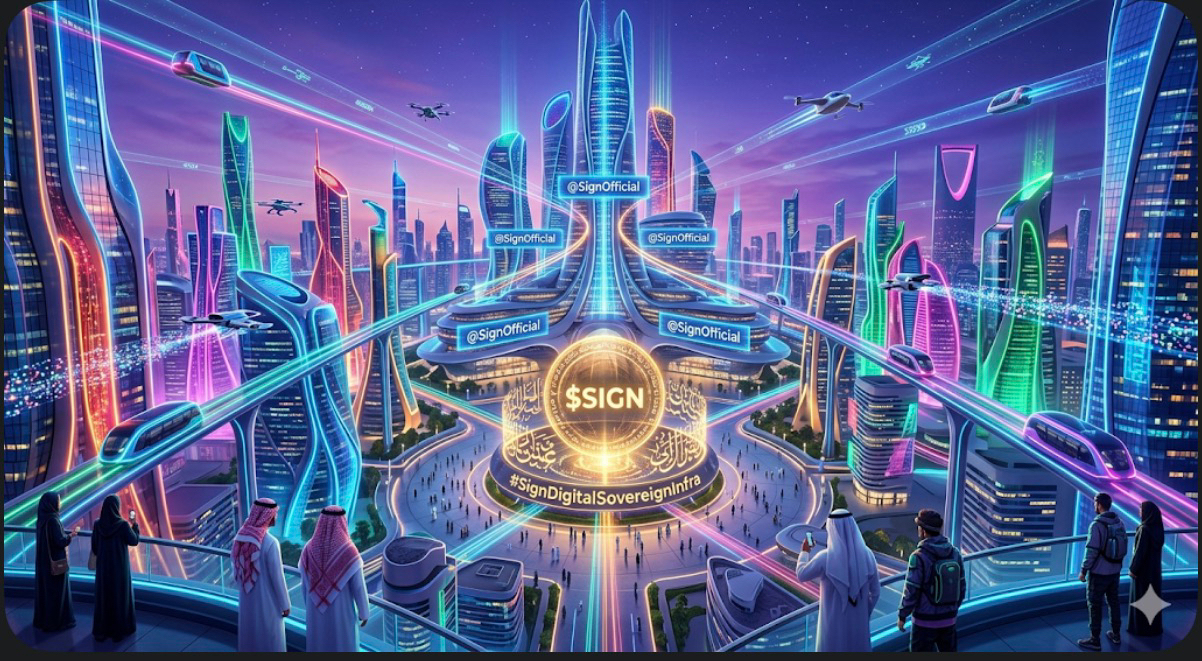
The global economic landscape is shifting, and at the epicenter of this transformation lies the Middle East. No longer content with being just a global energy hub, the region is rapidly pivotting toward a future defined by technological self-reliance and blockchain integration. However, for a digital economy to thrive, it requires more than just capital; it needs a robust, unshakeable foundation of trust. This is where Sign enters the narrative, serving as the essential digital sovereign infrastructure for a new era of regional prosperity.
The Problem of Digital Dependency
Historically, digital growth has relied on centralized, often foreign-owned, data silos. This creates a "sovereignty gap," where nations and businesses are subject to the rules and technical whims of third-party providers. In the context of the Middle East’s ambitious development goals, this dependency is a bottleneck. To truly scale, the region requires a system where data is verifiable, tamper-proof, and, most importantly, owned by the entities that create it.
SignOfficial: Building the Rails of Verification
Sign provides the omnichain attestation layer that bridges the gap between off-chain reality and on-chain certainty. By allowing for the decentralized verification of identity, credentials, and legal documents, SignOfficial is providing the "digital notary" service required for a modern economy.
Imagine a developer in Dubai being able to instantly verify their professional certifications to a firm in Riyadh, or a logistics company tracking the provenance of goods across borders without a single paper trail. This is the power of Sign. It isn't just about moving money; it’s about moving truth. By decentralizing the issuance and verification of claims, Sign ensures that "Digital Sovereignty" isn't just a buzzword—it's a functional reality.
The Economic Engine: $SIGN
The $SIGN token is the heartbeat of this infrastructure. It serves as the utility mechanism that facilitates these attestations, ensuring that the network remains secure, decentralized, and accessible. In a region where financial transparency is becoming a cornerstone of governance, $SIGN provides the transparency needed for complex token distributions, vesting schedules, and project launches through tools like TokenTable.
By utilizing $SIGN, participants are not just using a currency; they are fueling a public good—a shared infrastructure that allows for permissionless innovation. This creates a virtuous cycle: as more institutions adopt Sign for their verification needs, the utility and stability of the $SIGN ecosystem grow, further attracting global talent and investment to the Middle East.
A Vision for 2026 and Beyond
As we move further into 2026, the integration of blockchain into the "real world" is the ultimate goal. The Middle East is leading this charge by adopting technologies that prioritize national data autonomy. Sign’s role in this is pivotal. By offering a neutral, secure, and highly scalable layer for digital attestations, it allows governments and private enterprises to build complex applications without fear of data manipulation or centralized failure.
From the tokenization of real-world assets (RWA) to the management of sovereign identities, the possibilities are limitless. Sign is not just a tool for the crypto-native; it is a foundational layer for the global economy. By securing the Middle East's digital rails today, Sign is ensuring that the region's economic growth remains resilient, transparent, and entirely within its own control.
#SignDigitalSovereignInfra $SIGN @SignOfficial #sign