@SignOfficial This is already answering a tougher question: When war, sanctions, and capital flight occur simultaneously, who can provide a country with a working underlying digital system?
#SIGN Its value lies in sovereign-level infrastructure. It targets three core areas: currency, identity, and capital. Downstream, it enables stablecoin and CBDC issuance; midstream, it facilitates on-chain identity authentication, subsidy distribution, and credential management; and upstream, it supports RWA, cross-border settlement, and asset verification. Normally, it serves as an efficiency-enhancing tool; in times of crisis, it acts as a backup power grid for digital finance.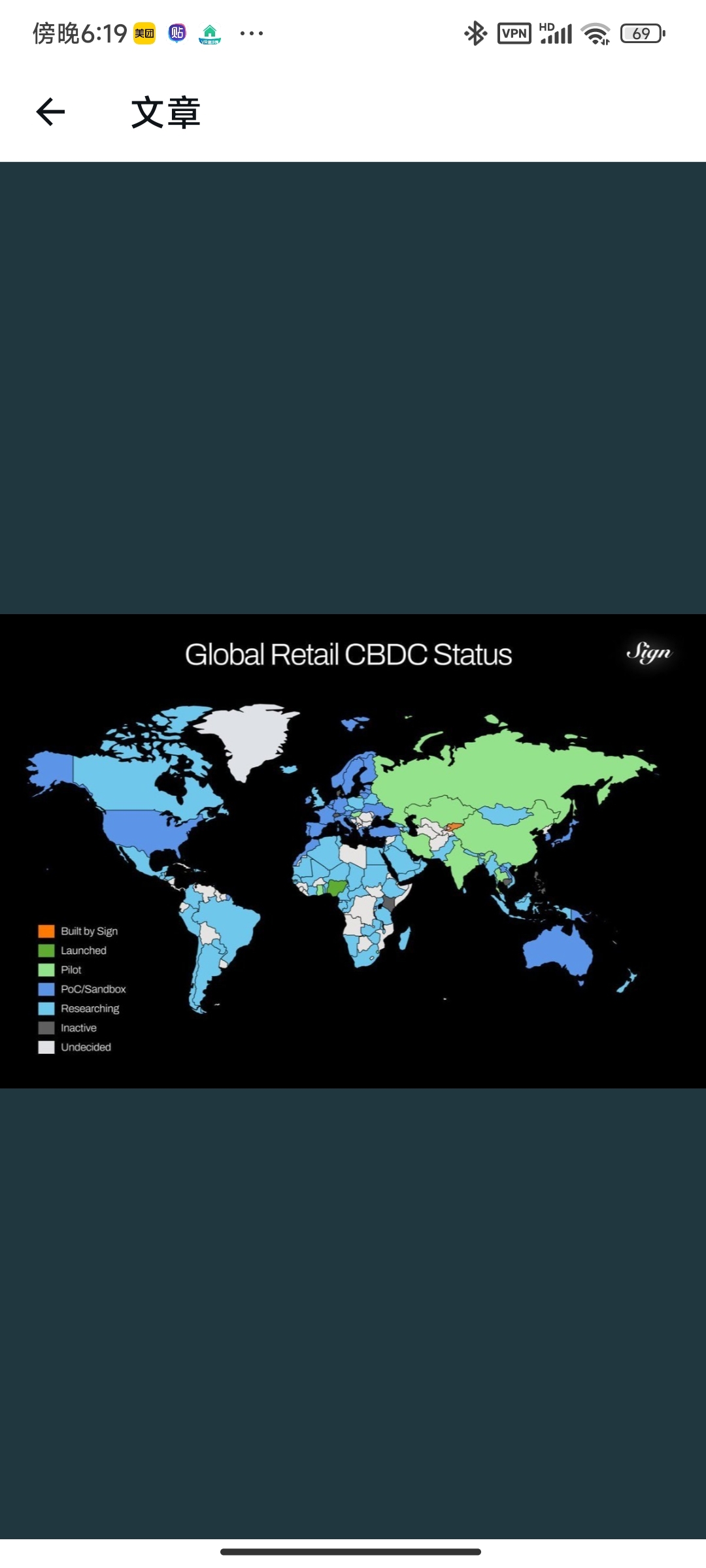
The most practical example is when a country wants to provide aid to refugees. Traditional systems are slow, leaky, and opaque, while SIGN can put identity verification, disbursement records, and receipt certificates all on the blockchain, making the flow of funds clearly traceable. Another example is cross-border trade settlement in the Middle East, and the demand for asset hedging and refuge during geopolitical disasters in the Middle East. Protocols like SIGN are more likely to meet the real needs of an era of high friction.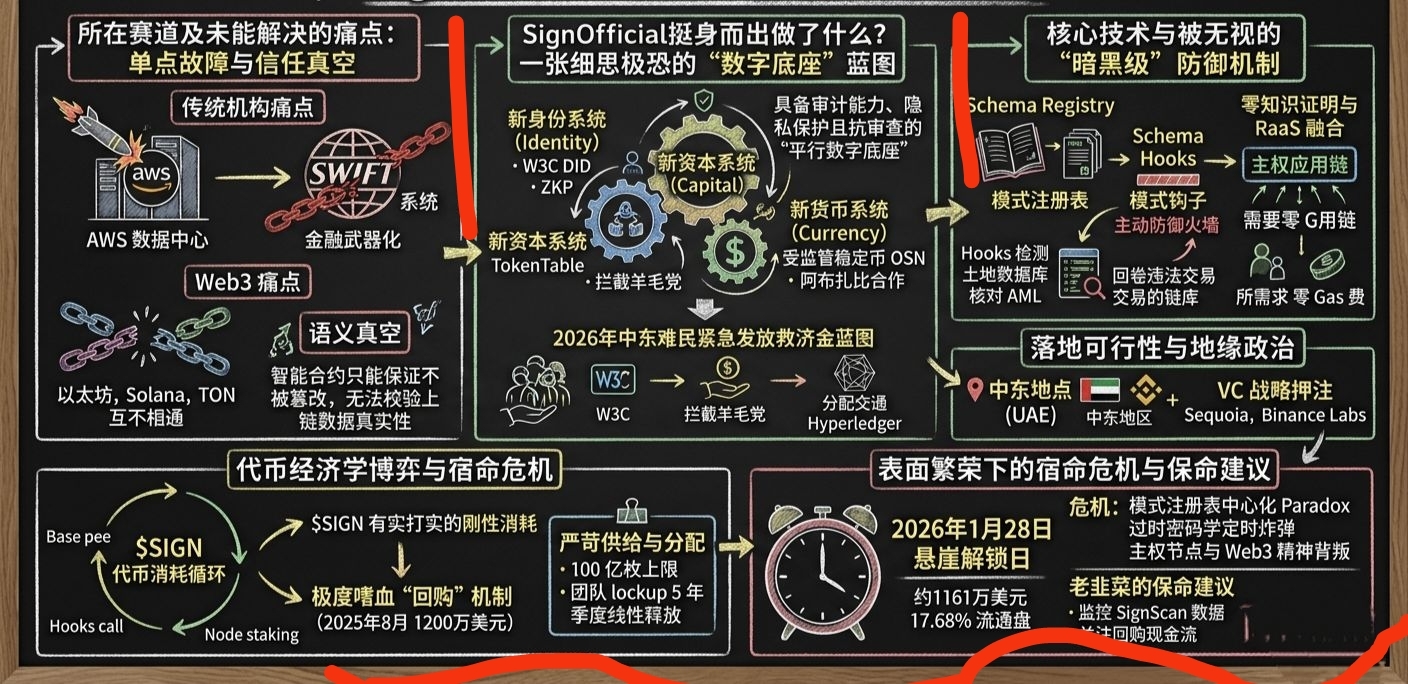 #Sign地缘政治基建
Those in the industry see it as a quick fix: airdrops, accumulation of shares, and short-term price manipulation. That's the reality; who doesn't calculate their exit strategy first? But this time, I was truly awakened—this project isn't just telling a story; it's directly competing in the "national digital finance infrastructure" arena. #SignGeopoliticalInfrastructure
The official website breaks down the entire system in detail: new currency, new identity, and new capital – a three-pronged approach, with the core being to transform authorization, payment, and contract signing into a verifiable, traceable, and tamper-proof "evidence layer." It doesn't sell concepts; it sells the idea that the future of digital finance won't lack public blockchains, but rather an evidence foundation that can be trusted by sovereign institutions.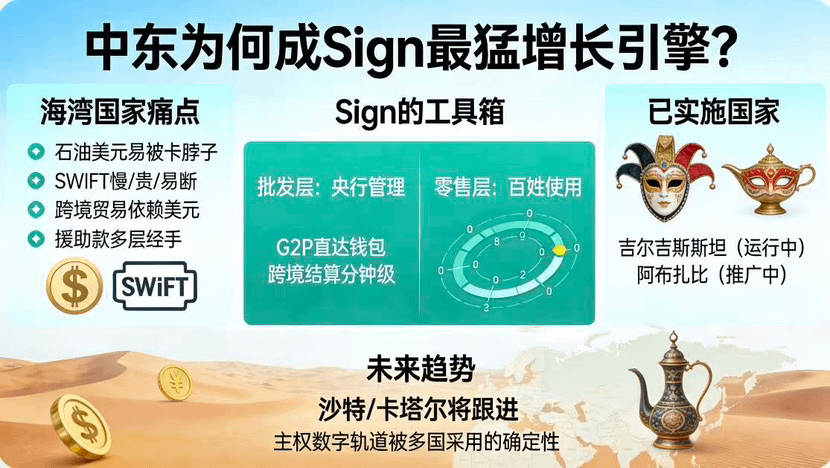
The recent geopolitical turmoil in the Middle East has only served to highlight the true state of affairs. UAE and Saudi Arabia have long since moved beyond the "should we get on board with Crypto?" phase; their current headache is how to weld together regulation, capital flows, and cross-border settlements with a censorship-resistant and internet-disruption-resistant architecture. I read that Reuters report twice: when the fighting starts, traditional offline finance collapses, but Crypto continues to run in the cloud because it's inherently immune to physical disruption. However, "being able to run" and "being widely adopted by countries" are two different things. What truly hinders institutions and sovereign states is never the speed of transfers, but rather the verification of identity and the creation of compliant records.
Sign's Selective Disclosure is practically tailor-made for Middle Eastern royalty and sovereign wealth funds: you can prove "I'm clean" to regulators without revealing your entire hand. This is ten times more valuable than a purely anonymous narrative and a hundred times more flexible than a purely compliance narrative. $SIGN