Having been in the circle for nearly ten years, I understand how those PPTs that threaten to overturn the world can be so far-fetched. Only recently, after stubbornly following SignOfficial, did I see that this group has actually plunged into the quagmire of geopolitical infrastructure, and suddenly felt that at last, there is a project willing to tackle hard problems with mud on them.@SignOfficial
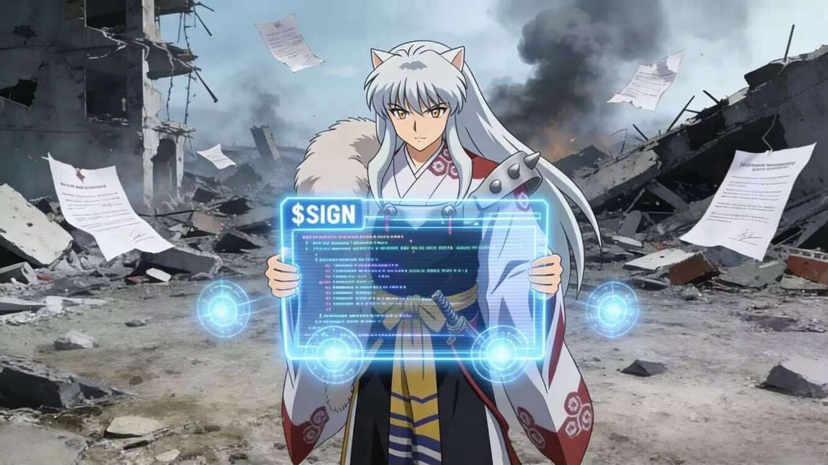
Don’t listen to those outside who treat SIGN as an ordinary certificate tool; they haven’t grasped the essence. Shift your focus to the war-torn Middle East, where the true potential of this thing is revealed. That place has never lacked money or small images; what it lacks is the fundamental mutual trust—once the gunfire starts today, the front line changes tomorrow. Even a network cable can be cut, and relying on anyone for guarantees is pointless. To prove identity or for rescue teams to deliver antibiotics into a blockade zone, the old world’s method of stamping documents has long become ineffective.$SIGN
Here lies a rarely mentioned trump card: the asynchronous witness mechanism. Normally, when interacting on-chain, losing internet for even a second can be infuriating, but in war zones, lack of internet is commonplace. The most remarkable aspect of SIGN is that even when completely offline, it can generate binding credentials via surrounding local networks, and as soon as the signal is restored, it can be packaged and uploaded to the main net to lock it down. This is not a display of skills in the Ethereum greenhouse; it’s a real-life lifesaver—the rations delivered into the blockade zone, the geographical stamp and receipt are irrefutable evidence that any local warlord cannot erase.
Many so-called infrastructure projects are laughably clean and cannot withstand the harsh realities. SIGN dares to wade into this murky water because it genuinely wants to get things done—it aims to establish a set of decentralized diplomatic principles on the ruins. When several sides point guns at each other, who can be trusted? Trust in mathematics. Resource allocation is locked down with threshold signatures; several opposing factions must authorize simultaneously for it to be released. A ceasefire agreement on paper can be torn up at will, but the code written on the blockchain can never be bought off.
But let’s be clear, the operational threshold of this agreement is currently inhumane. My relatives back home can’t even remember the complete transfer password; how can they understand the complex processes? If it can’t achieve a foolproof, seamless signature on mobile, it ultimately remains a toy for geeks. Its future depends entirely on how many chaotic scenarios it can penetrate— the Middle East is merely a testing ground, as long as this planet has war and suspicion, this set of cryptographic infrastructure will always have a market.$BTC
Right now, the circle is full of hype and empty talk; instead of chasing after air, it’s better to look at those who can address real pain points. For thousands of years, whoever has the strongest fist sets the rules. Now, signing agreements like this is like pulling teeth from a tiger. When the flames of war burn everything to ash, what remains intact will probably be the code that no one can change. Do you think Sign can achieve that? Everyone is welcome to comment.