

I keep thinking about this whenever I look at crypto. Sending tokens is not really the hard part anymore. The hard part is proving why those tokens were sent in the first place.
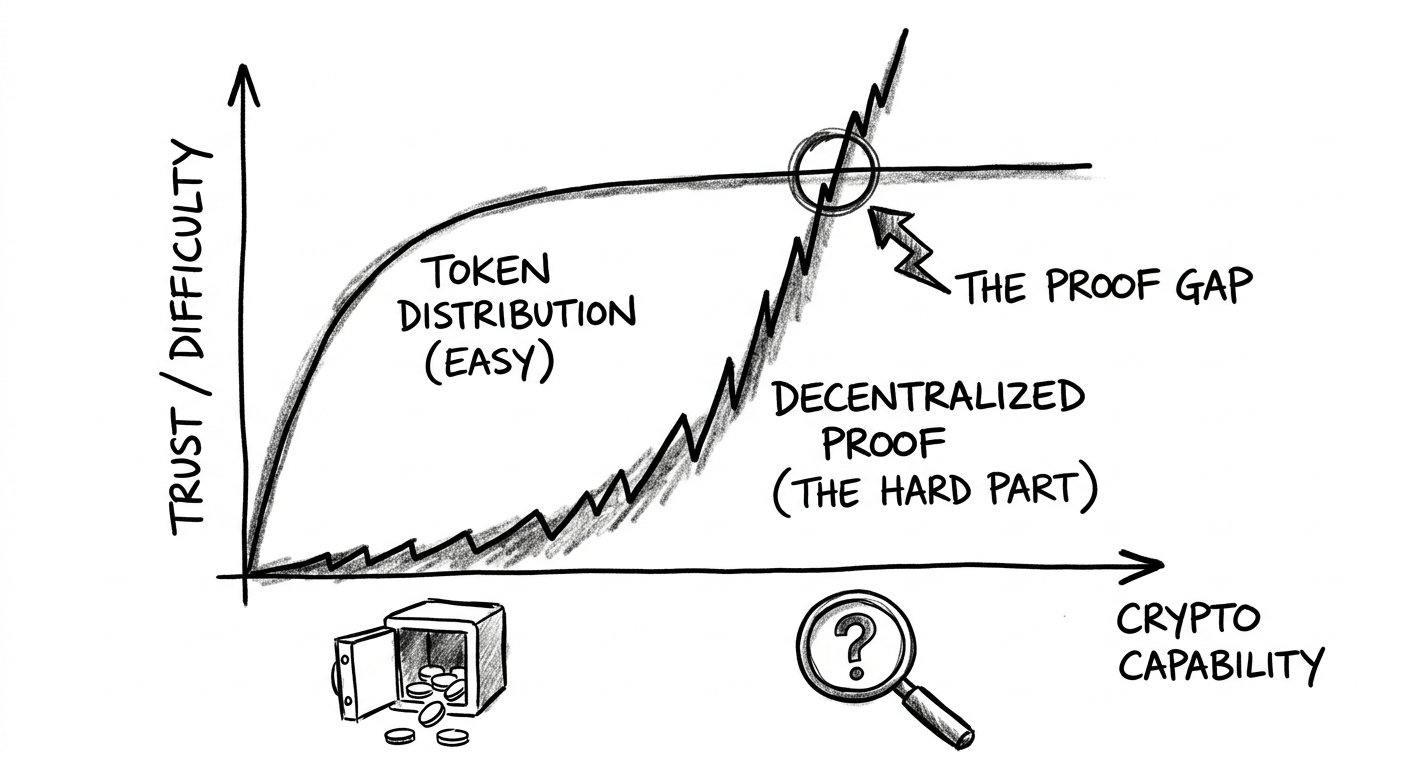
A wallet gets an allocation. An airdrop goes live. Rewards are unlocked. Everything looks smooth on the surface. But the real issue starts after that. Why did this wallet qualify? Who made that decision? What rules were used? And can those rules still be checked later?
That is why Sign caught my attention.
What I like about Sign is that it is not trying to sound flashy. It is trying to solve something deeper. At the base level, it works through schemas and attestations. A schema is basically the structure of a claim, and an attestation is the proof attached to it. Simple idea, but powerful one. It means the system is not only saying something happened. It is also trying to show why it happened.
That matters a lot, because I think this is where many crypto projects still feel weak.
Most projects know how to distribute tokens. But when you look closer, the logic behind the distribution is often unclear. People trust the final result, but they cannot really see the process behind it. Sometimes it is just a list. Sometimes it is a spreadsheet. Sometimes it feels like decisions were made somewhere in the background and users are just expected to accept them. That is where trust starts breaking.
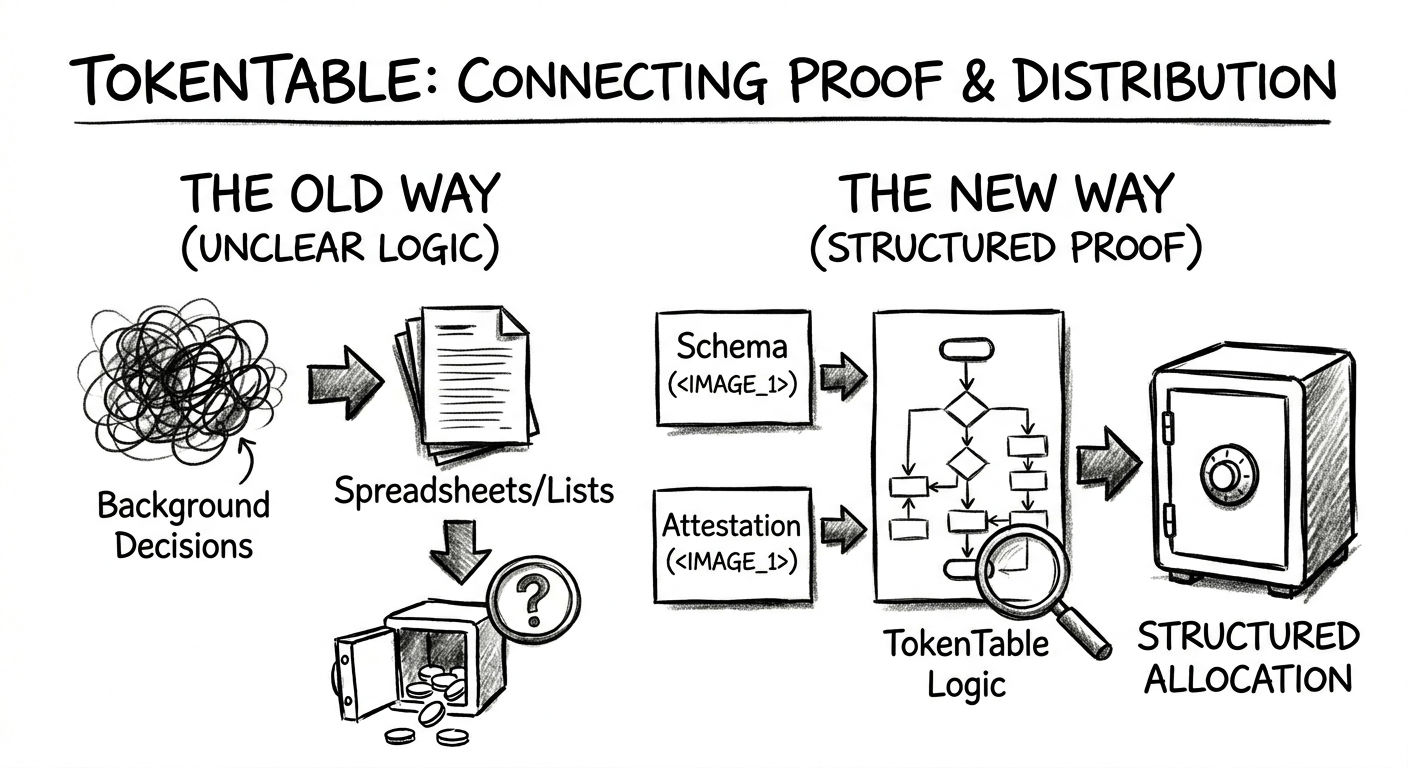
This is why TokenTable feels important to me. It connects proof with actual token distribution. So instead of distribution feeling random or hidden, it starts feeling more structured. If someone gets tokens, there should be a reason. If someone does not, that should be clear too. For me, that is a much stronger model than just sending assets and hoping people trust the process.
I also think Sign understands something very important. Not all trust comes from making everything public. Some data can be public, some can stay private, and some can be proven without showing every detail. That feels more realistic. Real systems are not clean and simple all the time. They deal with identity, privacy, agreements, and rules all at once. Sign looks like it is being built with that reality in mind.
The main thing I would watch is not only hype. I would watch whether more developers actually use it, whether the proof system becomes useful across more apps, and whether people start depending on it in situations where trust really matters. That is when a project starts becoming real infrastructure.
Of course, there are risks too. A system like this is only as strong as the people setting the rules behind it. If the issuer is weak, or the structure is badly designed, ,,,,,,,,then even verified proof can still carry weak logic. That is why understanding the risks early is important. Good infrastructure does not remove responsibility. It just makes responsibility easier to trace.
Still, I think the bigger idea here is strong. If Sign keeps growing the right way, it could help crypto move beyond just recording outcomes and move toward proving conditions. Not only who got value, but why they got it. Not only what happened, but whether it happened under the right rules.
That is the part I keep coming back to.
Crypto does not only...need better distribution. It needs better proof. And I think that is exactly where Sign is trying to build...