
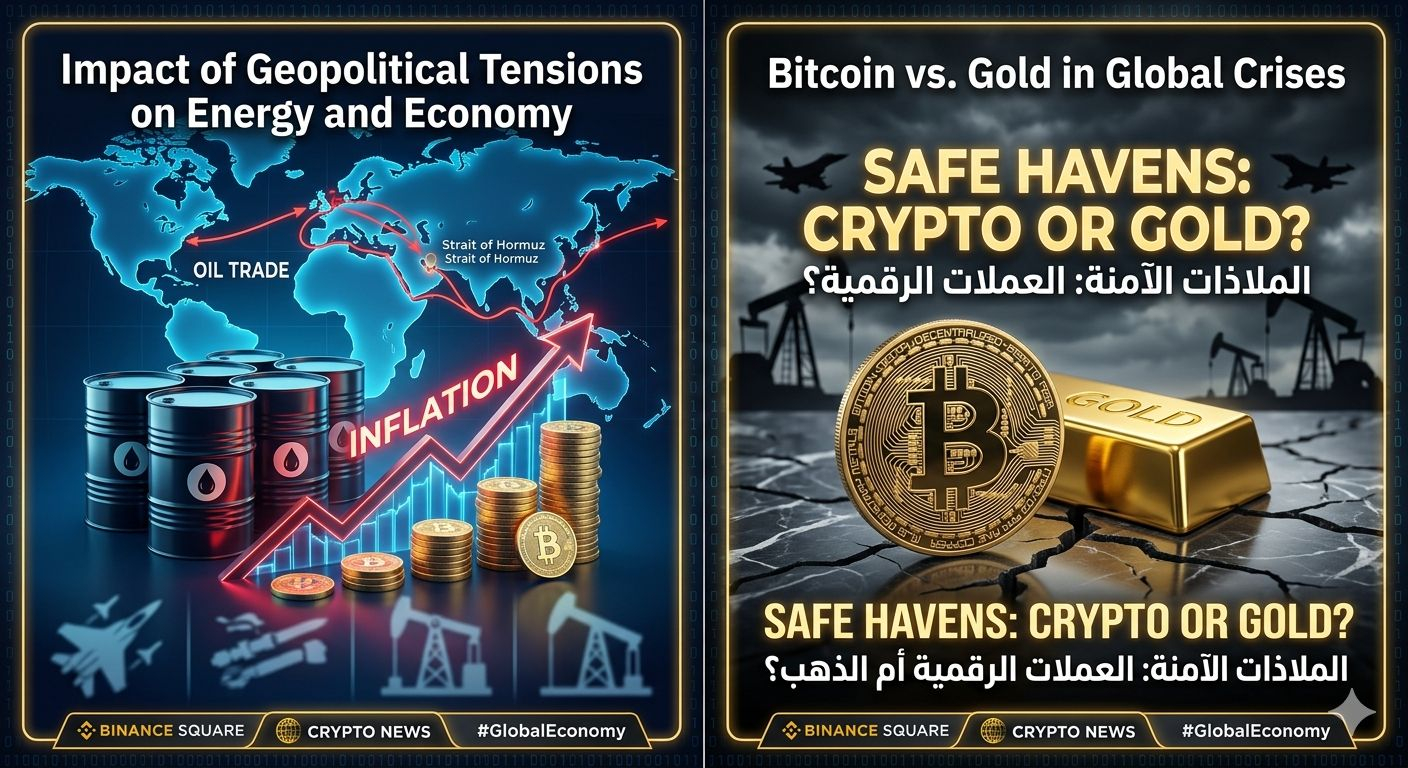
Writing an article for a platform like Binance Square requires a mix of geopolitical analysis and its direct impact on financial markets and crypto. Here’s a draft of a professional article.
Introduction: Geopolitics meets digital finance
The Middle East has always been the heart of the global energy market, but in 2025, it also became the main driver of fluctuations in financial markets. With ongoing geopolitical conflicts, the impact is no longer confined to oil prices alone, but has extended to global supply chains, inflation rates, and even the performance of digital assets like Bitcoin.
1. Oil and waterways: The threatened lifeline of the economy
The Middle East region accounts for about 20% of global oil and gas supplies passing through the Strait of Hormuz.
Consequences of the war: Any threat to these waterways immediately leads to spikes in oil prices (Brent and WTI), fueling global inflation.
Analysis: Rising energy costs mean increased shipping and production costs, which pressure central banks (like the US Federal Reserve) to continue high-interest policies, reducing liquidity in stock and crypto markets.
2. Bitcoin: Is it a "safe haven" or a "high-risk asset"?
The years 2024 and 2025 witnessed volatility in Bitcoin's identity during crises.
Immediate response: When escalation occurs, we often observe widespread liquidations of long positions due to panic, as investors tend to move to cash or gold.
Medium-term resilience: Data has shown that Bitcoin quickly recovers once conditions stabilize relatively, as some begin to see it as a hedge against the collapse of local currencies in conflict areas.
Mining: Rising energy prices directly affect the profitability of miners, which may lead to shifts in the global "Hash Rate."
3. Inflation and global monetary policy
The war in the Middle East is not just a regional conflict, but a global "supply shock."
2025 forecasts: Analyses suggest that ongoing tensions may add 0.5% to 0.8% to global inflation rates.
Investor stance: In an inflationary environment resulting from war, investors seek assets with a limited supply. Here, the importance of "Bitcoin scarcity" emerges as a long-term strategic option against fiat currencies that may lose value due to financial crises.
4. Tips for traders during geopolitical crises
On the Binance platform, prudent risk management is key:
Avoid high leverage: Volatility caused by political news can be very severe and lead to account liquidations within minutes.
Diversification of the portfolio: Don't put all your investments in one type of asset; combine stablecoins, Bitcoin, and traditional safe-haven assets.
Monitoring news and real-time data: Use "Binance News" to follow the immediate impact of events on liquidity movement.
Conclusion: The future of the financial landscape
The current crisis in the Middle East reminds us that the global financial system is closely interconnected. While traditional markets suffer from inflationary pressures and supply chain disruptions, fintech and digital currencies continue to provide decentralized alternatives, despite challenges and volatility.
#BinanceSquare #
MiddleEast
#GlobalEconomy
#Bitcoin #MarketAnalysis #Inflation