
I usually roll my eyes when a protocol calls itself a “public good.”
In crypto, that phrase is thrown around so casually it’s basically lost all meaning. Sometimes it just means “open source.” Sometimes it means “we hope someone else pays for this forever.”
So when Sign Protocol openly describes itself as an incentive aligned public good, I stopped scrolling and actually read.
What they’re trying to do is genuinely interesting and honestly a bit risky.
Sign positions the protocol as a neutral evidence layer: schemas, attestations, selective disclosure, revocation, expiration, and cross-chain verification. It’s not trying to be another flashy app. It wants to be the shared infrastructure that every other system can plug into without rebuilding trust from scratch. The docs are very clear: they want broad, permissionless benefit (Net Positive Impact) while admitting that grants alone are not sustainable (Pragmatic Sustainability).
That honesty is rare.
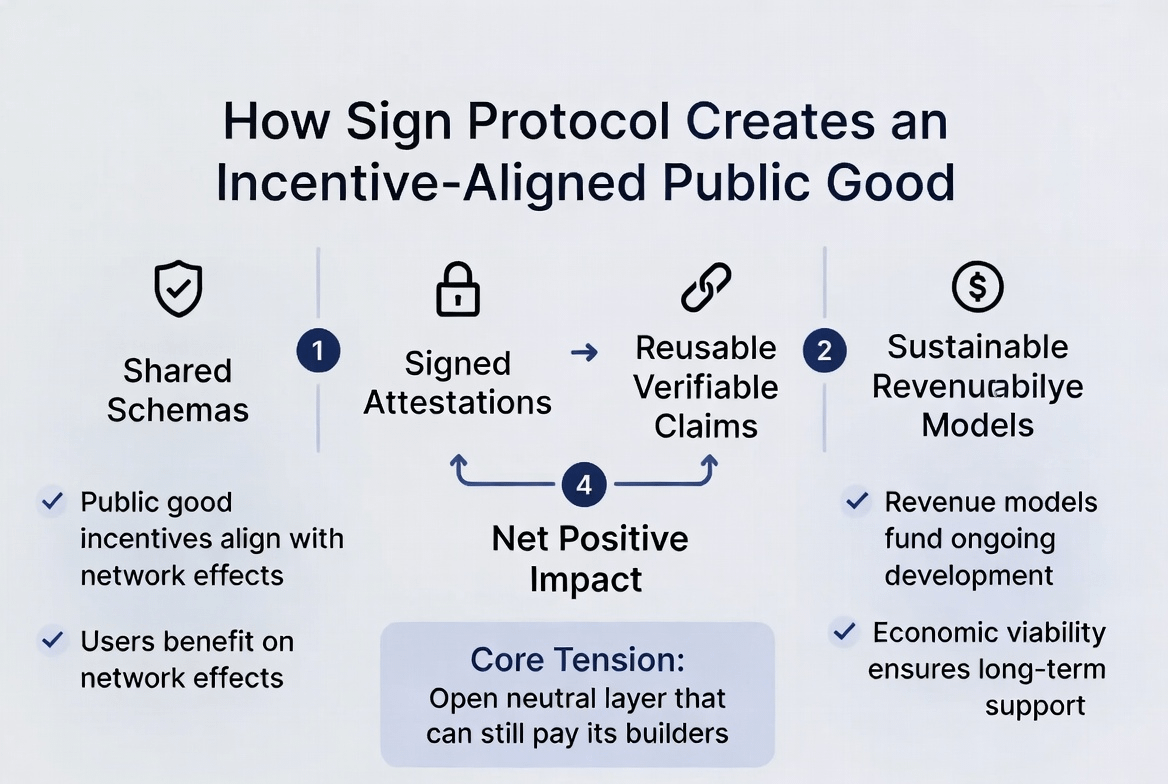
They even point to GitHub and Red Hat as examples, open infrastructure that still found ways to generate revenue (subscriptions, enterprise products) without compromising neutrality. Sign suggests the same path: the core protocol stays open and neutral, while products built on top (like EthSign) can explore monetization.
Technologically, it’s solid.
Attestations are structured, signed, and machine readable. Revocation and expiration are built in. Selective disclosure + ZK proofs let you prove something without revealing everything. The whole system is designed so that once a claim is issued, any downstream app can verify it instantly, no more scattered data, no more manual audits, no more reinventing the wheel.
The impact is bigger than it sounds.
If this layer actually works, institutions, governments, AI systems, and Web3 projects can all speak the same verifiable language. Ownership, credentials, eligibility, everything becomes portable and checkable instead of static PDFs no one trusts.
But here’s the tension I can’t shake: can a truly neutral public good survive without eventually favoring whatever makes money?
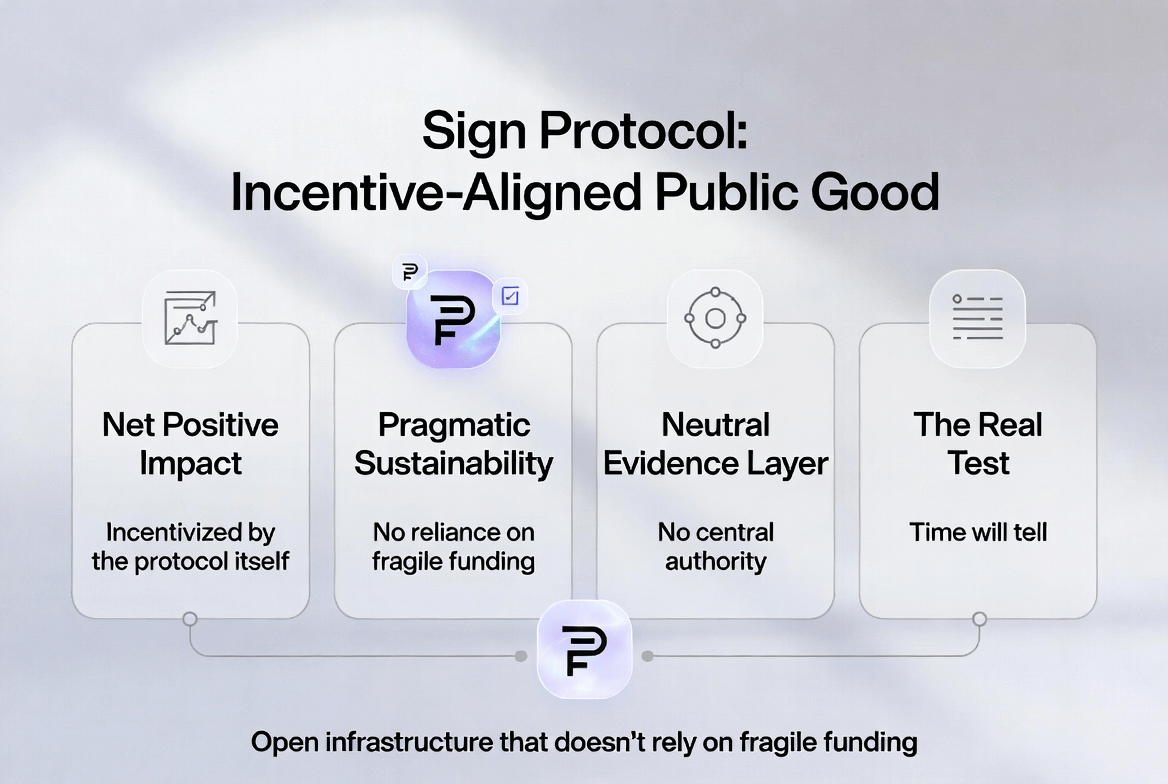
Sign is trying to thread that needle, keep the protocol open and beneficial for everyone, while letting commercial layers pay the bills. On paper it makes sense. In practice, that’s exactly where most “public good” projects eventually bend.
I’m not convinced yet.
But I’m paying very close attention. Because if Sign actually pulls this off a neutral, incentive aligned evidence layer that doesn’t collapse under its own idealism. It could become one of the most important pieces of infrastructure in the next cycle.
Right now, it’s still just an ambitious claim.
But it’s one of the few claims in crypto that feels worth watching.
#SignDigitalSovereignInfra @SignOfficial $SIGN
