If you've ever entered a perfect trade…
only to get stopped out before the price moves your way — you probably got caught in a liquidity sweep.
This is one of the most misunderstood mechanics in crypto trading.
Markets don’t move randomly.
Large players — market makers, funds, and whales — need liquidity to execute big orders. And the easiest place to find that liquidity is where retail traders place their stop losses.
Where do most traders put stops?
• Just below support
• Just above resistance
• Under obvious swing lows
• Above previous highs
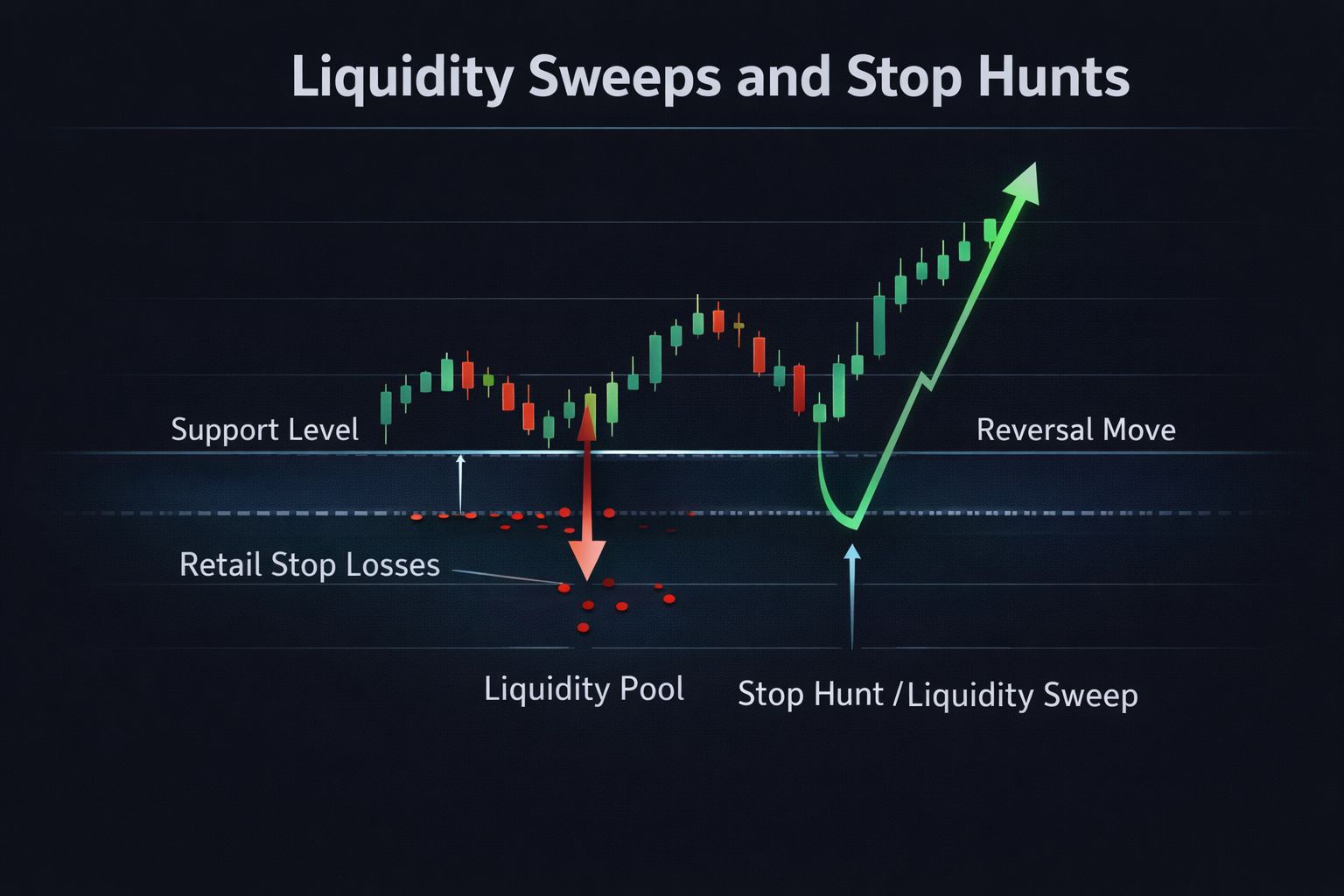
Because everyone uses the same levels, these areas become liquidity pools.
Price often moves toward these zones not because the trend changed, but because the market is collecting orders.
Once those stop losses are triggered, the market suddenly gains the liquidity needed for the real move.
This is why you often see quick wicks below support or above resistance.
It’s not manipulation — it’s how markets function.
Take Bitcoin during many consolidation phases.
Price often breaks slightly below a well-known support level, triggering thousands of stop losses.
Retail traders panic and sell.
Then within minutes or hours, BTC reverses and moves back above the range.
This pattern has appeared countless times across major assets like Ethereum and Solana.
Experienced traders recognize these moves as liquidity grabs, not trend changes.
To avoid getting trapped by liquidity sweeps:
• Don’t place stops exactly at obvious levels
• Watch for fake breakouts with fast rejections
• Enter after confirmation instead of the initial breakout
• Study market structure, not just support and resistance
Sometimes the best trade comes after the stop hunt, not before it.
In crypto trading, the market often moves where the most traders will lose first.
Learn where liquidity sits…
and you’ll start seeing the market very differently.
#CryptoTrading #Bitcoin #TradingEducation