

There’s a clean story around Sign Protocol: instant verification, frictionless transfers, trust you don’t have to think about.
Reality is quieter.
Things don’t break, they pause. Credentials lag. Transfers settle “eventually.” Small frictions stack up behind the scenes, even if users never notice.
That’s not failure. That’s the system working.
SIGN doesn’t eliminate friction, it absorbs it. It adapts across messy layers like regulation, legacy systems, and human decisions that don’t always align.
And here’s the shift most people miss:
Trust isn’t automated. It’s redistributed.
Part lives in code.
Part lives in operators.
Part lives in users accepting that “verified” isn’t always instant or universal.
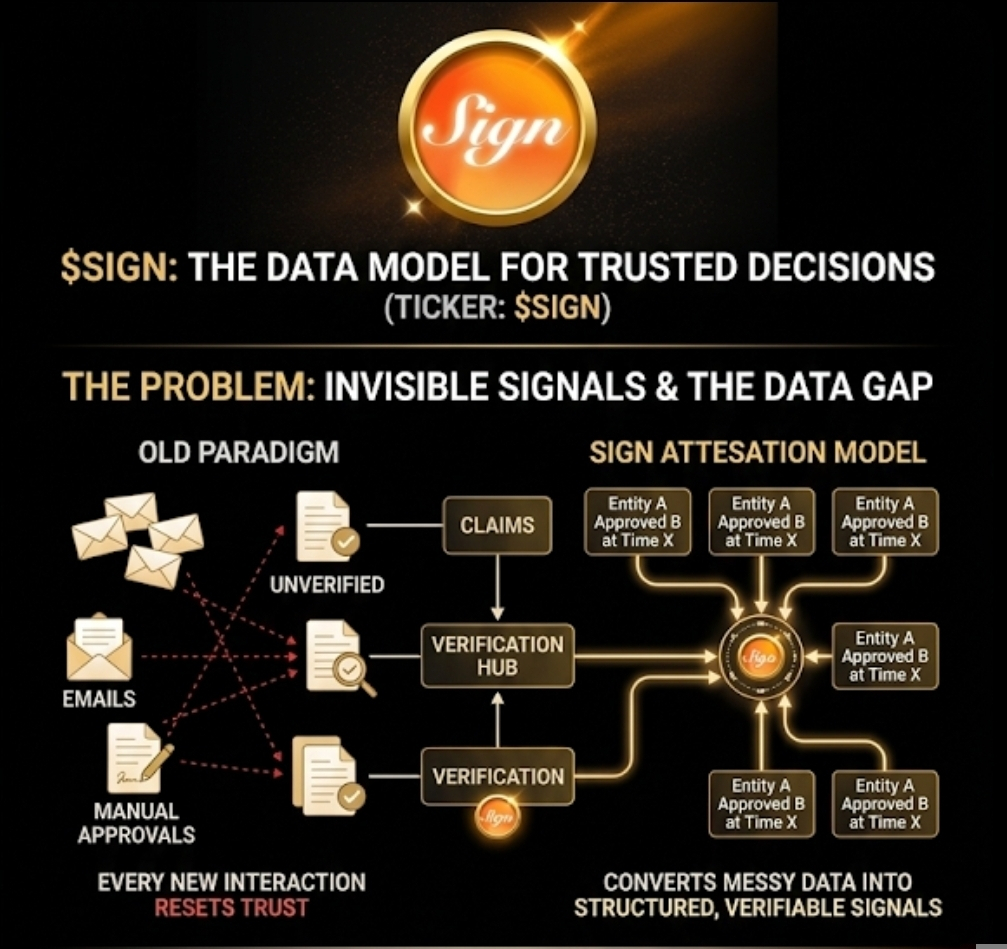
The real unlock is attestations.
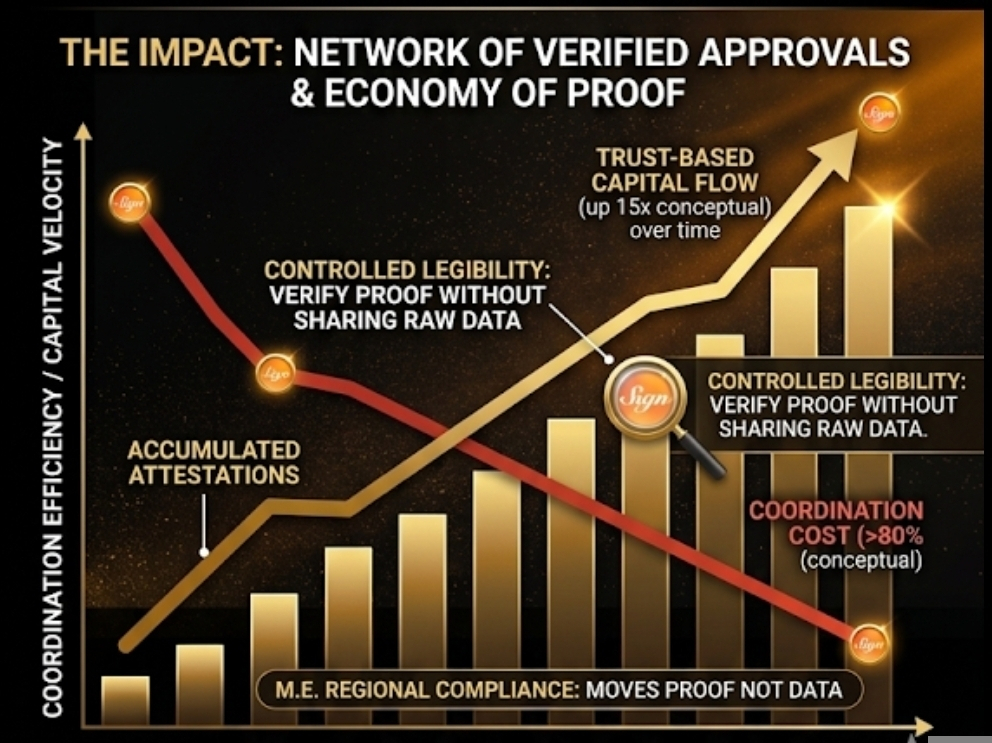
Not raw data. Not full transparency. Just structured proof: This was approved, by this entity, under these conditions.
That proof can move. It can be reused. It can influence decisions across systems without exposing everything behind them.
So approvals stop being endpoints. They become inputs.
And that changes how coordination works.
Less re-checking. Less duplication. Faster alignment between systems that don’t fully trust each other.
But it’s subtle.
This isn’t the kind of activity markets easily price. It’s not transaction volume. It’s decision infrastructure quietly improving underneath.
Which raises a harder question:
What’s more valuable long term — moving money, or proving why it should move?
SIGN isn’t about perfect trust.
It’s about making imperfect trust work at scale.
And that’s a much harder problem.