
At first, I didn’t think much about it. Standards always sound like background noise. ISO 20022, compliance, messaging formats… not exactly the exciting part of any system.
But the more I sat with $SIGN, the more that choice started to feel intentional. Almost like a signal hiding in plain sight.
Because if you think about it, crypto-native projects don’t care about ISO 20022. DeFi doesn’t use it. Retail users don’t even know it exists. Adding support for it doesn’t make your product look better or attract more users in the usual sense.
So why build around it from day one?
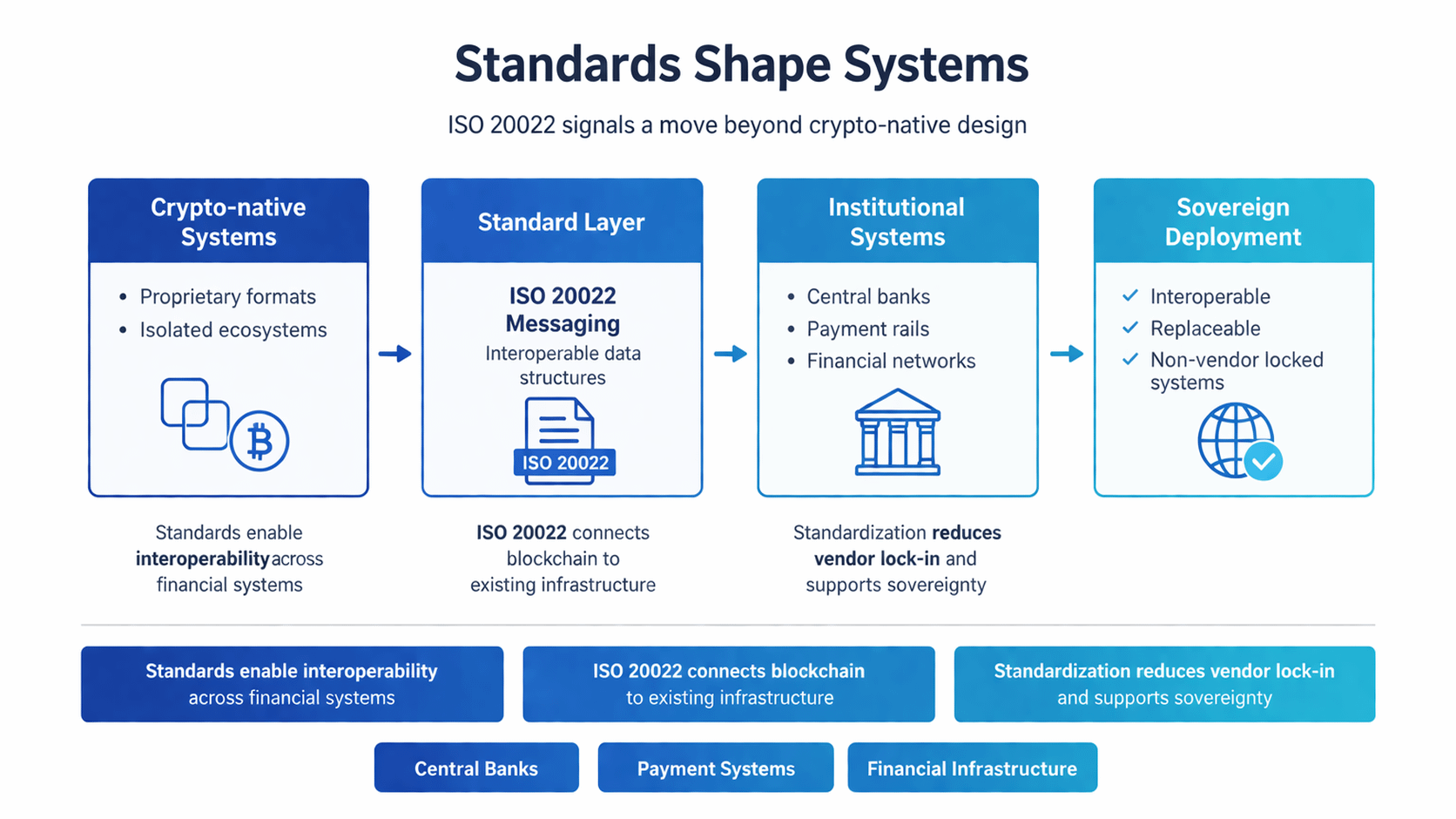
The only answer that makes sense to me is… they’re not building for crypto users first. They’re building for institutions that already run on that standard. Central banks, payment systems, financial infrastructure that needs to interoperate with everything else that already exists.
And that changes how I look at the whole architecture.
ISO 20022 isn’t just about compatibility, it’s about not being locked in. If your system speaks a standard language, then theoretically other systems can read it, integrate with it, or even replace parts of it without rebuilding everything from scratch. That’s a very different position compared to proprietary setups where everything depends on one vendor.
I think that’s where the “sovereignty” angle starts to feel more real. Not just in branding, but in actual design choices. Combined with things like open attestations and standard identity formats, it feels like they’re trying to make sure a government isn’t trapped inside the system they deploy.
At least in theory.
The dual-rail setup also fits into that idea. Private control where needed, public interoperability where it makes sense, and some kind of bridge connecting the two while still keeping policy in the hands of the operator. It sounds clean conceptually, but I keep wondering how that behaves under real-world pressure.
And yeah, this is where my doubts come in. It’s one thing to design for sovereignty on paper, another to actually deliver it in production. Migration, operations, long-term independence… those are messy, and documentation can’t really prove them.
Still, I keep coming back to the same thought. Most projects optimize for adoption first, then think about standards later. Sign seems to be doing the opposite.
Not sure if that makes it early or just aligned with a different timeline.
I’m still watching how this plays out.