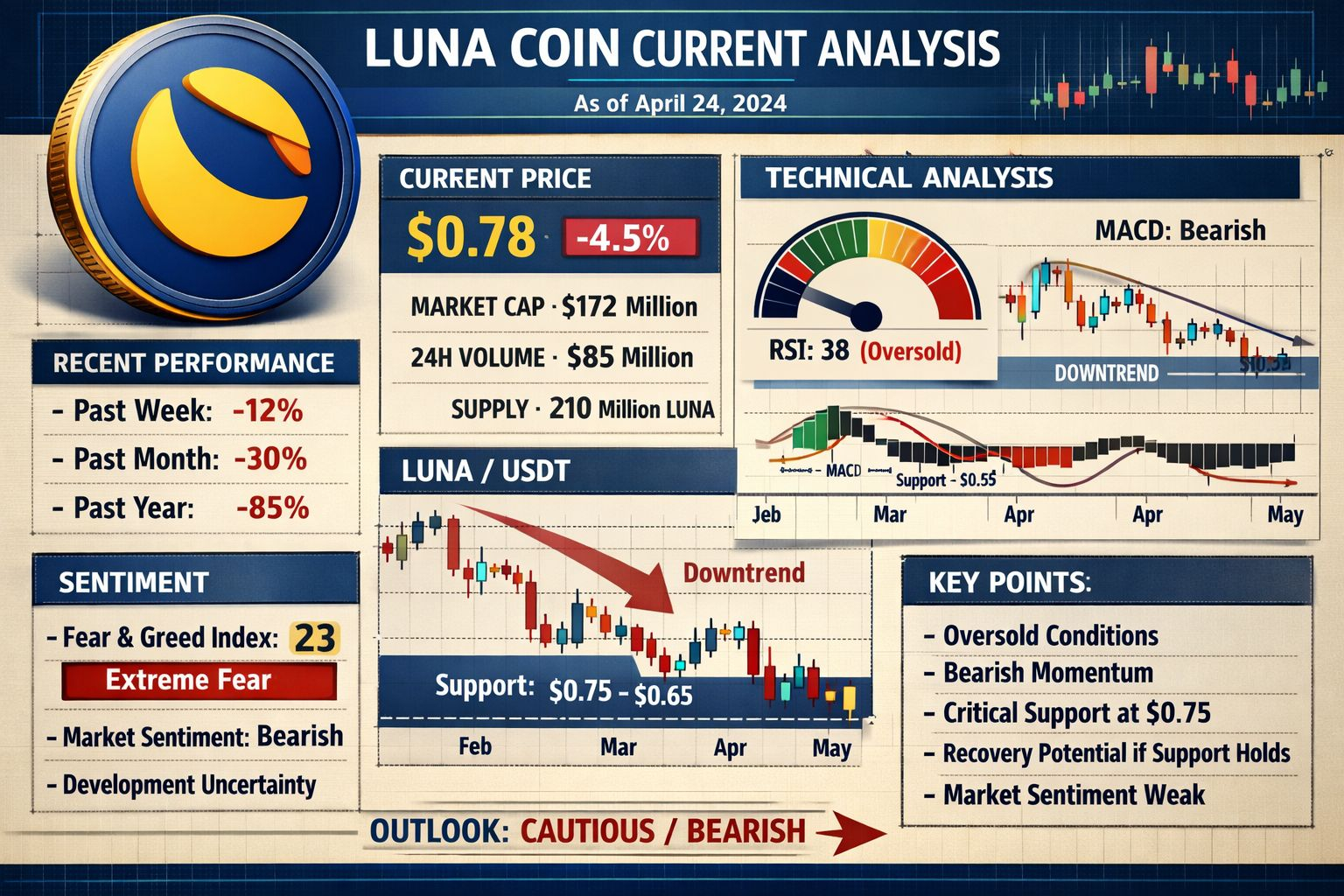
📈 Current Price & Market Status$LUNA

As of the most recent data, Terra (#LUNA ) is trading around $0.06–$0.064 per token, with a market capitalization near $44–$45 million and 24‑hour trading volume around $7–$8 million. This places it far below its historical peak of nearly $19–$20 in 2022, reflecting a dramatic collapse and slow recovery since.
LUNA’s current price movement is largely range‑bound and low‑volatility, with near‑term resistance around $0.0633–$0.0637 and support just below at around $0.0627–$0.0630. Technical indicators like the Relative Strength Index (RSI) show neutral momentum, suggesting neither strong bullish nor bearish conviction at present.
🧠 Project Fundamentals
🔹 What Is LUNA Today?
Terra (LUNA) is the native token of a community‑run blockchain launched in May 2022 under the Terra Ecosystem Revival Plan after the original network’s collapse. This new chain, often called Terra 2.0, uses Delegated Proof‑of‑Stake (DPoS) via the Cosmos SDK, supporting staking, governance, and transactions on its blockchain.
$LUNA tokens serve multiple functions on the network: paying transaction fees, participating in governance decisions, and securing the chain through staking.
🔹 Post‑Crash Context
Terra’s original blockchain included an algorithmic stablecoin (UST) designed to maintain a $1 peg, using LUNA as the balancing token. That system failed in May 2022, leading to a loss of investor confidence and a collapse that erased billions in value.
The current $LUNA token does not include that failed algorithmic stablecoin mechanism. The network has been rebuilt with a focus on community governance and basic utility, not replicating the previous stablecoin design.
📊 Technical Market Outlook
Short‑term price action shows LUNA stuck in a tight range, with no distinct catalyst driving independent growth; moves largely mirror broader crypto market trends, especially Bitcoin’s direction. If the price closes above the immediate resistance, it could offer limited short‑term upside targets. Failing to hold support levels could see stagnation or small declines.
Trading volume remains relatively subdued, which points to low market participation and makes price breakouts harder to sustain without a significant external driver.
⚠️ Key Risks & Challenges
🔸 Historical Reputational Damage
The Terra ecosystem’s past failure remains a major psychological and regulatory burden. Legal and regulatory fallout persists, as shown by related settlements and criminal cases tied to the collapse of the original network — factors that affect trust and institutional interest.
🔸 Project Adoption & Ecosystem
While Terra 2.0 exists, it currently lacks broad, high‑impact adoption compared to large Layer‑1 networks. Developers and decentralized applications (dApps) have largely emigrated to other platforms, limiting growth drivers for LUNA beyond speculative interest.
🔸 Market Volatility
As with most altcoins, LUNA remains highly sensitive to broader crypto market swings, meaning that even neutral news or macroeconomic shifts in Bitcoin or Ethereum prices can sway LUNA’s valuation.
📌 Summary
Bullish Factors
Defined technical levels traders can monitor.
Established ecosystem and governance structure.
Bearish Factors
Major historical reputational issues weighing on confidence.
Low liquidity and limited independent catalysts.
Heavy reliance on broader crypto market momentum.
In total, LUNA’s current trajectory is neutral to cautious, reflecting a fragile recovery stage with limited conviction among traders and investors.