
Most people think identity systems fail because of bad technology.
I don’t think that’s the real problem.
The real weakness usually shows up long before the code breaks. It shows up when trust is placed in the wrong place, or when authority makes a decision that cannot be easily corrected later.
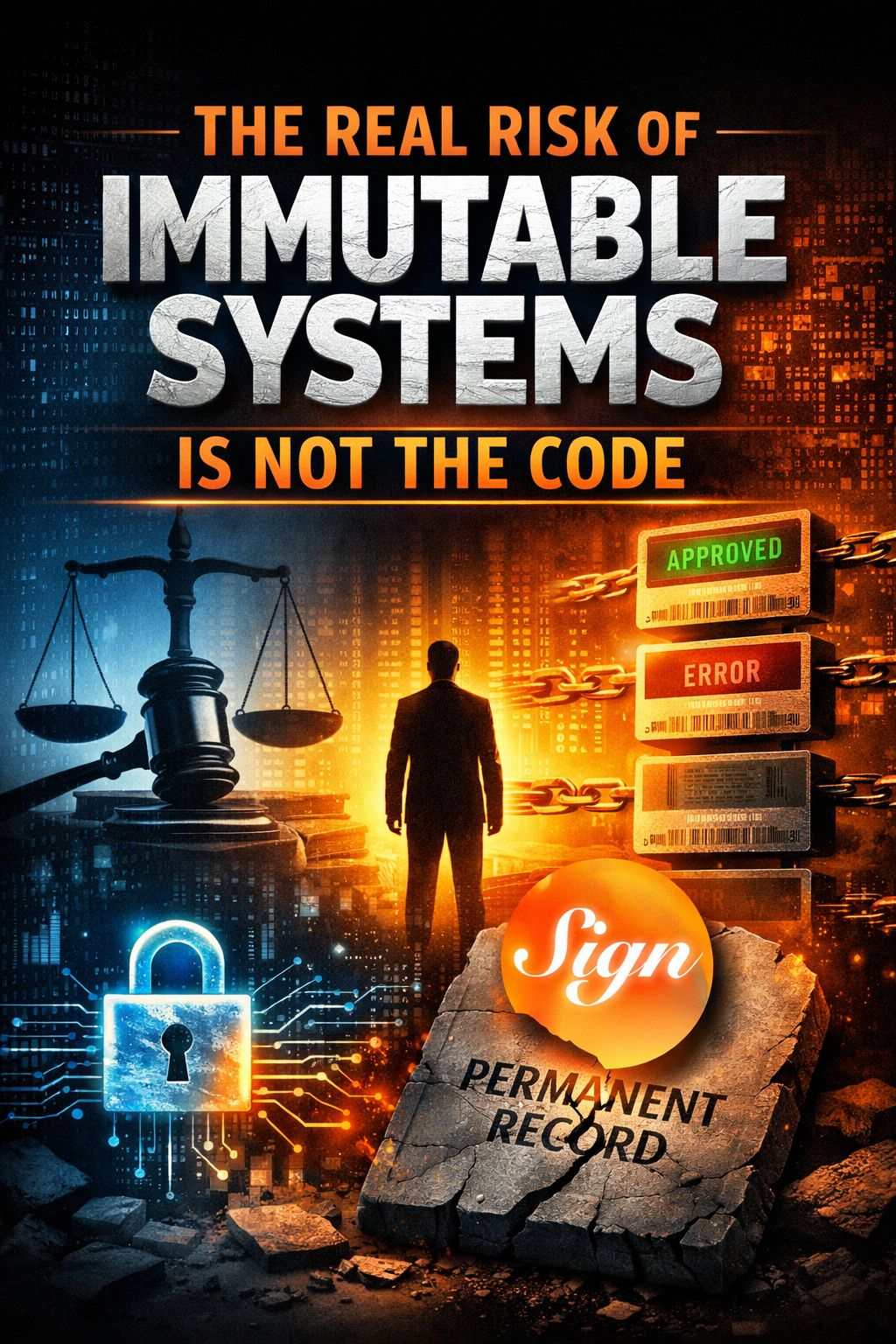
That is why something like Sign Protocol caught my attention.
Not because it stores data. A lot of systems store data.
Not because it signs documents. Many systems already do that.
What makes this different is the idea of turning decisions into permanent records.
At first, that sounds like progress. Immutable records feel secure. They feel reliable. They feel like something that cannot be manipulated behind closed doors.
But permanence cuts both ways.
If a system records something correct, permanence protects truth.
If a system records something wrong, permanence protects the mistake.
That is the uncomfortable part most people ignore.
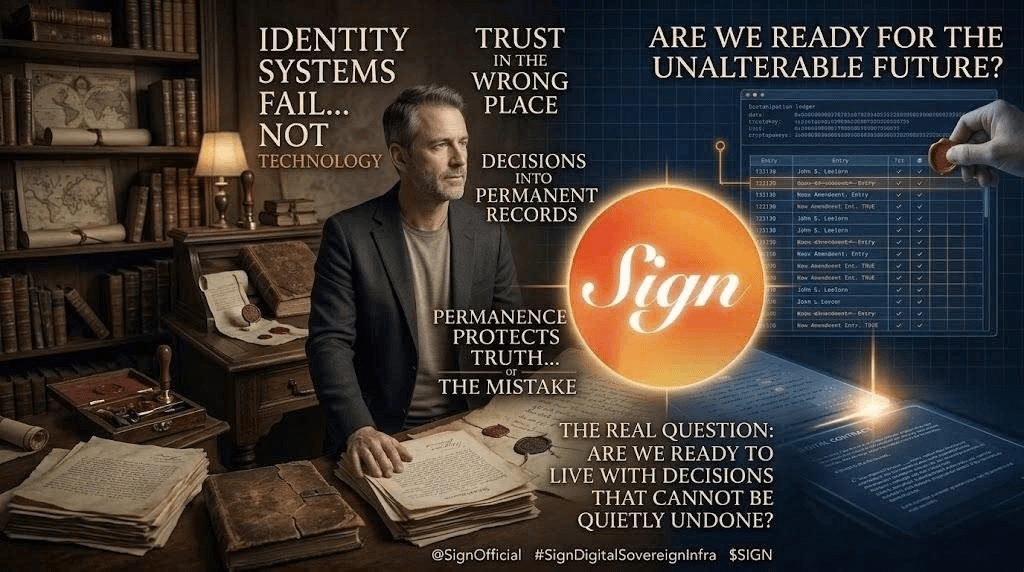
Technology can make verification faster, cheaper, and easier to share across institutions. But it cannot guarantee that the original judgment was fair, accurate, or free from bias. Once something is signed and recorded, the system remembers the decision, not the reasoning behind it.
And that changes how responsibility works.
In older systems, mistakes could quietly disappear inside a database update. It was inefficient, sometimes abused, but also flexible enough to fix errors without leaving permanent scars.
In newer infrastructure, every correction becomes a visible amendment, not an erasure.
That sounds transparent.
But transparency also means accountability becomes permanent.
This is why I think the real test for Sign Protocol is not just technical performance.
It is discipline.
Because the stronger the infrastructure becomes, the less room there is for careless decisions. Every signature starts to matter more than people expect.
And in systems where millions of identities or approvals depend on a single decision, that responsibility becomes heavier than the code itself.
The technology might be ready.
The real question is whether the institutions using it are ready to live with decisions that cannot be quietly undone.