
$SIGN — honestly, i’ve been watching how systems are changing and it finally clicked why ownership isn’t the whole story anymore.
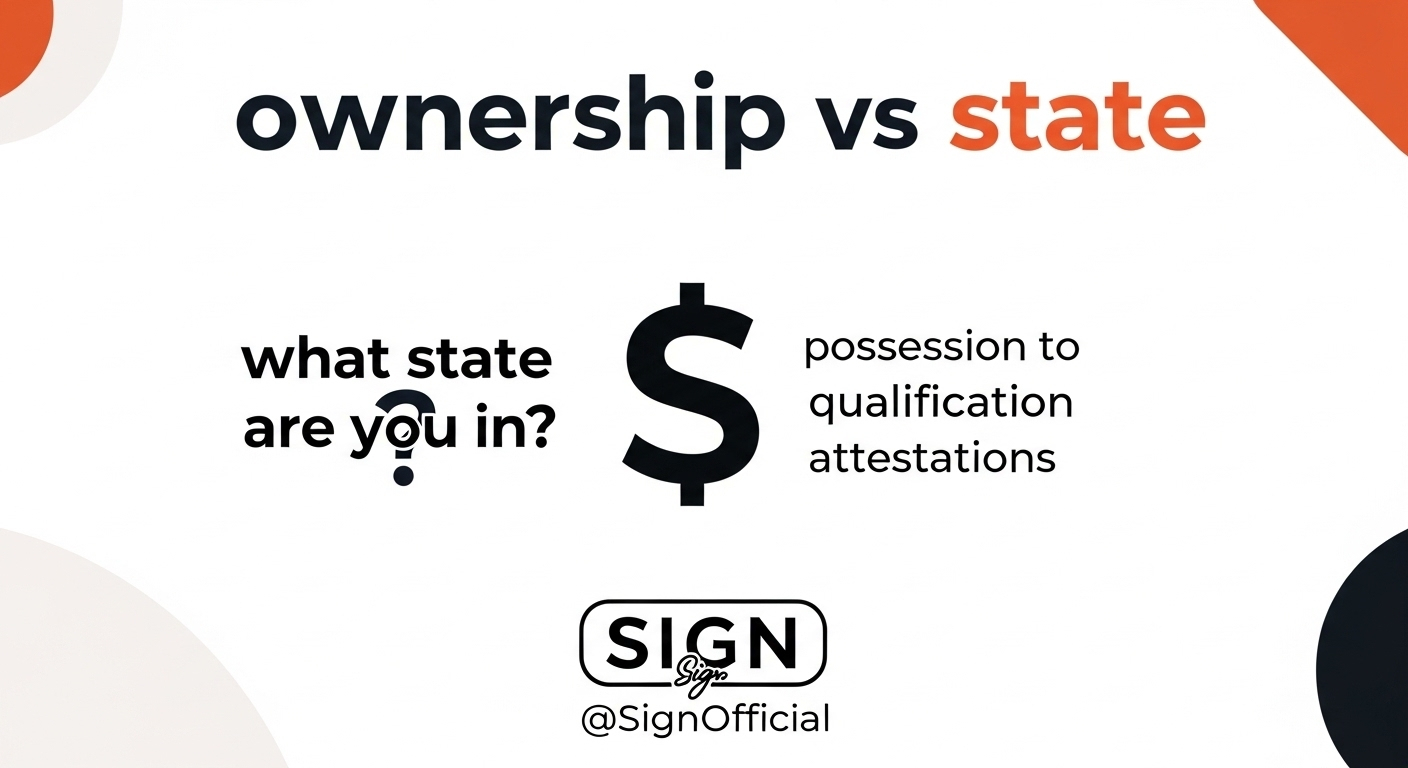
like yeah, balances still matter. tokens exist. nobody’s saying ownership is dead. but here’s the thing i kept bumping into — you can hold something and still not qualify. you can own assets and still get locked out of certain systems. at first that felt broken. but then i realized it’s actually smarter than i thought.
ownership is static. it just tells the system what you have right now. a balance, a token, a position. that’s fine. but it doesn’t say anything about what you’ve done. no history. no behavior. no context. and let’s be real — ownership can be borrowed, transferred, or moved around just to pass a check.
so systems started looking at something better: state.
state isn’t just what you hold. it’s the full picture of where you are right now. what actions you’ve taken. what conditions you’ve met. what signals you’ve built up over time. you can transfer tokens to a friend, but you can’t transfer your history. that’s what makes state powerful.
instead of asking “what do you own?” systems are asking “what state are you in?” and that changes everything. access depends on conditions, not just balances. decisions use verified signals, not temporary holdings. airdrops go to active participants, not just random wallets.
this is where $SIGN protocol fits perfectly. attestations turn actions into verifiable records. they help prove your state — not guess it. that makes systems more precise, harder to game, and way more fair.
we’re moving from possession to qualification. and honestly? that’s a win.