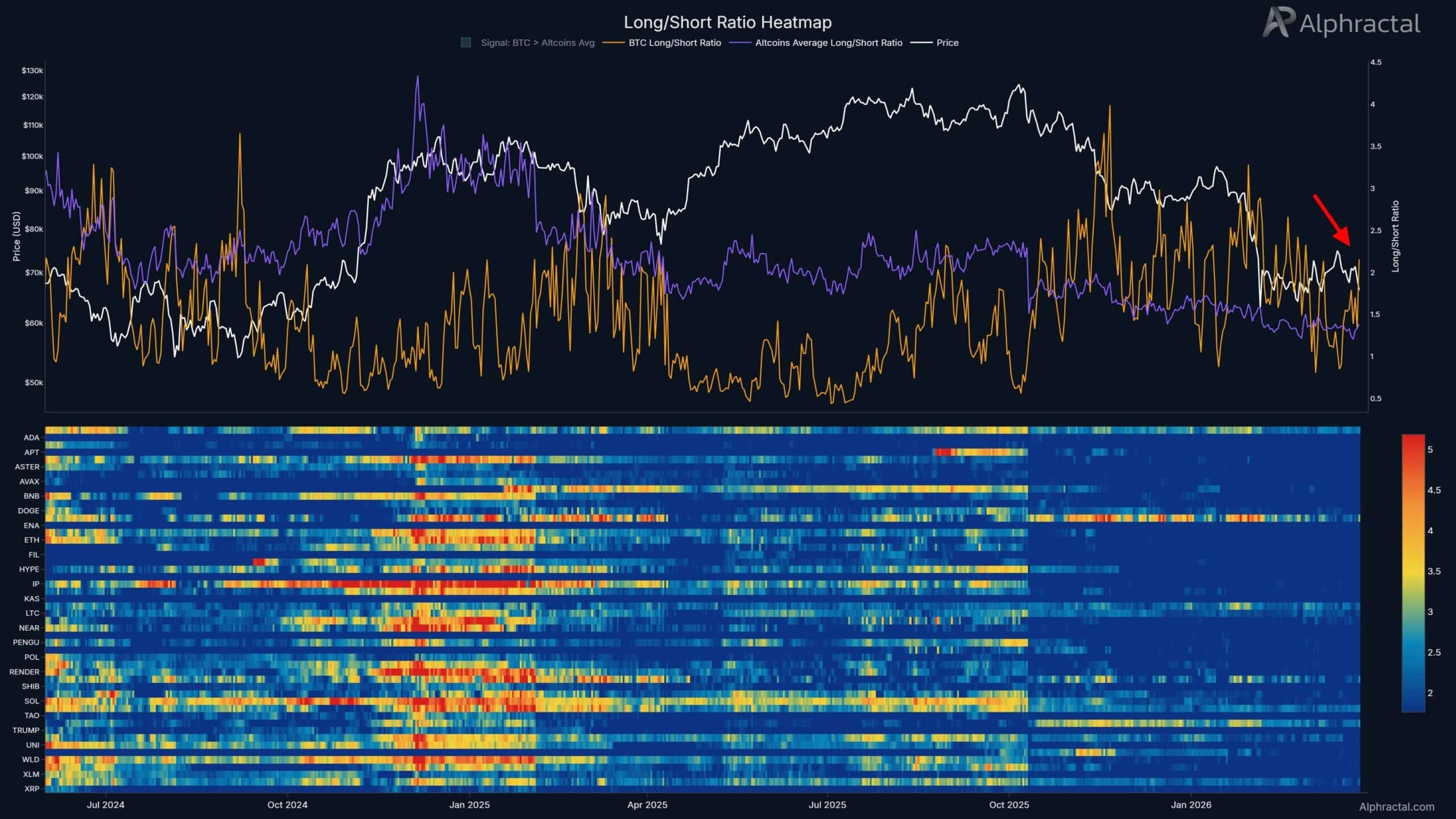
Bitcoin has slipped from the $72,000 area reached on March 25 and pulled back toward local support near $65,600 by March 27. Over the weekend, price action showed a small recovery, but the broader mood remains cautious as traders wait for stronger confirmation before making aggressive moves.
Market sentiment has turned increasingly negative. According to data shared by Santiment, social media conversations around Bitcoin have become more fearful, with bearish terms appearing more often. This kind of retail panic has historically appeared near short term buying zones, although it has not always led to a lasting rally. Instead, it often signals the possibility of a temporary rebound rather than a full trend reversal.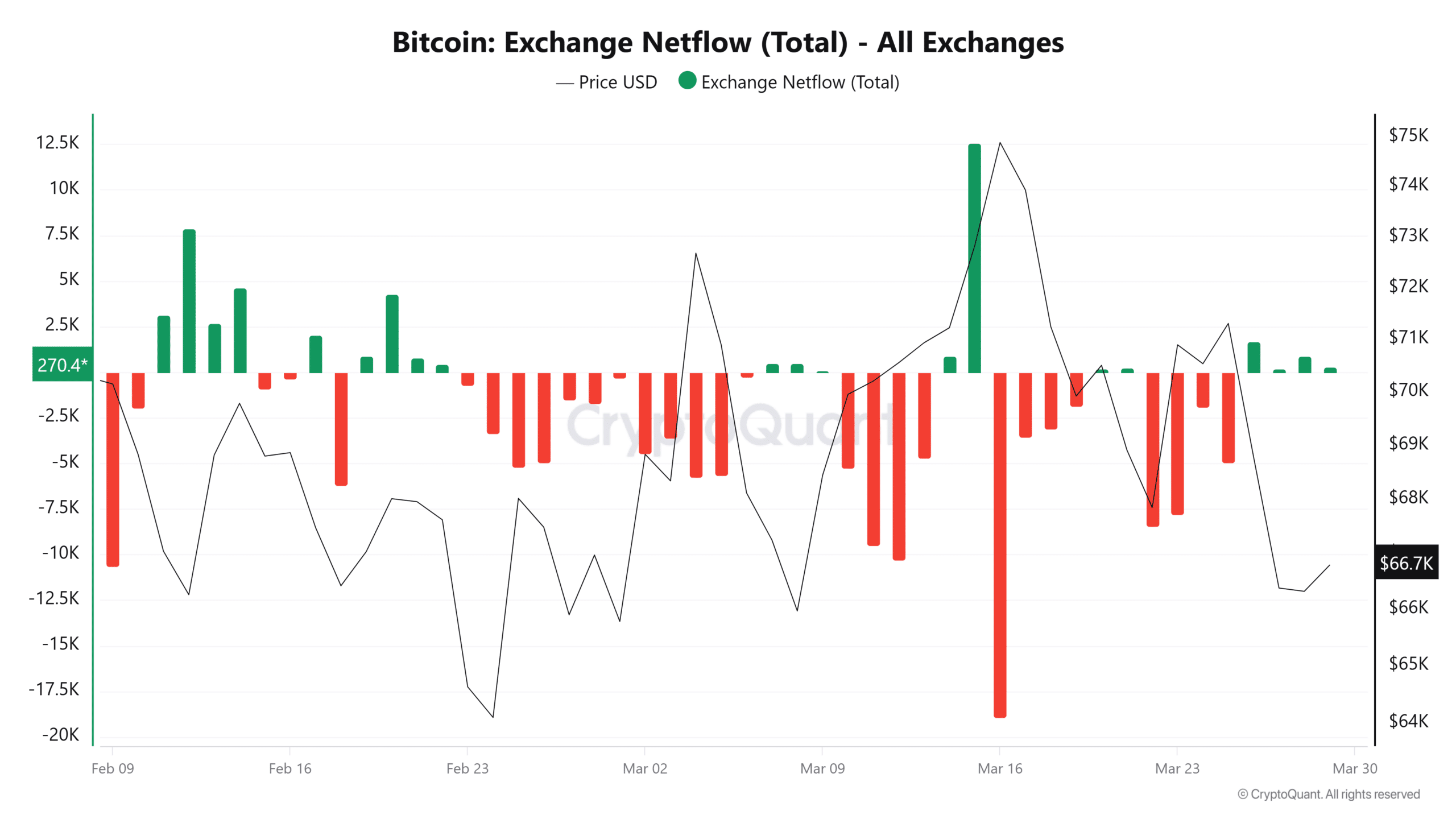
At the same time, leverage data suggests some traders are already trying to catch the bottom. Insights from Alphractal show that the Bitcoin long to short ratio has been climbing in recent days. Even after the pullback from the $76,000 region, many traders have continued opening long positions. This reflects growing confidence among short term speculators, but it also increases risk. When too many leveraged longs build up below nearby support, the market becomes vulnerable to a liquidation sweep that could push Bitcoin toward $64,000 or even lower before any meaningful recovery begins.
On the liquidity side, there are still reasons for optimism. CryptoQuant data highlighted that stablecoin reserves on exchanges remain relatively high compared with Bitcoin reserves. This suggests there is still enough sidelined capital available to buy the dip. A lower exchange stablecoin ratio can indicate that Bitcoin is becoming structurally more attractive, especially if buyers begin deploying that liquidity during weakness.
Exchange flow data adds another layer to the picture. Over the last month, Bitcoin exchange netflows were mostly negative, which points to ongoing accumulation. In simple terms, more Bitcoin has been leaving exchanges than entering them, a sign that investors may be holding rather than preparing to sell. However, the last four days have shown less clear direction, which suggests participants are becoming more hesitant in the short term.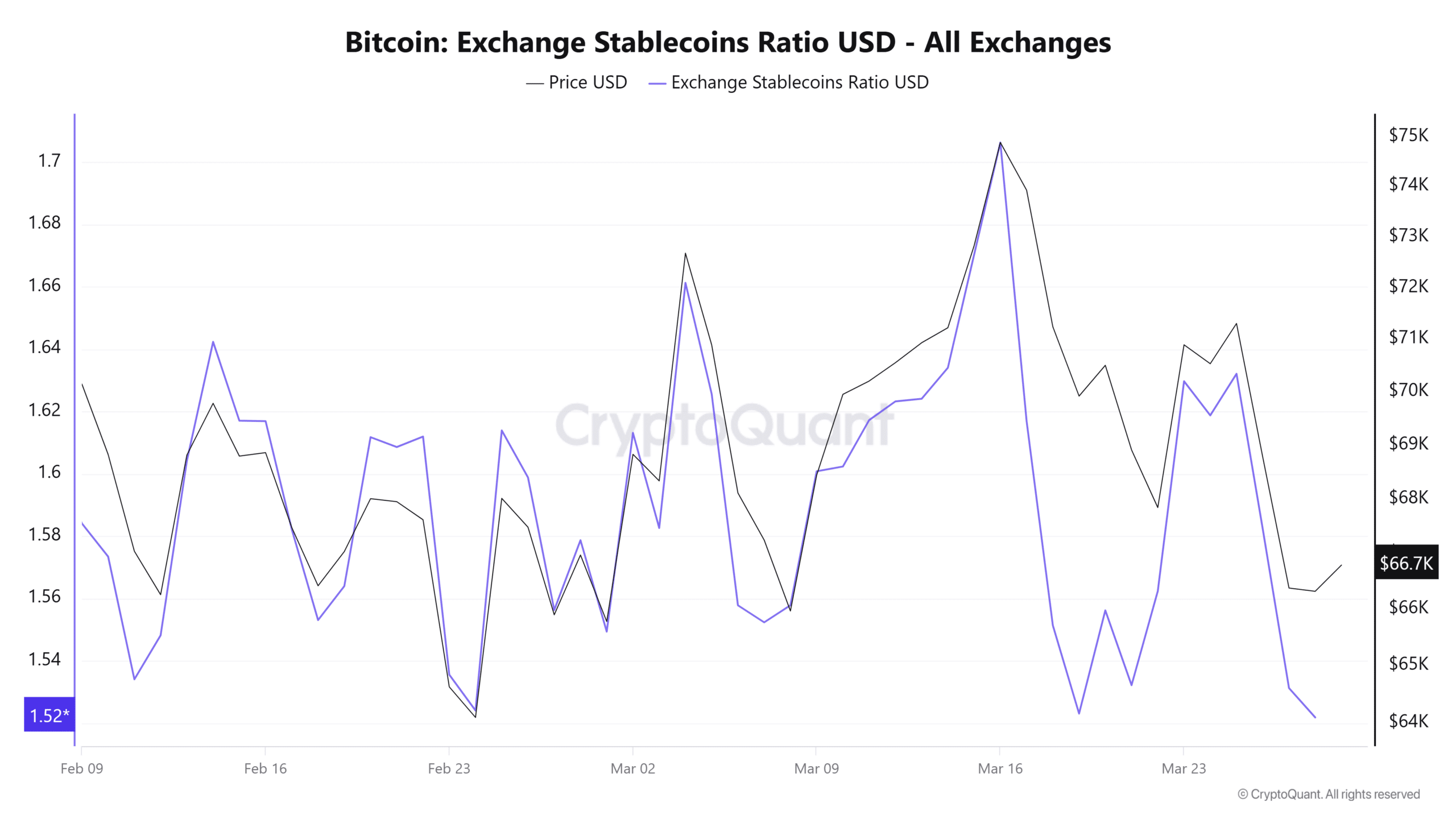
Overall, the market is caught between fear and opportunity. Retail sentiment has weakened significantly, yet some traders are still willing to take on more risk in hopes of buying the local bottom. Liquidity remains available, and the larger accumulation trend has not fully disappeared. Still, recent exchange flow uncertainty shows that many investors are waiting for clearer signals before committing with confidence.