Recently, my OpenClaw suddenly lost its memory.
It was during that awkward period when Binance AI was launched.
So this article is my real usage record during this time, not an advertisement, just telling everyone what this thing can do and how to use it.
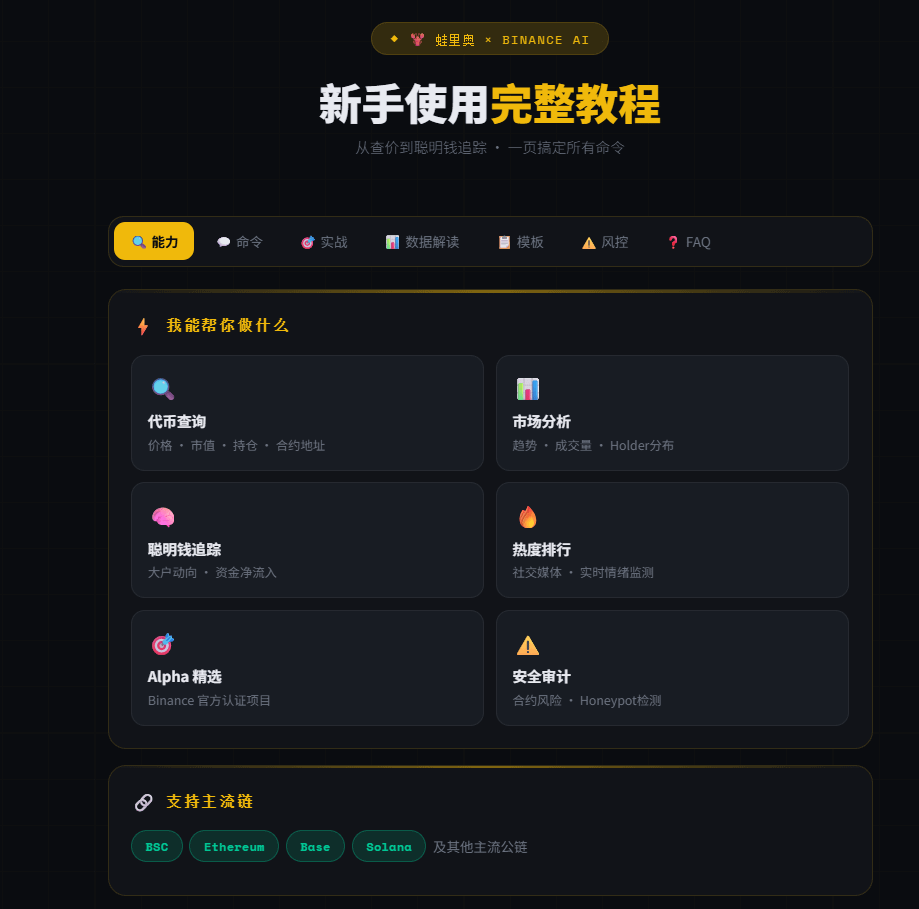
Binance AI is essentially a query analysis tool mounted on the Binance platform, with data sourced directly from the blockchain and official APIs, eliminating the need for you to switch between various platforms.
The things it can do are mainly focused on several directions:
Token fundamentals inquiry, market heat rankings, smart money capital flow, contract security audit, Binance Alpha project information.
These directions, taken separately, are not new; there are a bunch of tools on the market each doing one part. The advantage of Binance AI is that it is integrated and the threshold for interactive dialogue is very low; beginners don’t need to learn any command formats, just ask directly.
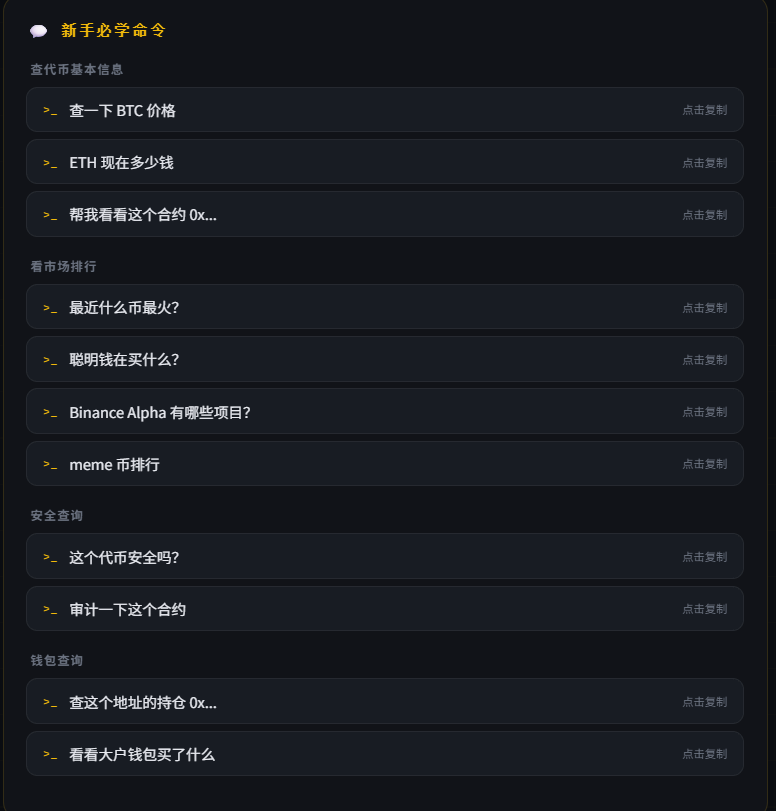
I find the most practical use cases are two scenarios.
The first is to quickly conduct a preliminary safety screening.
If someone pushes a token or sees a new project, you can first ask Binance AI, 'Is this contract safe?'
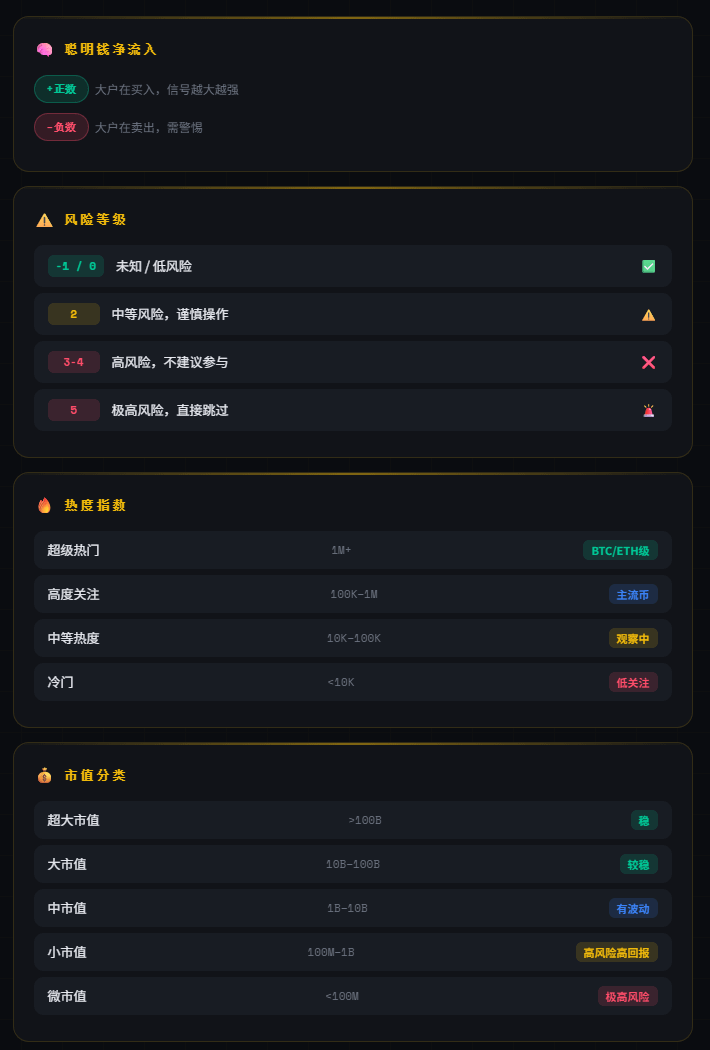
Binance AI will give you a risk level from 0 to 5, along with honeypot detection and blacklist function scanning. This is not to make decisions directly based on it, but to help you determine within 10 seconds whether it is worth spending time to continue researching.
For risk levels above 3, I basically skip it directly because I can't be bothered.
The second is monitoring smart money net inflow.
This data has limited significance when viewed alone but still has reference value as an auxiliary dimension.
Positive numbers represent net buying by large holders; negative numbers represent net selling. The larger the value, the more concentrated the signal.
My habit is to first look at the hype rankings, pick a few interesting tokens, and then check the direction of smart money, cross-referencing the two data sets. High hype but outflowing smart money often indicates an emotional peak, so I won't chase it.
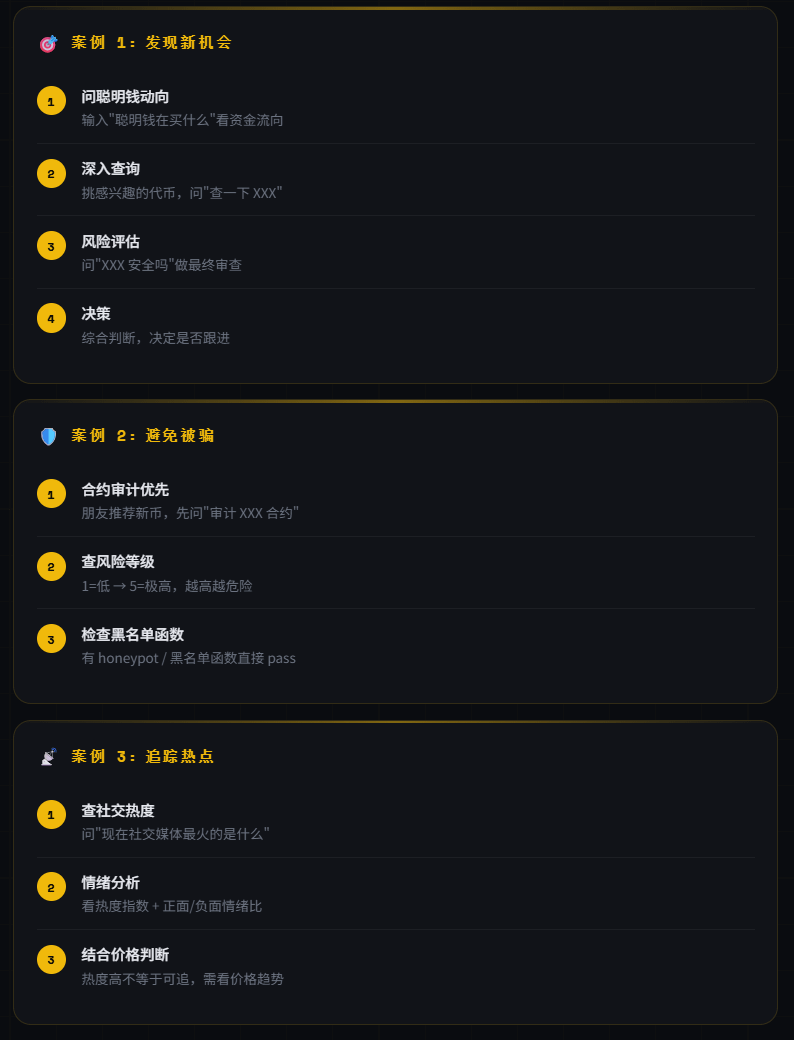
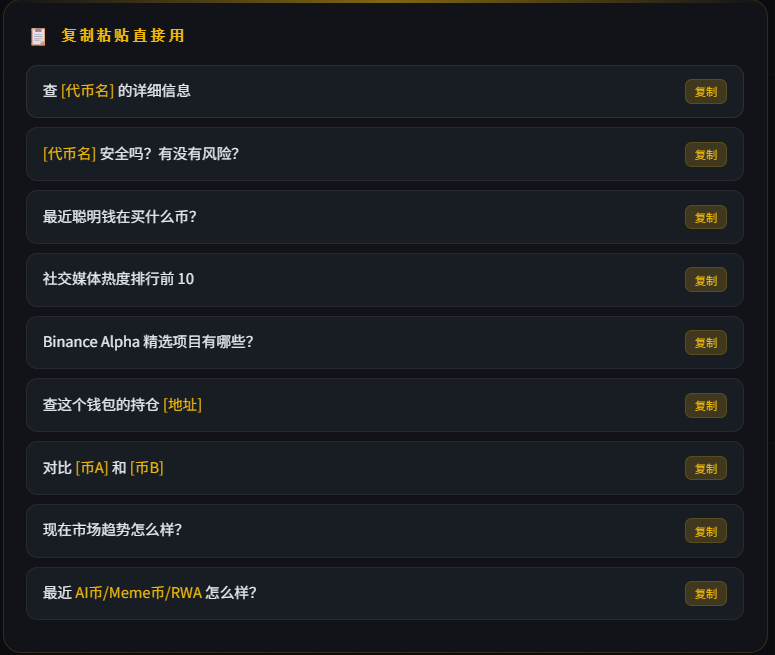
For beginners, there are several commands that can be directly copied to ask:
Check token: Look up the detailed information of [token name]
Safety inquiry: Is [token name] safe? Is there any risk?
Smart money: What is smart money buying recently?
Hype: Top 10 rankings in social media hype
Alpha projects: What are the selected projects by Binance Alpha?
Of course, it is still in the public testing phase and there are still many issues.
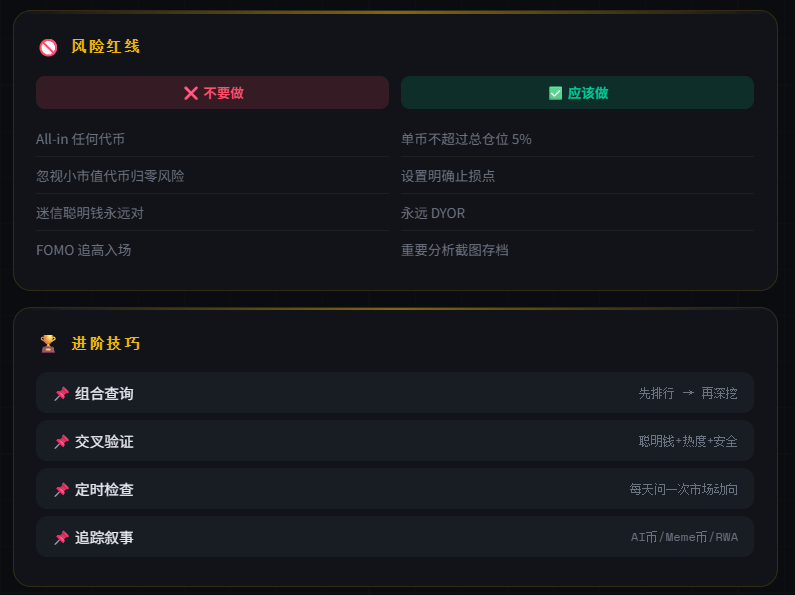
What it provides is data and direction, not conclusions. I've seen people ask it if a token can rise; it will give some analytical angles but won't give you a definitive 'can' or 'cannot' answer.
This is correct: any tool that gives you definitive answers should be approached with caution. So treat it as a research aid, not as a trading signal.
Additionally, its coverage of some micro-cap new projects may not be comprehensive; when data is blank, it will tell you it's unknown, and at this point, you need to check on-chain yourself.
For example, currently Binance AI cannot trade because there were problems in the first two days, but the observation attitude is very good and they are continuously helping me solve it.
My current usage is to treat it as the first filter.
Before entering the market, run through this: hype ranking to see narrative direction, smart money to see funding preferences, safety audit for preliminary screening; after cross-referencing the three data points, decide whether to delve deeper.
My little lobster is still slowly being re-cultivated and is recovering well. However, I plan to keep the habit of using Binance AI as my first procedure.
Tools do not replace judgment, but good tools can help you avoid unnecessary pitfalls. This is the most practical feeling I've had during this period.