
Looking at something like SIGN—the whole idea of a global system that can verify who you are and what you’ve done—I’ll admit, I was impressed right away. It just clicks at first. No more chasing paperwork, no more waiting on institutions to confirm something you already know is true. Everything follows you, clean and portable. Your achievements, your identity, your proof—it’s all just… there. It feels like one of those ideas that finally catches up to what the world actually needs.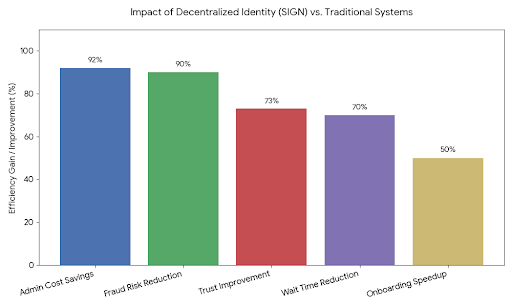
And honestly, part of me wanted to believe in it without questioning too much. Because it sounds fair. It sounds efficient. It sounds like something that could remove a lot of unnecessary struggle from people’s lives. I pictured students not losing opportunities because of missing documents, workers not being ignored because their experience isn’t “official” enough, people moving across borders without having to start from zero. It feels hopeful. It really does.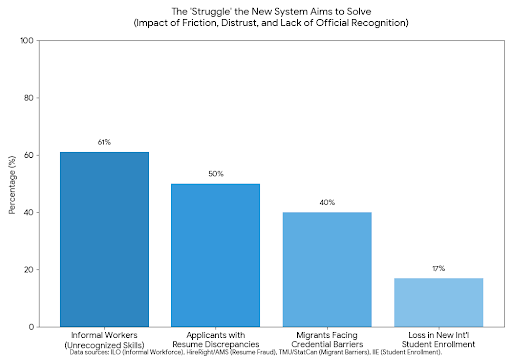
But the longer I sit with it, the more that initial excitement starts to soften. Not disappear, just… shift. Because something about it begins to feel heavier than it first appeared.That’s the part that lingers.Verification sounds simple until you realize it quietly becomes a condition. Not a tool you can choose, but something you need to function. What happens when this system becomes the default way the world decides who counts? What happens if you don’t fit into it perfectly?And not everyone will.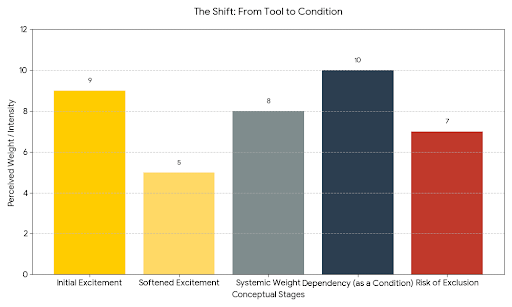
I keep thinking about people whose lives don’t follow neat lines. Someone who learned skills outside formal systems. Someone who had to restart their life multiple times. Someone whose records are incomplete, inconsistent, or just… missing. What happens to them in a world that relies so heavily on structured proof?
Do they get left behind—not because they lack value, but because they can’t translate their life into something the system understands?
That’s where the doubt starts to settle in.
And then there’s the question of mistakes. Because no matter how advanced something is, it will get things wrong. It will mislabel, misinterpret, or simply fail. And when that happens, it won’t just be a minor inconvenience. It could mean losing access to work, to education, to movement. It could mean being seen as “unverified” in a world that slowly stops trusting anything outside that system.
What happens when you’re locked out of your own identity?
That question makes me uncomfortable in a way I can’t easily brush off.
Because systems don’t feel pressure the way humans do. They don’t feel urgency. If something goes wrong, you don’t argue with a person—you face a process. And processes can be slow, unclear, or completely unresponsive. So where does responsibility go? Who actually answers when something breaks?
That’s the part I keep coming back to. Not the technology, not the ambition—but the absence of a clear human hand to hold accountable.
And beneath all of this, there’s something quieter, something more personal. The feeling of being constantly measured. Constantly confirmed. Like your existence needs to be checked and approved over and over again. Maybe it’s subtle at first, but over time, I can imagine it becoming exhausting. That quiet dependence on something you don’t control, something you can’t fully see.
It doesn’t feel like freedom anymore. It feels like needing permission.
And I don’t think that’s what anyone sets out to build. But intentions don’t always survive contact with reality. Systems grow. They expand. They become essential. And once they’re essential, they stop being optional.
That’s the shift that worries me the most.
I’m still torn, honestly. Part of me sees the beauty in it, the possibility. But another part of me can’t stop asking these questions that don’t have easy answers. And maybe that’s the point—maybe we’re not supposed to feel completely comfortable about something this powerful.
Because in the end, I keep circling back to something very simple: if this system decides what counts as real, then what happens to the parts of our lives that don’t fit neatly into it—and do they stop mattering, or do we just stop seeing them?