

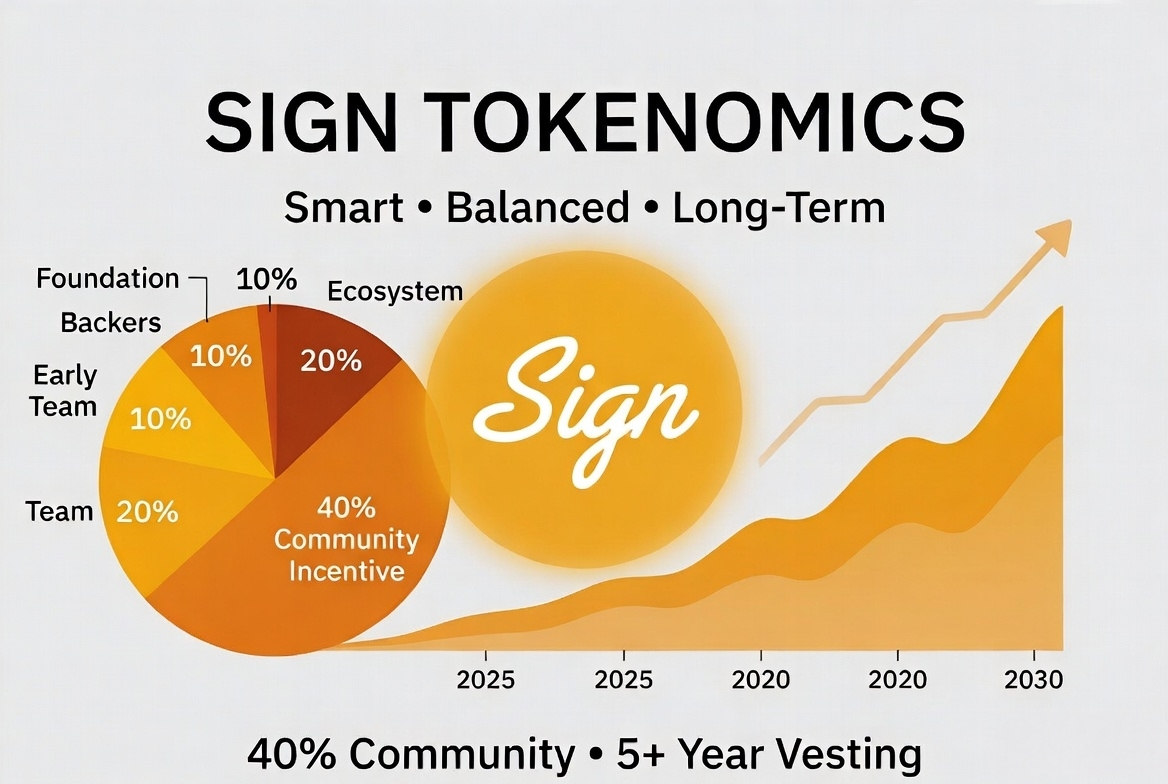
I’ve been deep-diving into projects lately, and Sign’s token economics just hit different. It’s not the usual “community gets 5%, team dumps everything at TGE” story we’ve seen a million times. Instead, it feels like a well-planned family business where everyone — early supporters, builders, and everyday users — gets a fair, timed share so the whole thing grows steadily instead of crashing after the hype dies.
Think of it like this: Imagine you and your friends start a neighborhood café. You don’t give all the profits to the investors on day one, nor do you let the chefs eat the entire kitchen. You release ingredients gradually, reward loyal customers with free coffee, and keep some cash aside for rent, licenses, and future expansion. That’s exactly how Sign’s $SIGN tokenomics works — practical, transparent, and built for the long haul.
The Pie: Who Gets What (And Why It Matters)
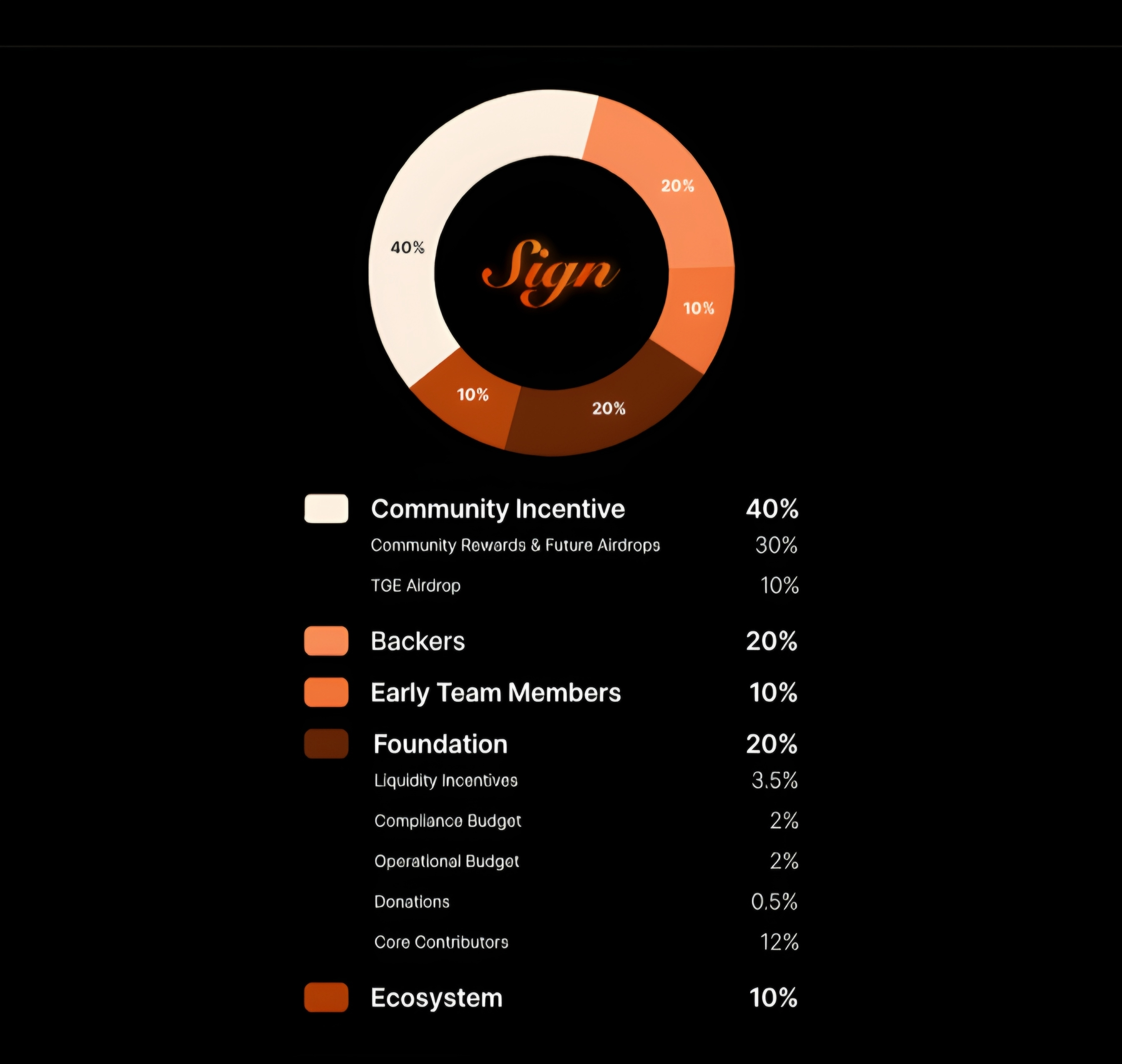
Here’s the allocation breakdown — super clean and easy to remember:
- Community Incentive → 40% (the biggest slice!)
- 30% for ongoing rewards & future airdrops
- 10% for TGE airdrop
In real life? This is your loyalty program on steroids. Every time you use the platform, contribute, or bring friends, you actually get rewarded over years — not just a one-time airdrop that gets sold immediately. It’s like Swiggy or Zomato giving you points that keep growing the more you order and review.
- Backers → 20%
The people who believed in the project early and put in real money. Fair enough — they took the risk, they get a solid but not greedy share.
- Early Team Members → 10%
The founders and first builders. Only 10% shows they’re not here to cash out fast. They’re in it for the marathon.
- Foundation → 20%
This is the “smart reserve” bucket:
- Liquidity incentives (3.5%)
- Compliance & legal (2%)
- Operations (2%)
- Donations (0.5%)
- Core contributors (12%)
Real-life comparison: This is your emergency fund + business savings account. It keeps the lights on, pays the lawyers (because crypto is regulated now), adds liquidity so you can actually trade without slippage, and funds the people actually building the product.
- Ecosystem → 10%
Grants, partnerships, developers building on Sign — basically the “let’s grow the whole neighborhood” fund.
Total = 100%. No mystery, no hidden 15% “marketing” that magically appears later. Clean and professional.
The Release Schedule: No Sudden Dumps, Just Steady Growth
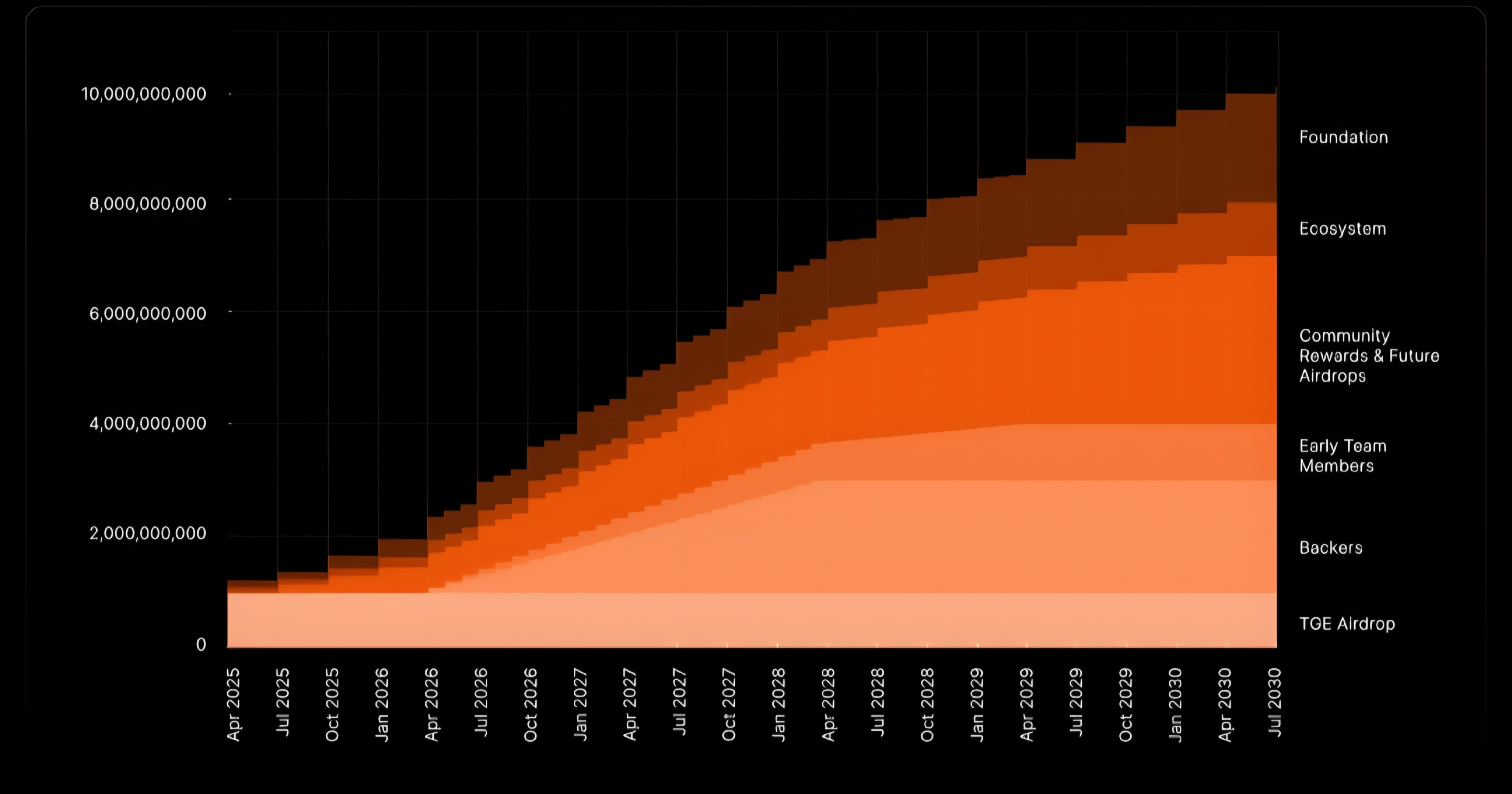
Now look at the chart, it’s a beautiful, slow-rising mountain from April 2025 all the way to July 2030.
At the bottom you see the TGE airdrop (small and early, as it should be). Then backers and early team unlock gradually. Community rewards and ecosystem layers grow nicely in the middle years. Foundation sits on top like the final safety net.
Why does this matter in day-to-day terms?
Remember those “get rich quick” apps where everyone gets tokens on day 1 and the price crashes 90% in a week? This is the opposite. Tokens are released in phases, almost like a salary that vests every few months. You can’t just dump everything and run. It forces alignment: the team, backers, and community all win only if the project keeps delivering real value year after year.
By July 2030 the total supply looks to be around 10 billion $SIGN, and the curve shows healthy, controlled inflation, not a sudden flood. It’s like compound interest in your mutual fund: small consistent additions every quarter create massive value over time instead of one big lottery ticket.
Why This Feels High-Profile & Future-Proof
In a market full of meme coins and shady allocations, Sign is playing chess while others play checkers.
- Heavy community weighting (40%) = real user ownership
- Long 5+ year vesting = skin in the game for builders
- Dedicated foundation slice for compliance & liquidity = they’re ready for institutional and regulatory reality
- Ecosystem fund = they’re not just launching a token, they’re building an actual platform that others will want to build on
It’s the kind of tokenomics you’d expect from a project that wants to be around in 2030, not just trending on Twitter in 2025.
Final Takeaway
If you’re someone who hates rug-pulls and loves projects that actually reward long-term holders, Sign’s model is refreshing. It’s not flashy. It’s thoughtful. It treats token holders like actual partners in a business, not exit liquidity.
I’ve bookmarked their X post for the live $SIGN tokenomics details and will be watching how the TGE and first unlocks play out. In this bull market, the projects that survive (and thrive) won’t be the ones with the loudest marketing, they’ll be the ones with the smartest economics.
What do you think? Does this allocation feel fair to you? Drop your thoughts below - let’s discuss in the comments.
