


It kind of hit me randomly one day…

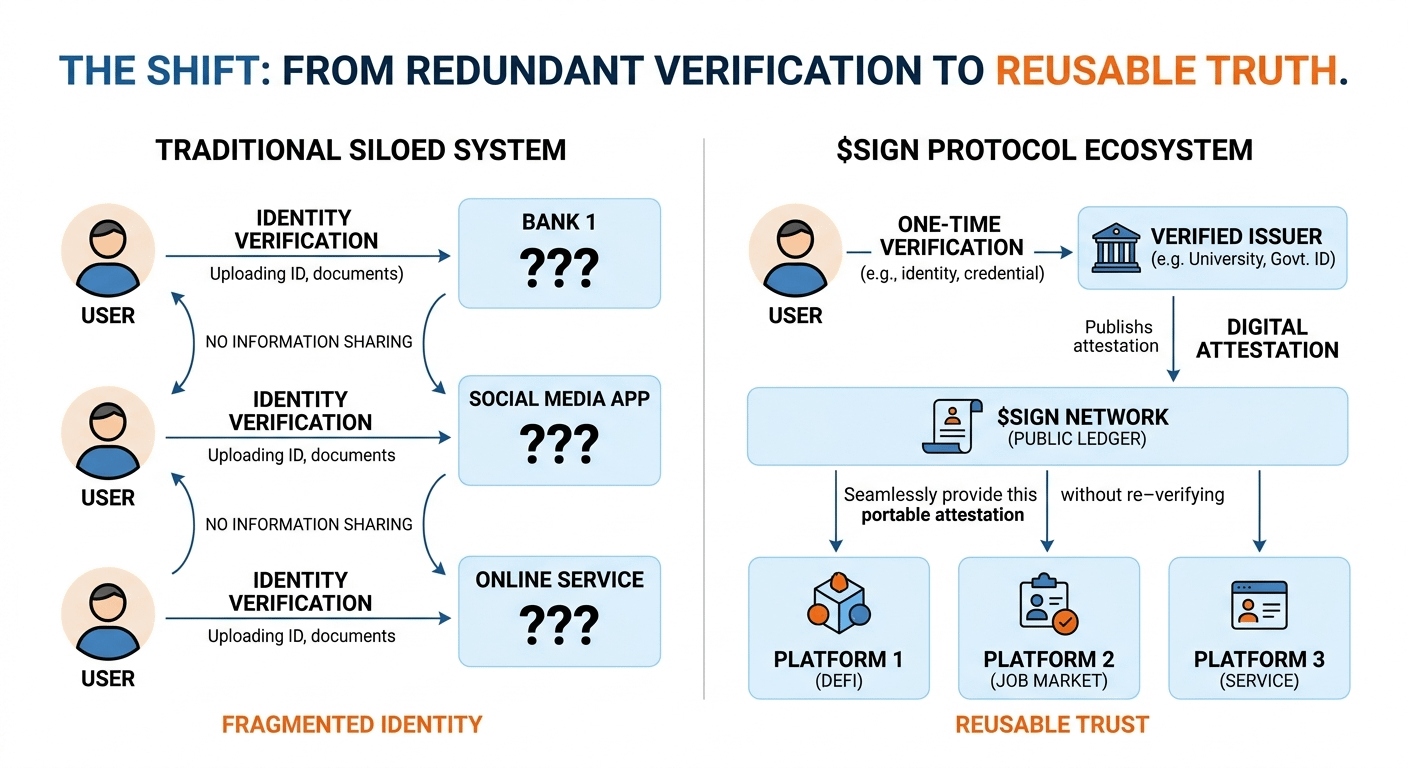
Why am I still proving the same things about myself again and again?
Not in a dramatic way, just small things. Signing up somewhere, verifying identity, uploading documents… waiting… repeating it all somewhere else like nothing carries forward.
At first it didn’t bother me much.
But over time, it started to feel unnecessary… like the system works, but it’s not really evolving.
When I first saw $SIGN , I didn’t think much of it.
Just another project talking about identity, verification, Web3… the usual mix.
But when I slowed down and tried to see what it’s actually doing… it felt a bit different.
Not bigger. Just… more practical.
The idea is surprisingly simple.
Instead of proving everything from scratch every time, you just get something verified once… and then reuse that proof.
Not your actual personal data going everywhere.
Just a confirmation that says, “this has already been checked.”
And for me, that small shift started to make a lot of sense.
Because right now, the real issue isn’t missing data.
It’s that systems don’t trust each other.
Every platform acts like it’s the first time seeing you.
That’s where Sign introduces this idea of attestations.
At first, I thought it’s just another technical term… but it’s actually straightforward.
Transactions move assets.
Attestations prove something is true.
And that’s when it kind of clicked for me…
Sign isn’t about moving money around.
It’s about making truth portable.
Your identity, your degree, your credentials… once verified, they don’t need to be re-verified everywhere.
The $SIGN token also fits into this in a practical way.
It’s not just there for speculation.
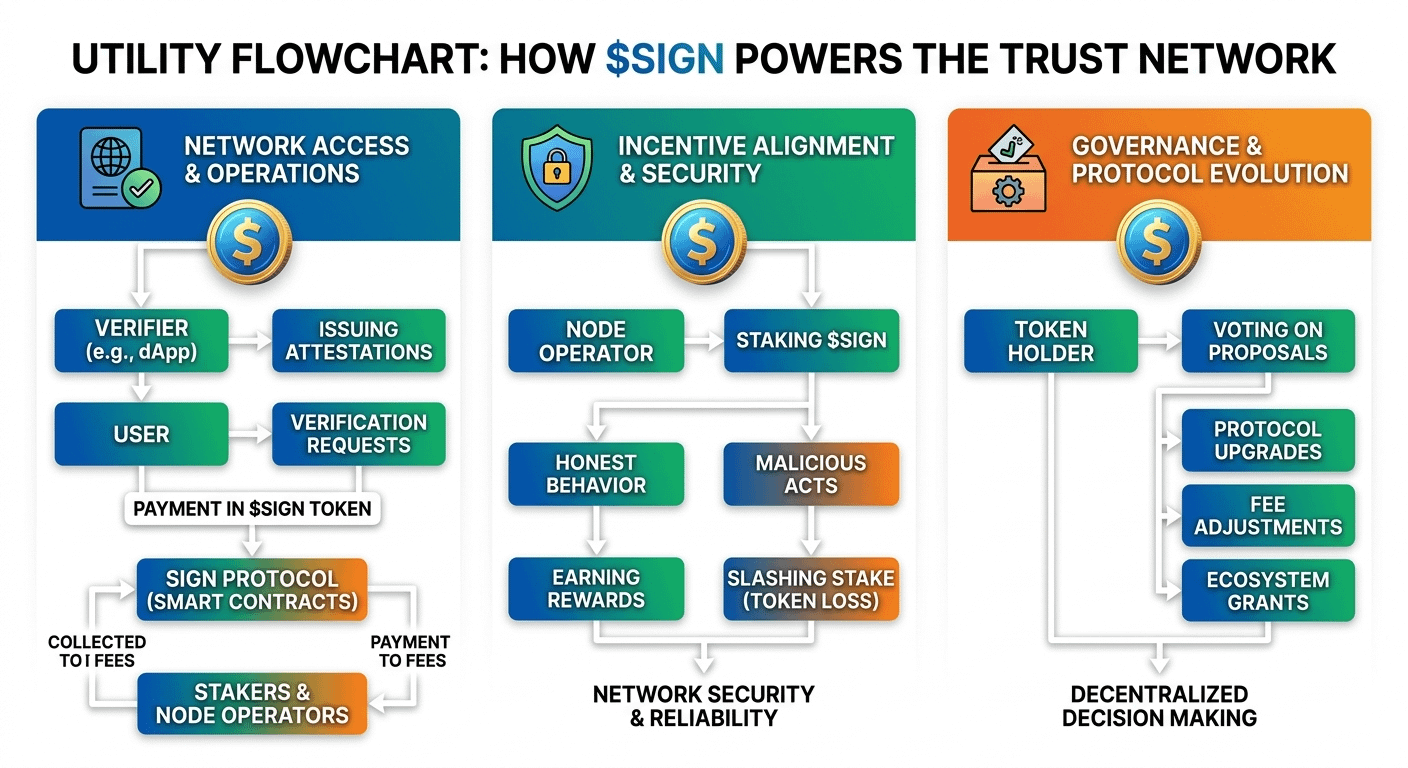
You use it to pay for issuing and verifying credentials.
People who help build and maintain the system earn it.
There’s governance involved, so decisions aren’t fully centralized.
And staking helps keep the network secure.
So it’s kind of powering the whole system from different angles.
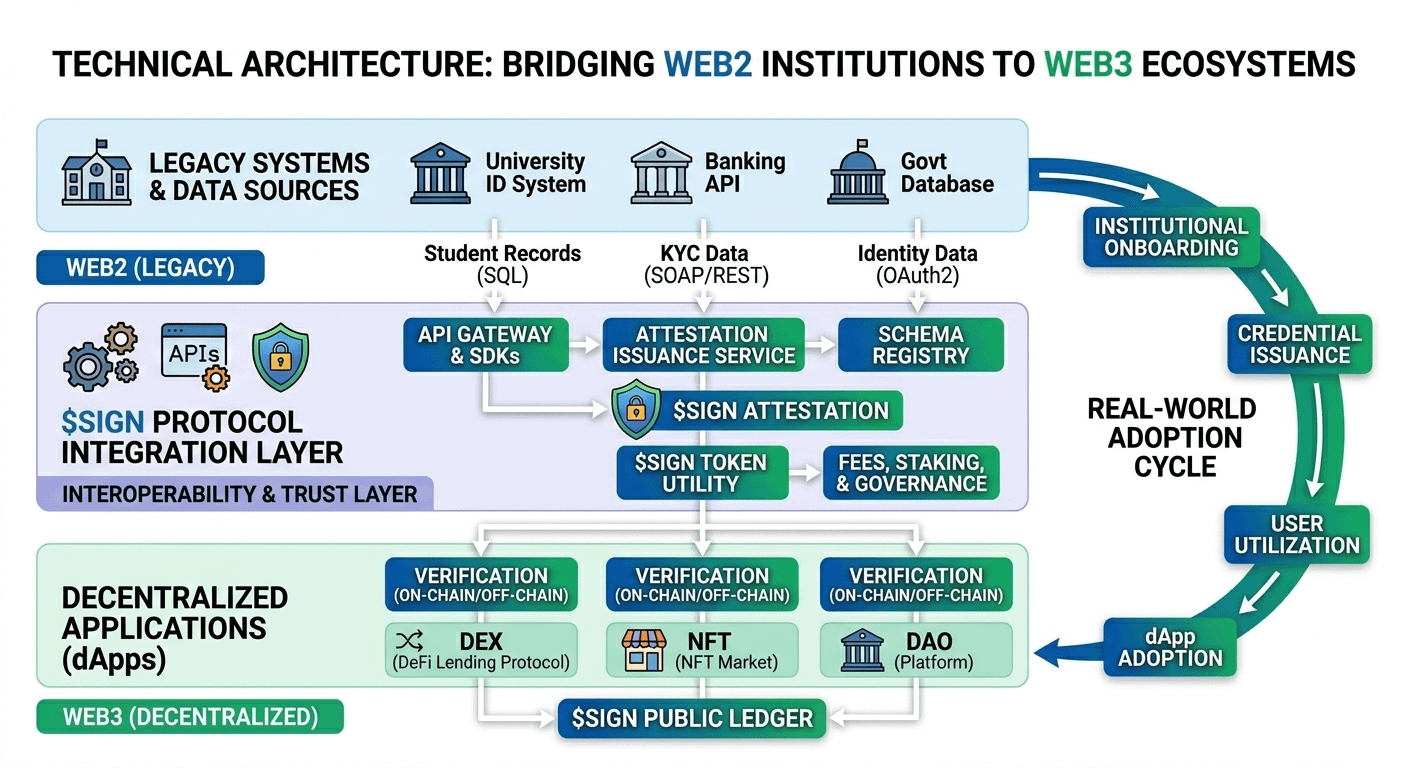
What I found interesting is how this connects two worlds that don’t really align today.
Web2 systems like banks, universities, governments…
And Web3 systems like DeFi, NFTs, decentralized apps…
They operate differently, and they don’t naturally trust each other.
Sign is trying to sit in between and create a shared layer of trust.
So institutions can issue verified credentials,
Web3 apps can accept them,
and users don’t have to restart their identity every time they switch environments.
For cross-border use cases like jobs, finance, or education… this feels especially relevant.
The technical side, though… is where things get complicated.
There are real hurdles:
Scaling to handle large volumes of credentials
Integrating with systems that use completely different standards
Keeping everything simple enough for normal users
Protecting privacy while staying compliant
And making sure the network stays fast and reliable
Because if any of this breaks down… adoption becomes difficult.
The API layer is something I didn’t expect to matter so much… but it does.
It’s basically how Sign connects to real-world applications.
Instead of forcing companies to rebuild everything, they can just integrate it.
Verification becomes automatic.
Systems stay mostly the same.
Data sharing becomes selective and controlled.
Cross-border interactions become smoother.
It’s less about disruption… more about fitting into what already exists.
I do have one concern though.
This whole system depends on real-world participation.
If institutions don’t adopt it, the system doesn’t reach its full potential.
Because trust systems only work when enough players are involved.
That part still feels uncertain.
But still… there was a moment where everything made sense to me.
We don’t really struggle with data.
We struggle with trust between systems.
And Sign isn’t trying to add more layers…
It’s trying to make trust reusable.
That shift feels small, but it changes how everything connects.
I’m not saying this is perfect.
And I’m not saying it’s guaranteed to succeed.
But I do feel like it’s addressing something real… something we all deal with but rarely question.
You can look into it yourself…
if it fits your perspective, it makes sense
if not, it’s fine to move on
but yeah… this one stayed with me longer than I expected.@SignOfficial #SignDigitalSovereignInfra