
It took me a while to realize this, but crypto loves talking about multi-chain, omni-chain… sounds big, sounds advanced. But most of it is still just about moving assets around, not really solving the bigger problem, which is how different economic systems actually connect with each other. Sounds abstract, but if you look at regions like the Middle East, where every country has its own rules, standards, structures… you start to see the real issue isn’t which chain is faster, it’s whether data can move across systems while still being trusted.
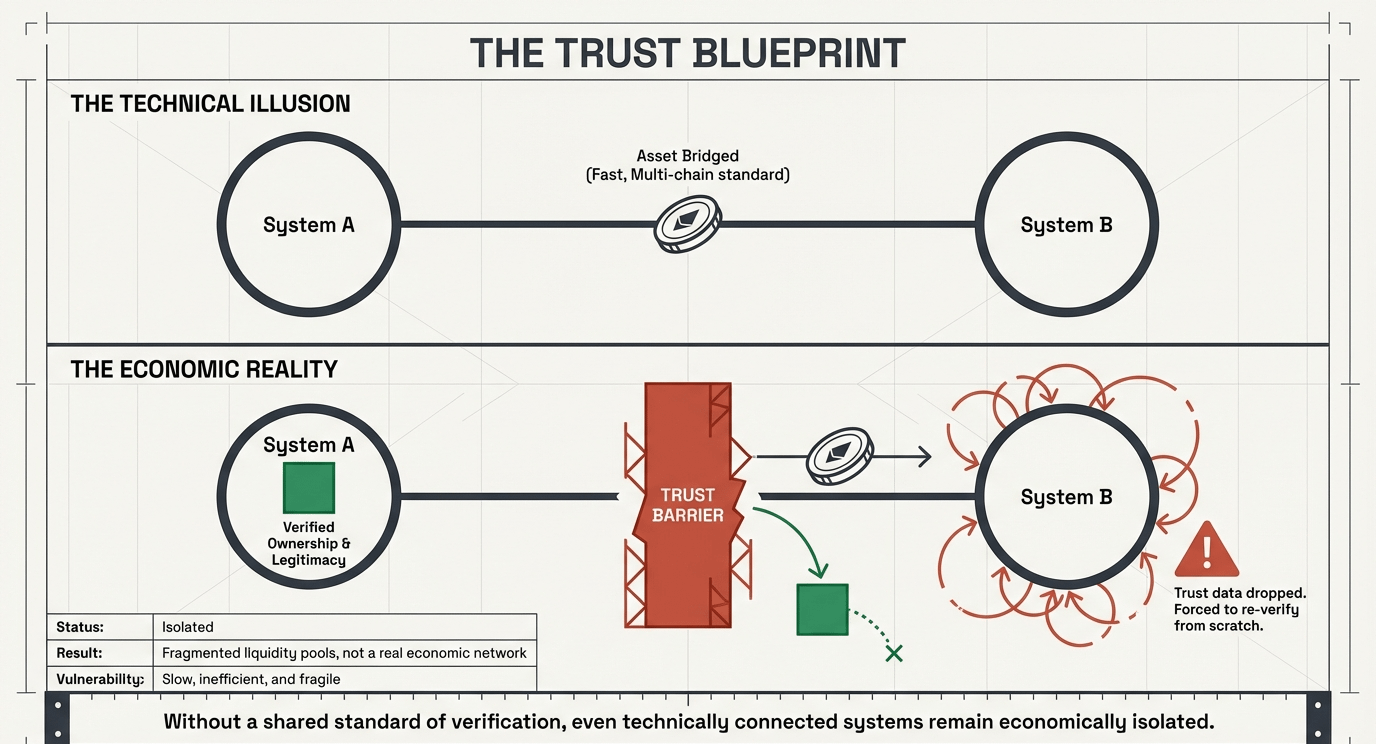
And this is where traditional interoperability starts to fall apart. You can bridge assets, sure. But you can’t really bridge trust. You can move crypto from one chain to another, but you can’t reliably move something like “this asset has been verified” or “this ownership is legitimate” in a way that other systems can instantly accept. So everything resets. Every system has to re-verify from scratch. Slow, inefficient, and honestly… fragile.
What Sign Protocol seems to be doing is slightly different. It’s not trying to connect chains, it’s trying to connect proofs. Instead of moving assets, it allows verified information to move. Once something is proven in one place, it can be reused elsewhere without starting over. Sounds simple, but if it works, it’s basically creating a shared language for economic systems.
And this is where transparency actually becomes meaningful. Not in the sense that everything is visible to everyone, but that anything can be verified when needed. That’s a huge difference. Transparency shifts from “show everything” to “prove what matters.” It’s more flexible, more realistic, especially in regions with regulatory complexity.
A lot of people still treat interoperability as a technical problem, something for developers to figure out. But it’s really a trust problem between systems. Without a shared standard of verification, even if systems are technically connected, economically they remain isolated. Crypto stays as fragmented liquidity pools, not a real economic network.
What’s interesting is how things change once this verification layer exists. A business in one country can prove its financial credibility, and that proof can be accepted in another system without re-checking everything. A tokenized asset created somewhere can be traded elsewhere without constant doubt about its legitimacy. Data carries its own proof.
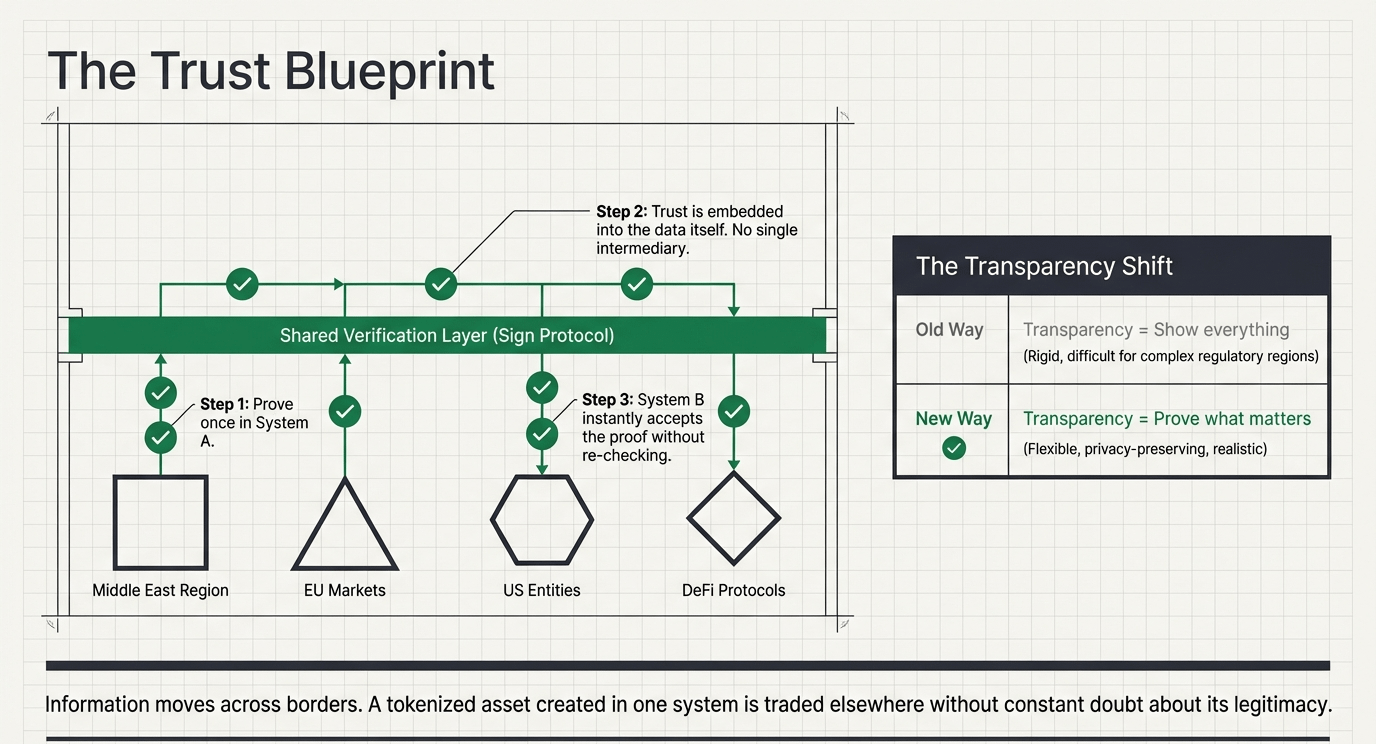
It almost feels like traditional finance again, but it’s not. Because there’s no single intermediary holding the trust. Trust is embedded into the data itself, and anyone can verify it. That’s where crypto starts to move beyond speculation and into real utility.
And maybe that’s why transparency becomes a required standard for new finance. Not because it sounds good, but because without it, systems simply cannot connect in a reliable way. Without transparency, interoperability is just surface-level integration.
If you think about it, crypto started with moving money, then moved into questioning trust, and now it’s approaching the stage of connecting economies. But to get there, it doesn’t need more chains… it needs better ways to prove things.
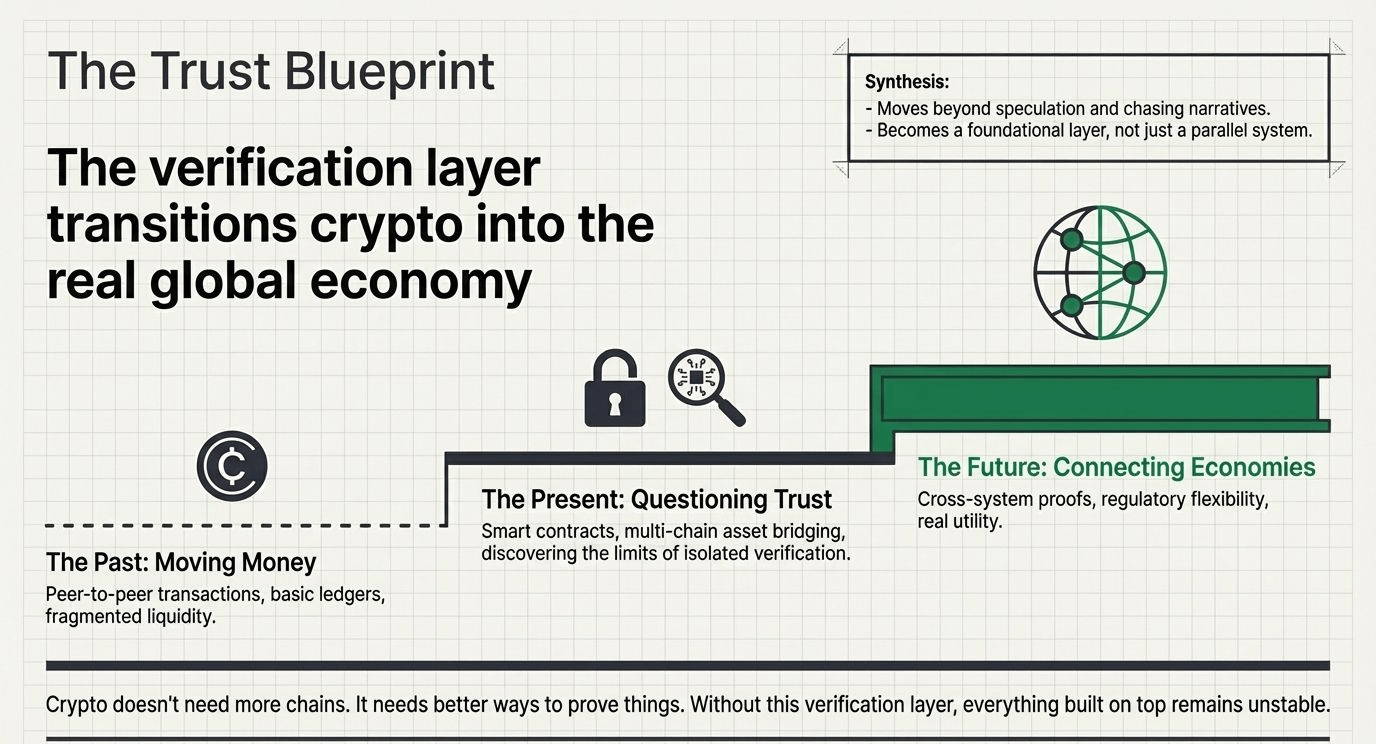
Right now, most people are still focused on trading, chasing narratives, quick wins. And yeah, this stuff feels distant. But long term, this is the foundation. Without it, everything built on top is unstable. With it, crypto might finally become part of the real global economy, not just a parallel system. @SignOfficial $SIGN #SignDigitalSovereignInfra