


Okay, I need to vent for a second.
The internet feels broken right now. And crypto? Somehow worse. Half my day is just staring at tabs, trying to figure out what’s real, what’s AI generated, and why I need five different apps to do one simple thing. Sign here. Verify there. Claim tokens somewhere else. Switch wallets. Switch chains. Refresh. Pray. ✨️

It’s exhausting. And I’m saying that after losing a chunk of change last month because I messed up a cross-chain transfer while juggling three different verification windows. One wrong click, funds gone. That’s not “the future.” That’s a mess.
That’s why SIGN caught my attention. Not because of hype. Not because of some shiny “next big thing” pitch. But because it actually looks like someone finally looked at the chaos and said “maybe we should clean this up instead of adding another layer.”
SuperApp Thing Yeah, I Know, Eye Roll
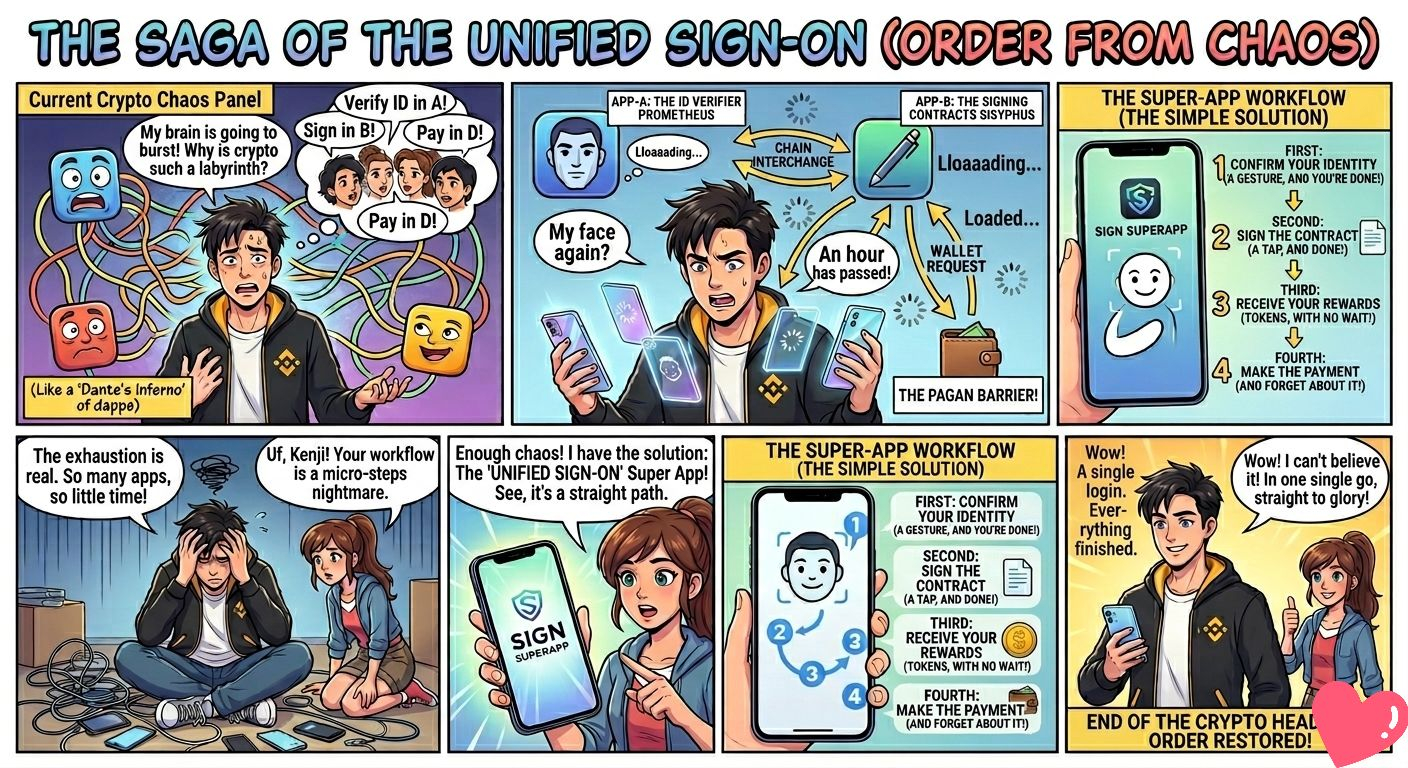
🫤 Every project claims they’re building a SuperApp. Most of them just mean “we crammed too many features into a dashboard and called it a day.” But here’s the thing: I want one place where I can prove who I am, sign something, claim tokens, and pay without hopping across platforms like I’m solving a logic puzzle designed by someone who hates me. Open once. Log in once. Done.
I want that badly. I’m tired of switching wallets and networks just to do something simple. It shouldn’t feel like defusing a bomb every time I move funds. Last week I almost sent USDC to the wrong chain 😵💫😵💫 because the dropdown menu on some dApp defaulted to something I wasn’t paying attention to. This stuff should not be this hard.
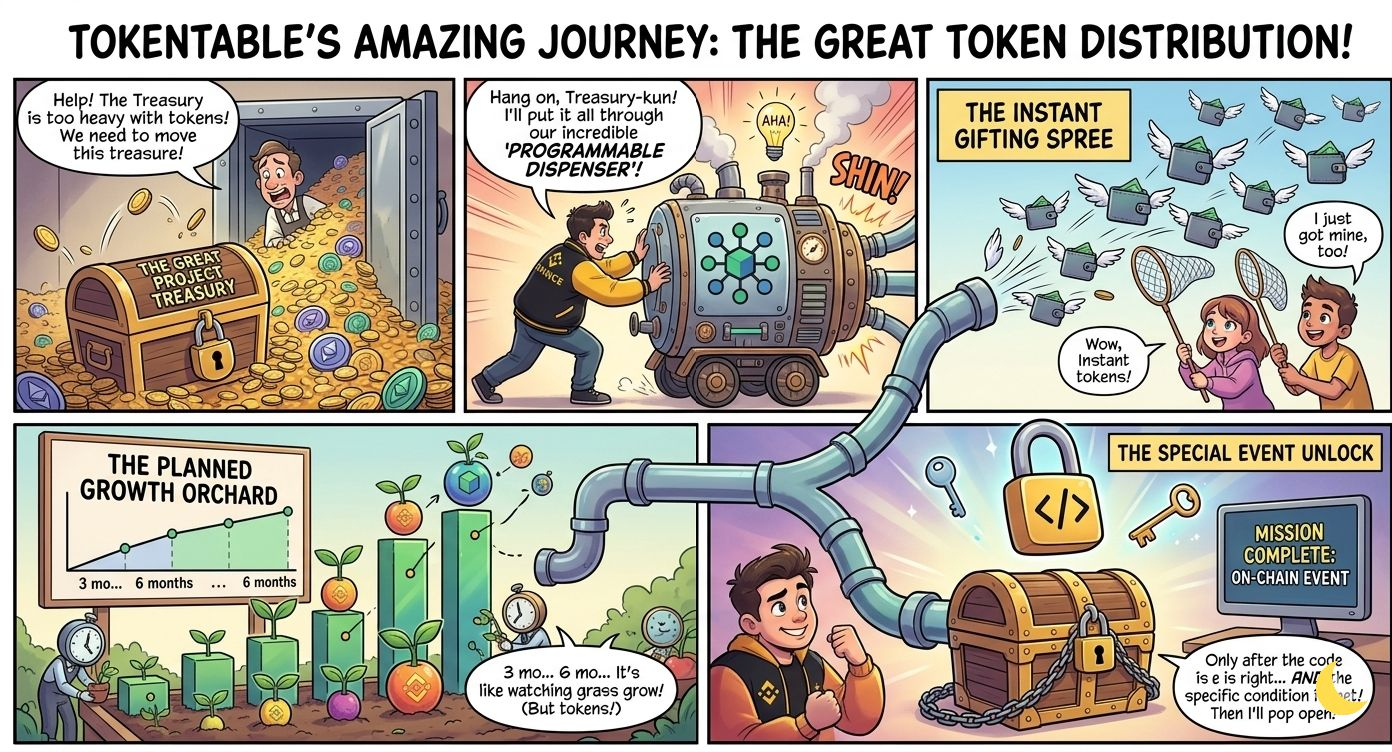
Token distribution in crypto has always been a mess. Airdrops here, vesting contracts there, random spreadsheets, manual overrides when something breaks
🔄 TokenTable actually structures this stuff properly. You can distribute instantly, or slowly over time, or based on conditions. Build in delays, unlock schedules, even emergency stops if something goes wrong. That’s not hype. That’s infrastructure. That’s how real businesses and governments operate.
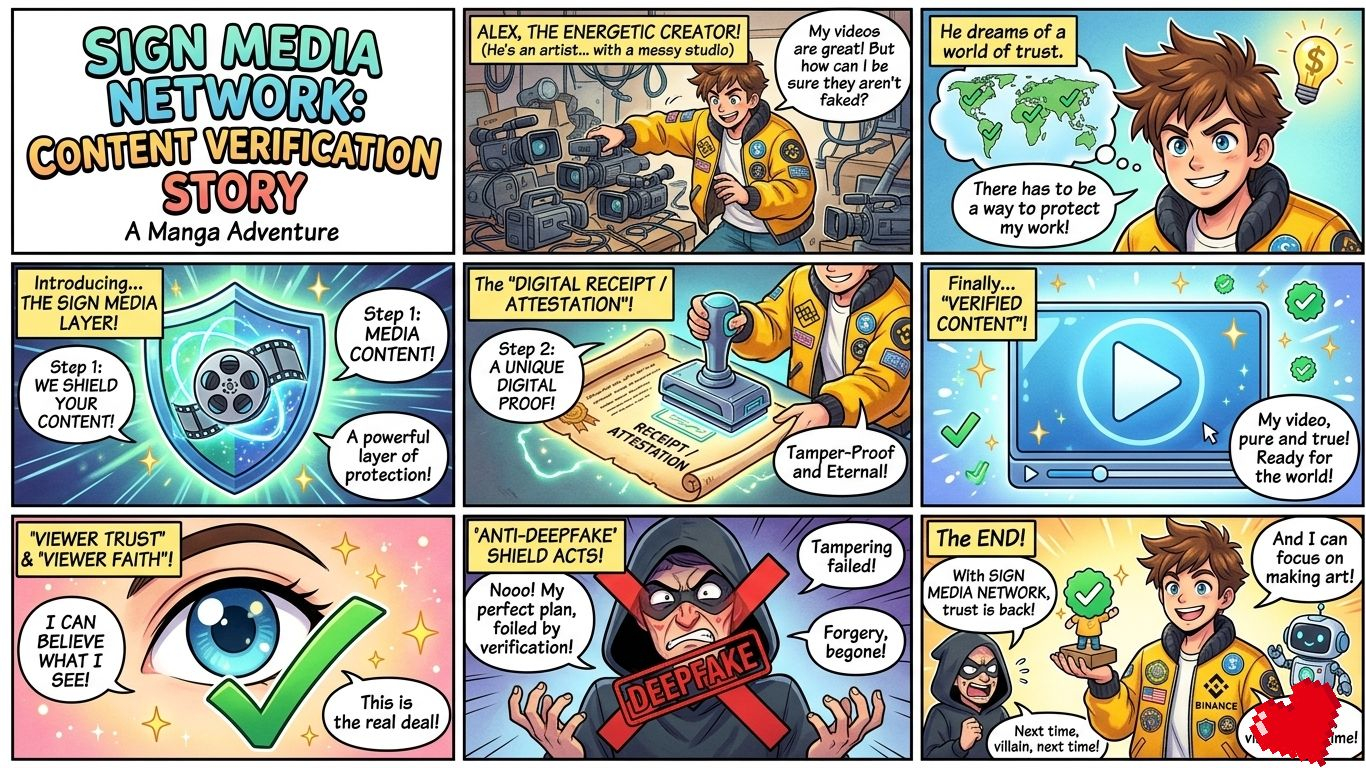
When I first saw the Media Network piece, I was like… why? Why does an identity and token infrastructure project need a media layer?
Then it hit me. Deepfakes are everywhere. AI voices sound real. Edited clips spread like wildfire. We’re heading into a world where you can’t trust your own eyes. If Sign lets creators attach proof to their content a digital receipt that says “this is real, this is mine”that’s powerful. Actually, scratch that. It’s necessary. I’ve already seen friends get burned by fake endorsements circulating on twitter. That problem isn’t going away
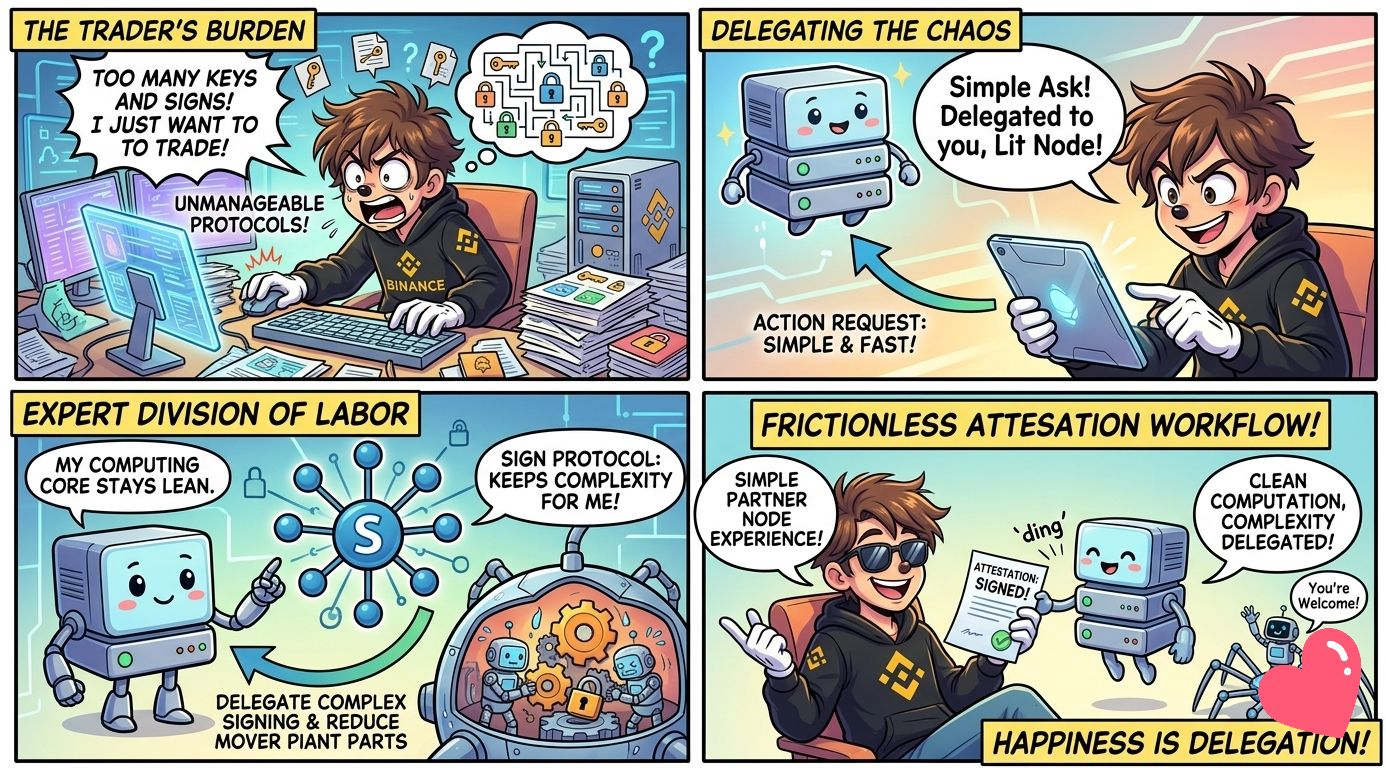
😁 Here’s the part that made me actually nod. Sign Protocol handles delegated attestation for Lit nodes. The nodes don’t have to carry the full burden themselves. Sign steps in and signs on their behalf. From a trader’s perspective? I like setups that reduce friction. Fewer moving parts usually means fewer things break when volatility hits and everyone starts panic-clicking.
I’m always skeptical at first
I’ve been burned by “trust us” architecture before but this delegation feels clean.
Practical.
It makes sense.
I don’t trust anything blindly anymore. Systems look solid until someone stress-tests them. Everything works when the market’s calm. I watch what happens when something breaks. On-chain. During chaos. Not during the demo.
Where can it fail? 🫠
Those questions matter more than the marketing page. Delegated attestation sounds fancy, but I want to know exactly how that trust flows. I want audits.
I want to see how it behaves when something goes wrong. Because as someone who’s lost money to smart contract edge cases before, I care about that way more than the tech talk.
SIGN feels like someone finally looked at the ecosystem and said, “Why are we making this harder than it needs to be?” Instead of building another isolated tool, they’re trying to connect identity, signing, token distribution, payments, media verification all of it into something that actually works together.
That’s ambitious. Maybe too ambitious. Building a smooth app people genuinely want to use is hard. Getting governments onboard? Even harder. Making all of this fast and secure behind the scenes while handling delegated attestation and complex token logic?
That’s where things get tricky.
But I respect the direction. If they pull it off, this won’t be another crypto project we talk about for two weeks and forget. It’ll be something people use without thinking about it.
And honestly, that’s the real goal, isn’t it? Tech you don’t have to think about. It just works 🙂↕️
.
.