
I’ve been reading a lot about how countries approach "Digital ID," and there is a common fantasy that most people buy into: the idea that a government can just build a new database from scratch and solve identity once and for all.
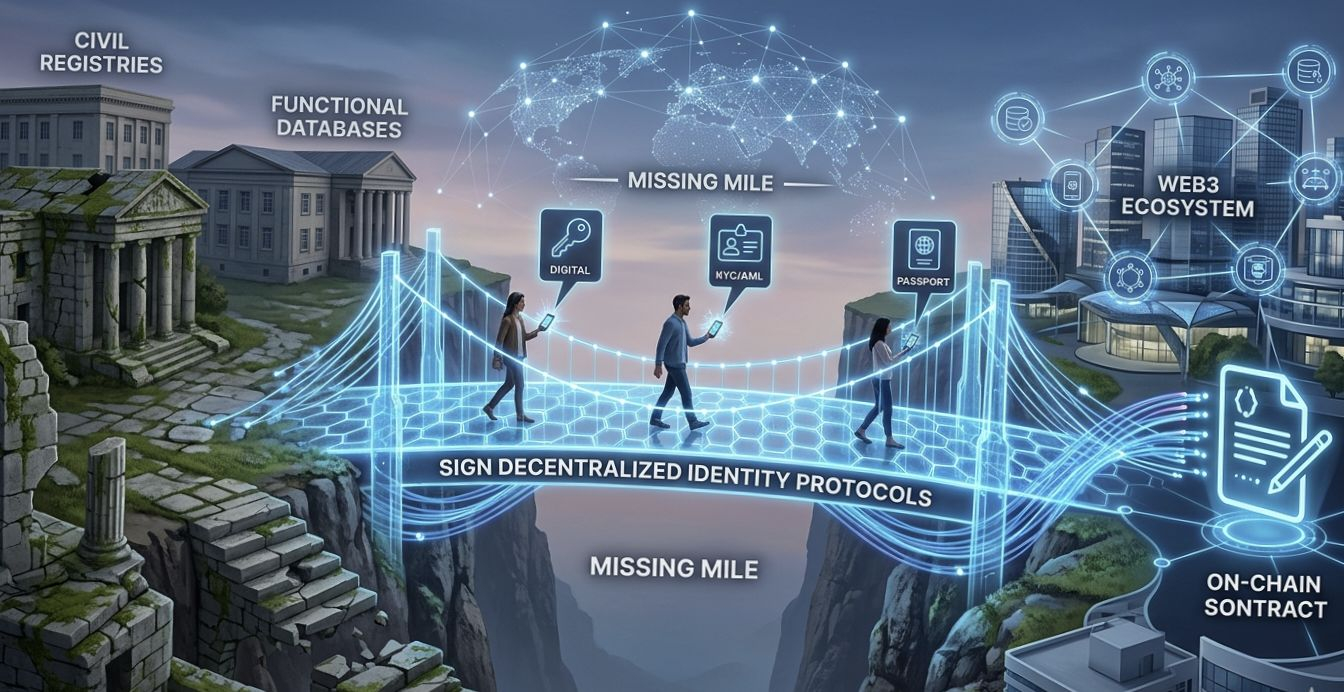
I’m looking at the reality of how these systems actually work, and it’s far more complex than a single strategy deck. Most nations are stuck with a "patchwork" system—civil registries, functional databases, and national IDs that don't always talk to each other. We often act as if identity starts at zero, ignoring the decades of history and fragmented institutions already in place.
I know that for the blockchain community, this is where things get interesting. The current national identity architectures are struggling to bridge the "last mile" of security and user sovereignty. This is exactly why decentralized identity protocols are becoming the focal point of the next era of the internet.
Why None Wins Alone
The article highlights that no single architecture—whether it’s a civil registry or a functional database—can provide a perfect solution in isolation. In the world of Web3 and Binance, we see a similar pattern:
Centralized vs. Decentralized: Governments provide the "root" of trust, but blockchain provides the "rail" for verification.
The Fragmented Reality: Just as countries have a patchwork of IDs, users in crypto have a patchwork of wallets and KYC credentials.
The SIGN Perspective
As we move toward more coherent identity systems, projects like @SignOfficial are exploring how to make these "patchwork" systems actually work together. The goal isn't to delete history, but to build a layer that makes identity portable, secure, and truly owned by the individual.
The "Identity Revolution" isn't about the first database; it’s about the network that finally connects them all.
What do you think? Will national IDs eventually be fully integrated into on-chain verification, or will they always remain separate systems?