
The Middle Eastern powder keg has been ignited again. Trump threw out a phrase on social media, "48-hour countdown," and global oil prices skyrocketed instantly, with traders' hands trembling as they stared at the screens. More sensitive than traditional markets is the cryptocurrency space—Bitcoin jumped in response, and the total open interest surged overnight.
Hark Island, a small island only 6 kilometers long and 3 kilometers wide, controls nearly 90% of Iran's crude oil exports. 2,000 U.S. Marines were the first to deploy, followed closely by 3,000 from the 82nd Airborne Division, with two waves of assault having clear targets—to seize the island and choke off Iran's economic lifeline. For cryptocurrency players, this is not a distant geopolitical conflict, but a tangible risk signal.
Why is the cryptocurrency market so tense? Because the Strait of Hormuz is the throat of global oil transportation; once blocked, oil prices will soar, inflation expectations will spike, and the U.S. dollar's credibility will come under further pressure. Each time the situation in the Middle East escalates, funds instinctively flow into Bitcoin—an asset many consider to be 'digital gold' for hedging.
But Trump's chess game is very confusing.
He first made a loud ultimatum on social media, and two days later changed his tone, saying that 'negotiations are going smoothly,' and postponed the airstrike by five days. On the surface, it appears to be an olive branch, but in reality, it is buying time for the U.S. military to gather forces. The Iranian Foreign Ministry directly punctured this bubble: there is no negotiation at all, and that five days just happens to allow U.S. military strength to double. This kind of 'openly repairing the road while secretly crossing the bridge' trick is clear to the whole world.
For the cryptocurrency market, this uncertainty is precisely the most deadly. The news keeps jumping back and forth, meaning that the market could fluctuate violently at any time. Whale addresses have already started quietly increasing their positions, and on-chain data shows that large Bitcoin transfers have significantly increased in the past 48 hours.
The two waves of U.S. military strikes sound intimidating, but in reality, they are full of flaws. The first wave landed from the sea, but the waters around Khark Island have already been mined by Iran; the second wave has elite paratroopers deployed, but during the landing process, they are highly likely to become live targets for anti-aircraft missiles. The defending troops on the island are elite members of the Iranian Revolutionary Guard, familiar with the terrain and capable of unconventional tactics. Even if the U.S. military can land on the island, it will be as difficult as climbing to the sky to establish a foothold.
What is even more alarming is that Iran has issued a stern warning—ready to block the Strait of Hormuz at any time. Nearly one-third of the world's oil passes through here; if it is blocked, the energy market will collapse, and the global economy will enter a state of turmoil. In this context, the cryptocurrency market often faces a tug-of-war between two forces: safe-haven funds flowing into Bitcoin, but tightening liquidity may trigger short-term selling pressure.
Surrounding countries are also secretly competing. Although Saudi Arabia does not get along with Iran, it fears that the flames of war will reach its own oil fields; Iraq has clearly stated that it will not allow U.S. troops to use its bases to attack Iran. Russia has been supplying equipment and intelligence to Iran, and China has also clearly opposed unilateral military action diplomatically. The geopolitical landscape is being reshuffled, and the dollar's hegemonic status is undergoing a new round of testing—this presents both opportunities and risks for the cryptocurrency market.
Trump's chess game seems to be aimed at 'maintaining peace,' but in reality, he is more focused on domestic calculations. The economy is in shambles and inflation cannot be contained; using a military operation to divert contradictions and gain some votes, while also choking Iran's oil exports and controlling global oil prices, achieves two goals at once.
But he clearly miscalculated. Iran is neither Iraq nor Afghanistan. A complete military industrial base, a powerful Revolutionary Guard, and a deep sense of national cohesion are not to be taken lightly.
For cryptocurrency players, the next few days are the real battlefield. The war hasn't started yet, but risk aversion has already taken the lead; once the situation truly escalates, market volatility may far exceed expectations. Those holding positions are likely to have a restless weekend.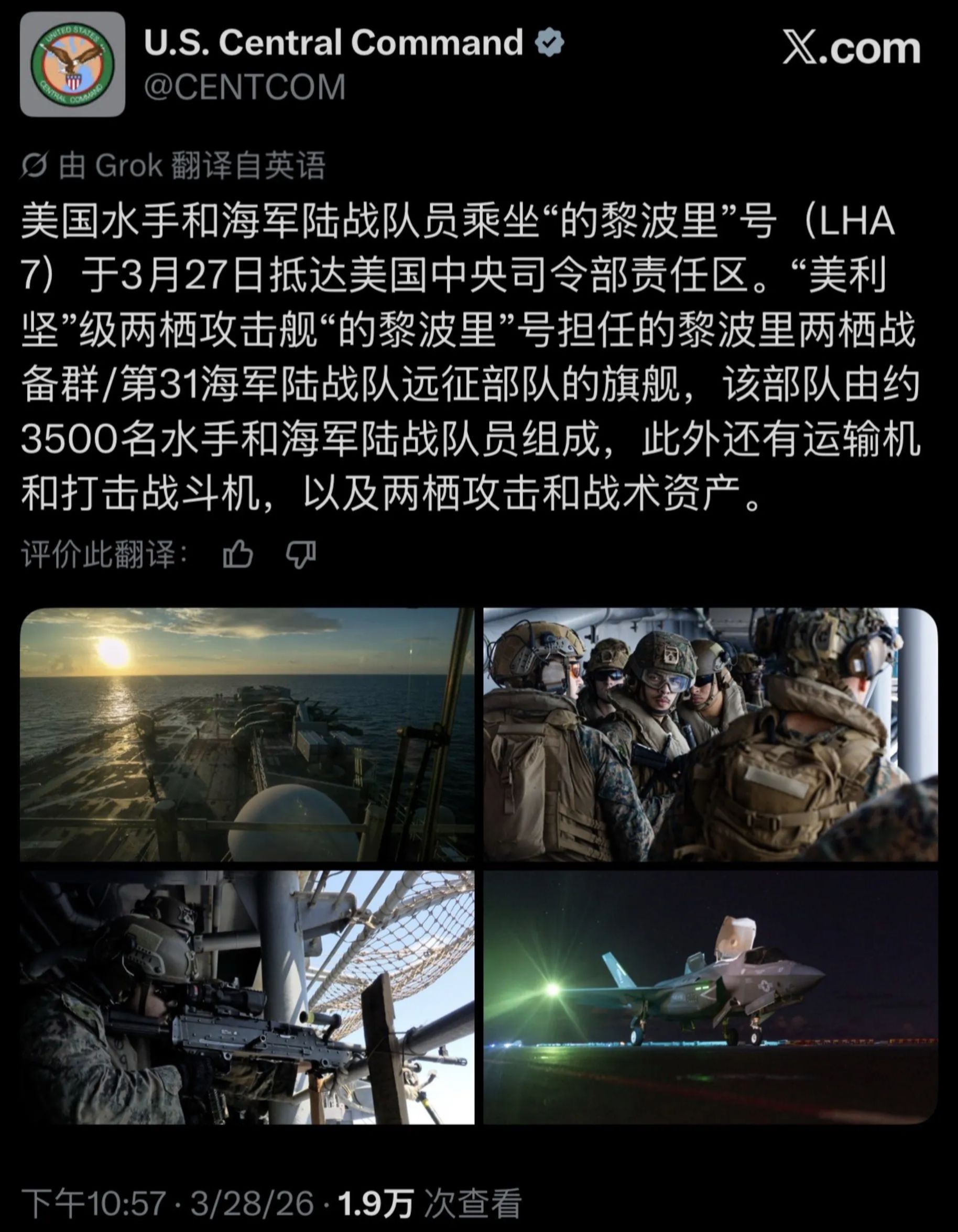 #特朗普希望尽快结束对伊朗战争 $BTC
